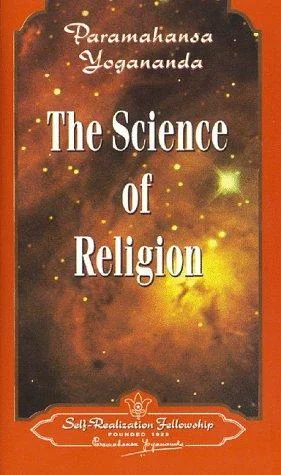
The Science of Religion (Revised)
✍️ Yogananda, ParamahansaThis seminal work, a significant expansion of Paramahansa Yogananda's inaugural American address from 1920, lays bare the universal spiritual laws governing our existence. It meticulously outlines practical principles and accessible techniques designed to guide seekers toward an unmediated, personal apprehension of the divine. More than mere philosophy, it offers a tangible methodology for spiritual awakening, demonstrating how ancient wisdom can be applied with scientific precision to transform consciousness and achieve profound inner realization. A foundational text for those eager to move beyond dogma into direct experience.


📝 Description: The Science of Religion (Revised)
💎 Expert review
📖 Why choose it
Why this book is worth reading
Readers who feel constrained by rigid religious dogma will find profound liberation in this work. It is ideal for the intellectually curious seeker who desires a structured, methodical approach to spirituality rather than vague inspiration. Those eager to move beyond theoretical philosophy into tangible, practical application of spiritual laws will appreciate the clear techniques provided. If you are looking for a way to experience the divine directly through scientific precision and accessible principles, this book offers a transformative roadmap for personal awakening.
⭐ Reader reviews
Reader rating
Yogananda presents a compelling case for spirituality as an empirical discipline, stripping away mysticism to reveal underlying universal laws. However, readers seeking traditional theological debate or historical religious analysis will find little here. It is not suited for those who prefer abstract metaphysics over practical instruction, nor for skeptics unwilling to engage with the premise of direct divine experience. The text demands a willingness to adopt specific practices rather than merely observe them from a distance.
❓ Frequently asked questions
📖 Who should read this
If you yearn for a spiritual path grounded in direct experience, or seek to understand the universal "science" behind all true religions, this book is for you. It's a vital guide for any earnest seeker ready to embrace a systematic approach to divine realization, transcending mere belief.
🎯 Key themes and symbolism
Experiencing the Divine Directly
This book champions the idea that spiritual truth isn't just intellectual or dogmatic; it's an intensely personal, verifiable encounter. Yogananda provides systematic methods to cultivate an inner awareness that transcends belief, leading the practitioner to an immediate, undeniable realization of ultimate reality within themselves, rather than relying on external authority or abstract faith.
Spiritual Science Unveiled
Yogananda presents spirituality not as blind faith, but as an empirical science, with repeatable experiments and observable results. He illustrates how ancient yogic principles can be understood and applied with the precision of a scientific method, offering a rational framework for spiritual growth that appeals to both the heart and the intellect, bridging the gap between mysticism and modern thought.
Practical Path to Realization
Beyond theoretical exposition, this volume offers a clear, actionable roadmap for spiritual progress. It details specific principles and exercises that individuals can integrate into their daily lives, transforming abstract concepts into tangible steps towards self-mastery and divine connection. The emphasis is on personal effort and consistent practice to achieve measurable inner transformation and spiritual awakening.
📜 Historical context
📚 Glossary
- Divine Experience
- Yogic Principles
- Self-Realization
📔 Questions to reflect on
- How do you currently approach spiritual truth: through belief, intellectual understanding, or direct experience? How might a "scientific" approach shift your perspective?
- Reflect on a time you felt a deep, undeniable connection to something greater than yourself. How did that experience differ from merely believing in it?
- Yogananda suggests universal spiritual principles exist. What common threads do you perceive across different religious or spiritual traditions you're familiar with?