The Martian Codex: More Reflections from Mars
Haas, George JThis edition can be ordered. No arrival date is confirmed.
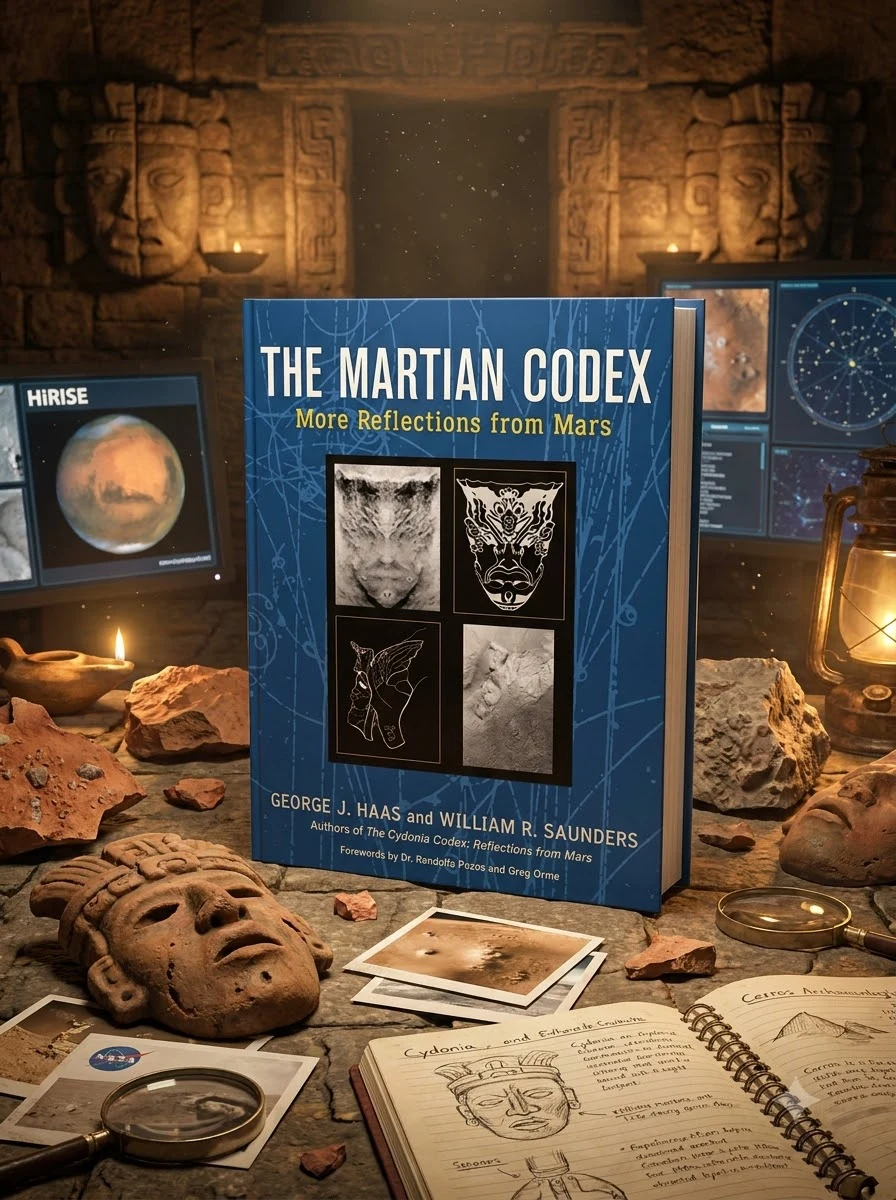
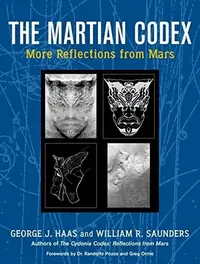
Ancient masks mirror Martian geology, revealing a shared mythic ancestry between Earth and the Red Planet.
This compelling volume bridges archaeology and space exploration, arguing that Martian surface features are not natural formations but artifacts of a lost civilization. By comparing high-resolution NASA imagery of the 'Face on Cydonia' with pre-Columbian Mexican masks, the authors demonstrate striking parallels in iconography. They trace recurring two-faced motifs across the Martian landscape, suggesting these images depict deities from the Mayan Popol Vuh. The text posits that extraterrestrial beings influenced early Earth cultures, leaving a visual legacy that persists in our oldest spiritual records.
This work sits firmly within the tradition of alternative archaeology and speculative esotericism, challenging mainstream scientific consensus by proposing a mythic ancestry between Earth and Mars. It aligns with New Age spiritualism that seeks extraterrestrial connections in ancient human history.


📝 Description: The Martian Codex: More Reflections from Mars
💎 Expert review
📖 Why choose it
Why this book is worth reading
Readers fascinated by the intersection of archaeology, mythology, and space exploration will find this volume deeply engaging. It offers a unique perspective for those who believe that ancient spiritual records hold keys to cosmic origins. If you are intrigued by the idea that Martian geology mirrors human artistic expression, this book provides a compelling narrative. It appeals to seekers of hidden connections between disparate cultures and celestial bodies, offering a fresh lens through which to view familiar mythic motifs like two-faced deities.
⭐ Reader reviews
Reader rating
This edition finally does the material justice. The historical context alone makes it worth the price. Already eyeing my next order.
I collect works on this subject and this is a worthy addition. You can tell why this work has endured. The historical context alone makes it worth the price. The font runs small in the appendices. Good, with the caveats above.
Finally got around to ordering this. The print is clean and easy on the eyes for long sessions. Great value for what you get.
This text presents a bold hypothesis linking NASA imagery to pre-Columbian iconography, appealing to those open to non-traditional historical narratives. However, it does not suit readers seeking peer-reviewed archaeological evidence or strict scientific rigor. Skeptics of extraterrestrial involvement in human history may find the arguments speculative rather than factual. The book is best appreciated as a work of imaginative esoteric theory rather than hard science. It succeeds in weaving a coherent mythic tapestry but lacks the empirical grounding expected in academic circles.
❓ Frequently asked questions
📖 Who should read this
Readers fascinated by the intersection of archaeology and ufology will appreciate this visual argument. It suits those who believe ancient myths contain historical truth and who seek evidence of contact between early humans and extraterrestrial visitors.
🎯 Key themes and symbolism
Comparative Iconography
Ancient Astronaut Theory
Mayan Cosmology
💬 Quotes from the book
“The split-faced structure of Cydonia precisely resembles masks from Cerros, Mexico.”
“Both worlds depict specific gods from the Mayan creation mythology.”
📜 Historical context
📚 Glossary
- Geoglyph
- Popol Vuh
- Cydonia
📔 Questions to reflect on
- How do visual similarities between distant cultures challenge our understanding of human isolation?
- What role does pattern recognition play in interpreting ambiguous data from space?
- In what ways might ancient myths preserve literal history rather than just allegory?
✍️ More books by this author Haas, George J
All books by this author →
🏛 Books from this publisher North Atlantic Books
All books from this publisher →







You might also like
See more →





 91
91