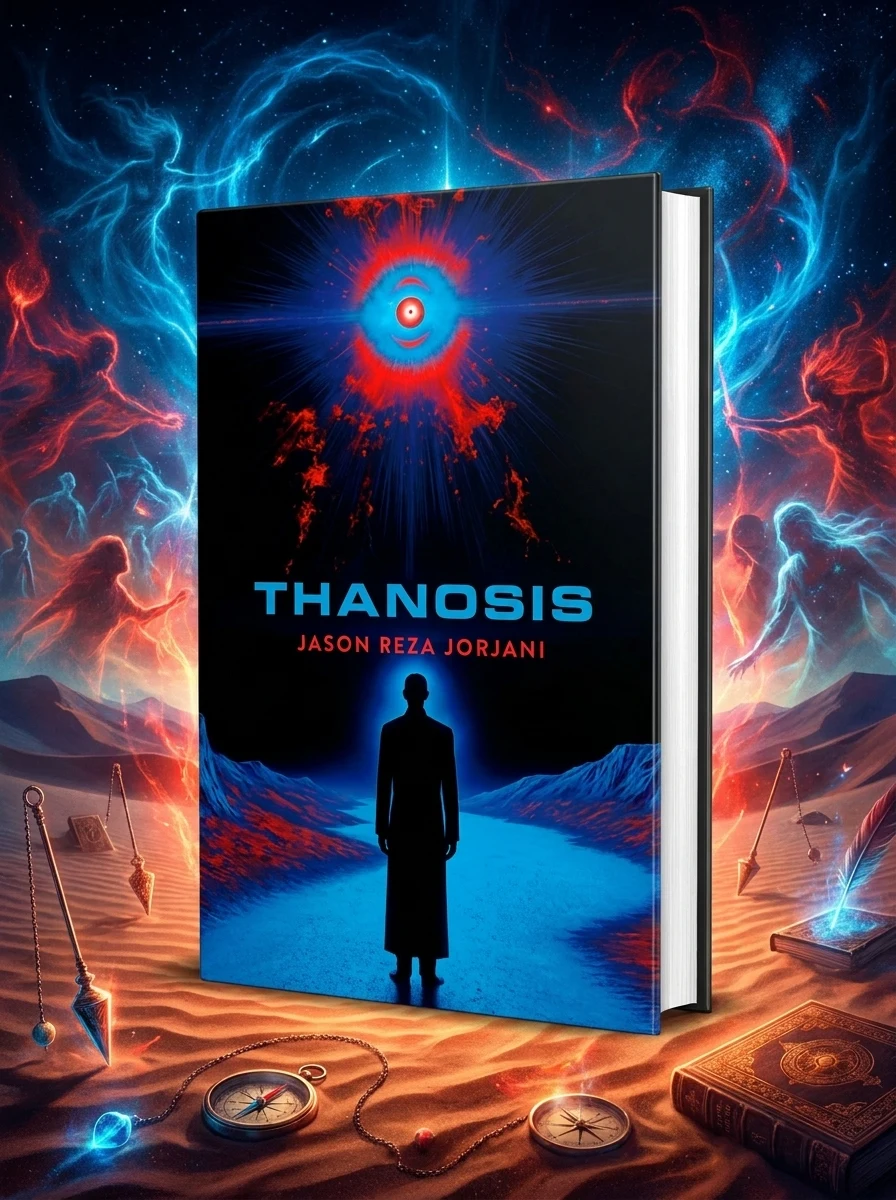
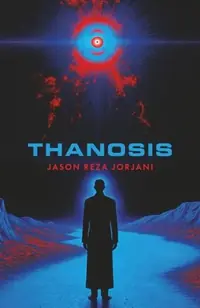
Thanosis
Stock reported in the catalog; fulfillment is confirmed with your request.
Beyond material death, your conscious will fights for individual agency in a quantum cosmos.
Jorjani’s Thanosis boldly redefines post-mortem existence, weaving together a century of parapsychological evidence with a groundbreaking philosophical framework. Eschewing simplistic views of annihilation or universal unity, he champions a radical pluralism where individual consciousness, free will, and creative spirit persist after the body's demise. The book proposes a computational model of the soul, reimagining the afterlife not as a passive state but as a complex system to be navigated, offering a challenging yet empowering vision of enduring personhood.
This work emerges from the modern esoteric tradition of parapsychology and speculative metaphysics, bridging contemporary quantum theory with historical occult inquiries into post-mortem existence. It aligns with recent philosophical shifts that challenge traditional dualisms by proposing a computational model for consciousness.


📝 Description: Thanosis
💎 Expert review
📖 Why choose it
Why this book is worth reading
Readers seeking a rigorous, non-dogmatic exploration of what lies beyond physical death will find profound value in this text. It is ideal for those disillusioned with simplistic notions of annihilation or universal absorption, offering instead a powerful affirmation of individual agency and creative spirit. By integrating parapsychological evidence with computational metaphors, Jorjani provides an empowering framework for understanding enduring personhood. Those interested in the intersection of consciousness studies, quantum physics, and spiritual philosophy will appreciate the bold redefinition of the afterlife as a navigable system rather than a passive state.
⭐ Reader reviews
Reader rating
Jorjani presents a dense, intellectually demanding argument that may alienate readers seeking comforting, traditional spiritual reassurance. This book is not for those who prefer emotional solace over philosophical rigor or who are uncomfortable with computational analogies applied to the soul. It demands active engagement with complex ideas about agency and pluralism in a quantum cosmos. While the vision is undeniably original and intellectually stimulating, it requires a reader willing to navigate challenging concepts without the crutch of conventional religious dogma or simple metaphysical answers.
❓ Frequently asked questions
📖 Who should read this
If you question conventional narratives about death, seek to integrate scientific inquiry with spiritual philosophy, and are ready for a challenging, radical re-evaluation of consciousness beyond the body, this book offers a profound journey into the nature of enduring selfhood.
🎯 Key themes and symbolism
Post-Mortem Consciousness
This work critically examines the concept of life after death, moving beyond conventional religious dogma and scientific materialism. It synthesizes extensive parapsychological findings to argue for the persistence of individual awareness, suggesting that our subjective experience and identity are not extinguished with physical demise but continue within an expanded reality.
Agency in the Afterlife
Jorjani posits that survival beyond death is not a passive state but an active domain where personal will and freedom remain paramount. He challenges deterministic views, advocating for a pluralistic panpsychism where individual agency is central, and liberation is achieved through conscious authorship over one's informational pattern, even in a potentially restrictive post-mortem environment.
The Afterlife Reimagined
The book presents a provocative reinterpretation of traditional eschatologies, portraying the "afterlife" as a potentially structured, even exploitative, system. Jorjani introduces a computational ontology where the soul functions as software within a quantum information processing matrix, reframing concepts like reincarnation and possession through this radical, digital-age lens.
💬 Quotes from the book
“Consciousness is not a static endpoint, but a battlefield where individual wills contend, even beyond the veil of physical death.”
“To achieve true liberation is to claim Promethean authorship over one’s own informational pattern, escaping the psychotronic prisons of a simulated afterlife.”
📜 Historical context
📚 Glossary
- Jamesian Pluralism
- Loosh
- Computational Ontology
📔 Questions to reflect on
- How does Jorjani's concept of a "psychotronic prison" for souls challenge or align with your existing beliefs about the afterlife or spiritual realms?
- If your soul were truly "software," what implications would this have for personal identity, free will, and the meaning of spiritual evolution?
- Consider the idea of "Promethean authorship over one's informational pattern." What practical or philosophical steps might one take in life to prepare for such post-mortem agency?
You might also like
See more →

 91
91



 91
91