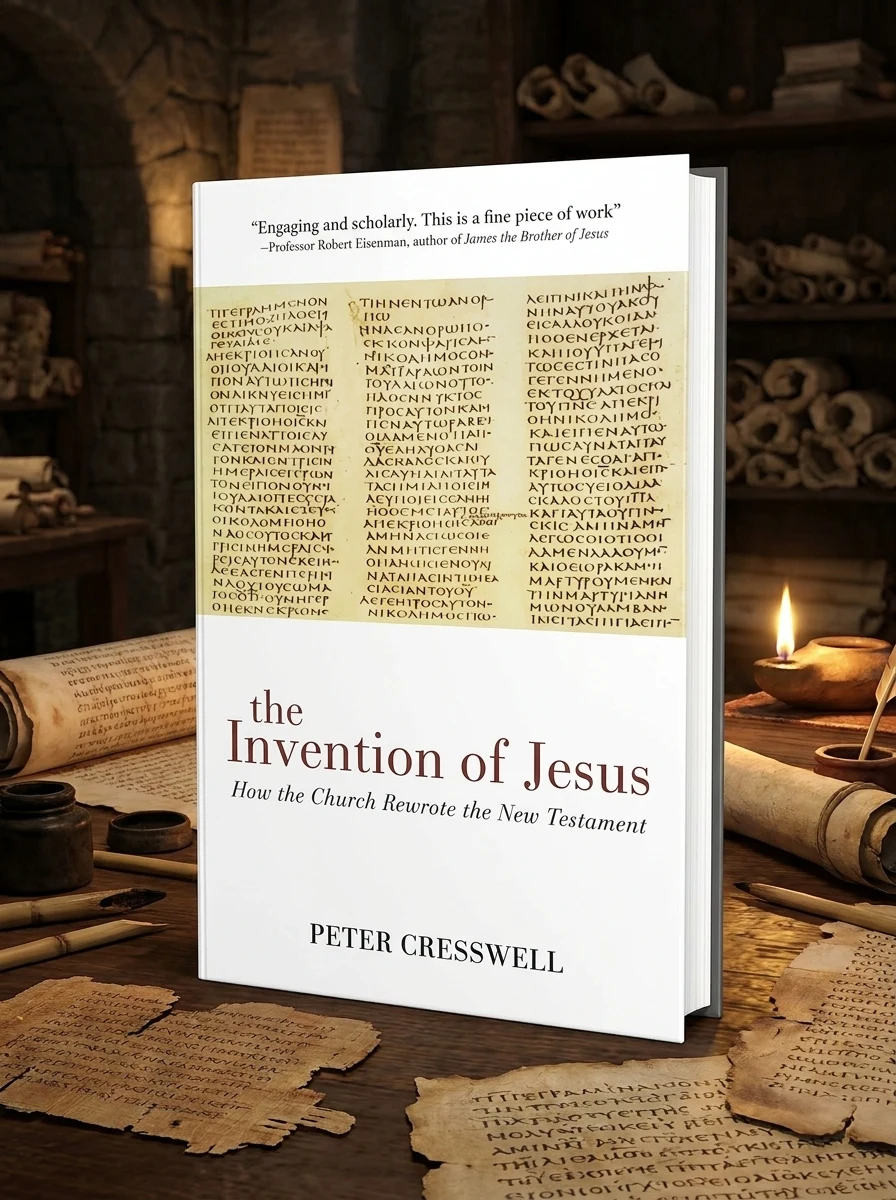
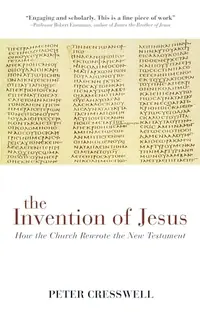
The Invention of Jesus: How the Church Rewrote the New Testament
This edition can be ordered. No arrival date is confirmed.
Uncover how the Church deliberately crafted the image of Jesus over centuries.
Peter Creswell’s incisive work delves into the foundational texts of Christianity, meticulously examining early New Testament manuscripts. Through innovative analytical methods, he reveals a fascinating trajectory of doctrinal development. Creswell posits that core tenets, such as the divinity of Jesus and the resurrection narrative, were not static but progressively woven into the scriptural fabric by early scribes. This profound textual investigation aims to differentiate the historical figure of Jesus from the constructed persona presented by the evolving Church, offering a compelling reinterpretation of Christian origins.
This work sits within the tradition of esoteric textual criticism, challenging established ecclesiastical narratives through the lens of occult and alternative historical inquiry. It aligns with Watkins Publishing’s focus on uncovering hidden or suppressed dimensions of religious history.


📝 Description: The Invention of Jesus: How the Church Rewrote the New Testament
💎 Expert review
📖 Why choose it
Why this book is worth reading
Readers fascinated by the intersection of theology, textual analysis, and historical revisionism will find this book particularly rewarding. It appeals to those who question orthodox interpretations and seek to understand the mechanical processes behind doctrinal formation. If you are intrigued by how religious images are constructed over time rather than accepted as static truth, Creswell offers a compelling roadmap. This is for the curious mind eager to distinguish the historical Jesus from the theological persona crafted by institutional power. It provides a fresh perspective for anyone interested in the fluidity of scripture and the deliberate shaping of spiritual identity by early scribes.
⭐ Reader reviews
Reader rating
Creswell presents a rigorous, albeit provocative, examination of New Testament manuscript evolution. While intellectually stimulating for those open to deconstructing foundational myths, it may alienate devout Christians who view these texts as divinely preserved rather than humanly crafted. The book demands patience with dense textual analysis and does not shy away from controversial claims about scribal intervention. It is best suited for skeptics and historians of religion rather than casual readers seeking a straightforward biblical overview. Those expecting definitive proof rather than analytical trajectory might find the arguments too speculative, though they are undeniably thought-provoking.
❓ Frequently asked questions
📖 Who should read this
For discerning readers intrigued by the historical Jesus and the origins of Christian dogma, this book offers a rigorous re-examination. If you question traditional narratives and seek a deep, evidence-based understanding of biblical formation, Creswell’s work will prove profoundly illuminating.
🎯 Key themes and symbolism
Doctrinal Development Unveiled
This book meticulously demonstrates how central Christian doctrines, notably the divine nature of Jesus and the accounts of his resurrection, were gradually interpolated into the biblical narrative. Creswell highlights that these theological concepts were not always present in their final form but were introduced and solidified through deliberate scribal modifications over time.
The Invented Christ
By isolating these textual additions and modifications, Creswell reconstructs the character of Jesus as it existed prior to the Church's doctrinal embellishments. He argues that the figure widely accepted today is, in significant aspects, a theological construct, shaped and defined by the early Christian community's evolving interpretations and textual interventions.
💬 Quotes from the book
“The careful examination of the earliest Greek manuscripts reveals a consistent pattern: key theological assertions, particularly concerning Christ's divine nature, appear to be interpolations, not original declarations.”
“Far from presenting a monolithic narrative, the textual record demonstrates a collaborative, albeit often subtle, scribal effort to shape the emerging Christian identity and the very character of its founder.”
📜 Historical context
📚 Glossary
- Textual Criticism
- Codex Sinaiticus
- Papyrus Fragments
📔 Questions to reflect on
- Considering Creswell’s argument, how might understanding the 'invention' of certain doctrines reshape your personal perception of Christian history or faith?
- If key theological concepts were introduced gradually, what does this imply about the authority of early church councils versus original textual integrity?
- Reflect on the power of textual transmission: how might slight alterations in ancient manuscripts profoundly influence centuries of belief and practice?
🏛 Books from this publisher Watkins Publishing
All books from this publisher →




![Pregnancy Health Yoga: Your Essential Guide for Bump, Birth and Beyond [With DVD]](/img/pregnancy-health-yoga-your-essential-guide-for-bump-birth-and-beyond-with-dvd.webp)
You might also like
See more →




 91
91