US shipping Secure card payment Occult and esoteric books

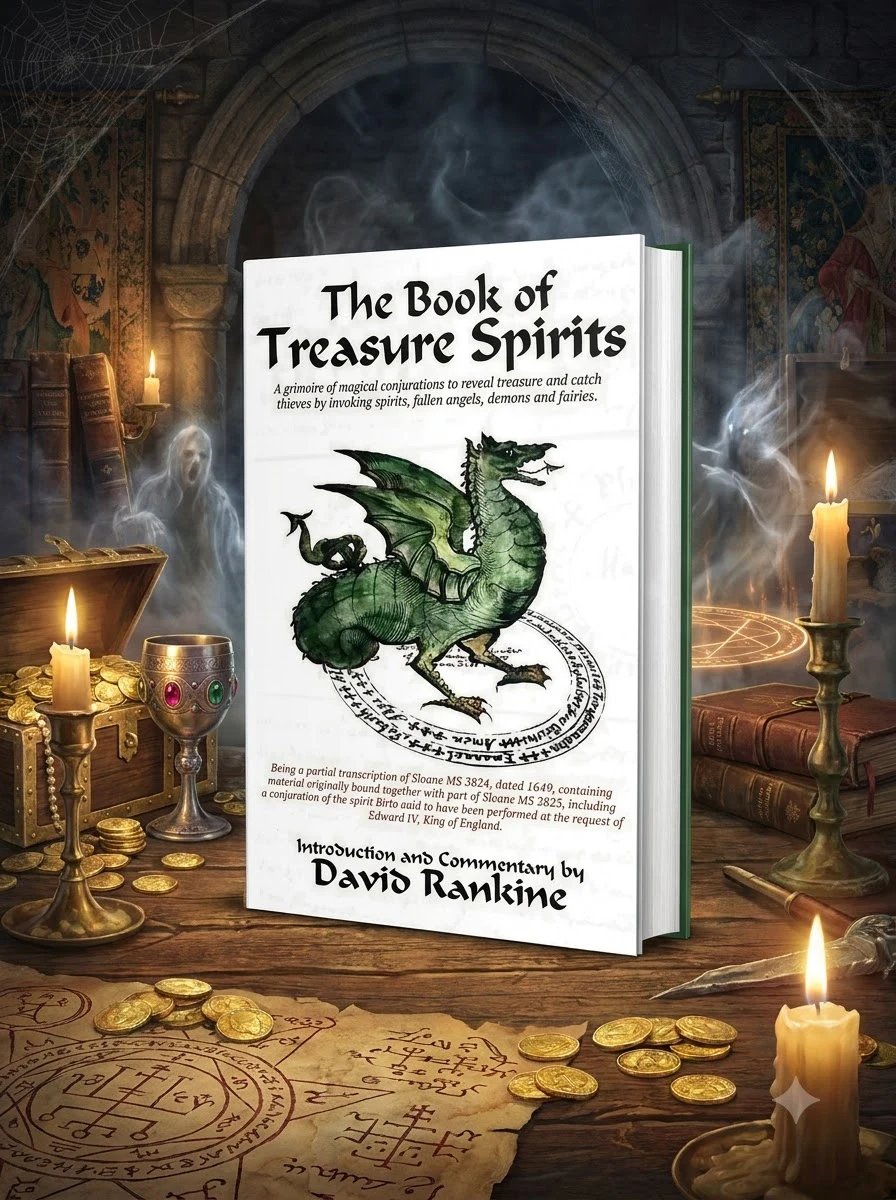
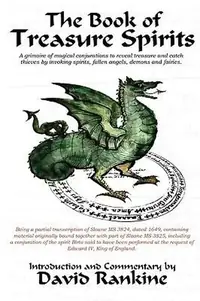
The Book of Treasure Spirits: A Grimoire of Magical Conjurations to Reveal Treasure and Catch Thieves by Invoking Spirits, Fallen Angels, Demons and Fairi

Rankine, David
Reader rating
4.8
(5 reviews) 35 sold
In stock

Stock reported in the catalog; fulfillment is confirmed with your request.

📚 ABOUT THE BOOK

Unlock the sea's secrets and hidden hoards with forgotten seventeenth-century conjurations from the British Library's archives.

This volume resurrects a rare mid-seventeenth-century manuscript from the British Library, offering practical grimoire workings for locating lost wealth and recovering stolen items. Compiled by the renowned antiquarian Elias Ashmole, the text features invocations of Goetic spirits, fallen angels, and fairies, alongside rites to summon treasures from the depths. It includes a crucial English transcription of the Heptameron’s conjuration practices, preserved for working magicians. The collection also contains a specific rite allegedly performed for King Edward IV, providing a tangible link to the era when royal licenses regulated the arcane pursuit of treasure trove.

Key themes
Treasure Conjuration Restitution Magic Seventeenth-Century Grimoire Tradition
Historical context

This text anchors itself in the mid-seventeenth-century British occult tradition, specifically reflecting the antiquarian interests of Elias Ashmole and the era’s regulated pursuit of treasure trove through royal license.


Difficulty
●●● Demanding
Fans will love it
Elias Ashmole · The Heptameron · Goetic Grimoires
📕 Grimoires
🏛 Avalonia 📖 184 pages 📔 Paperback 📐 Paperback ISBN: 9781905297276
Fun fact
This volume excels in accessibility, bringing a neglected manuscript into the light for modern practitioners. It offers a rare, grounded perspective on treasure magic that avoids excessive theory. However, readers seeking detailed illustrations or modern interpretations may find the text starkly academic and dense. It sits firmly within the niche of historical grimoire studies, serving as a vital primary source for those tracing the lineage of practical magic in England.
📚 This book appears in Esoterica Books

📝 Description: The Book of Treasure Spirits: A Grimoire of Magical Conjurations to Reveal Treasure and Catch Thieves by Invoking Spirits, Fallen Angels, Demons and Fairi

Conjurations of Goetic spirits, old gods, demons and fairies are all part of a rich heritage of the magical search for treasure trove. During the Middle Ages and Renaissance the British Monarchy gave out licenses to people seeking treasure in an effort to control such practices, and this is one reason why so many grimoires are full of conjurations and charms to help the magician find treasure. Published here for the first time, from a long-ignored mid-seventeenth century manuscript in the British Library (Sloane MS 3824), the conjuration is said to have been performed at the request of King Edward IV, with other rites to reveal treasure, to have treasure brought from the sea, and to cause thieves to bring back stolen goods. Conjurations to call any type of spirit are also included, recorded by the noted alchemist and collector Elias Ashmole, as is an extract on conjuration practices from the Heptameron, transcribed into English for practical use by a working group of magicians, before its first English publication by Robert Turner in 1655. These conjurations demonstrate the influence of earlier classic grimoires and sources, with components drawn from the Goetia, the Heptameron, and Reginald Scot's Discoverie of Witchcraft. The material includes spirit contracts for Agares, Padiel and Vassago, as well as techniques like lead plates for binding, and summoning into a glass of water, which hark back to the defixiones of Hellenistic Greece and the demonic magic of the Biblical world. This material forms part of a corpus of conjurations all written in the same hand and style of evocation, linking Goetic spirits and treasure spirits with the archangels and planetary intelligences (in Sloane MS 3825), and demon kings and Enochian hierarchies (in Sloane MS 3821), making it a unique bridge of style and content between what are often falsely seen as diverse threads of Renaissance magic.

💎 Expert review

💎
Esoterica Books editorial team
Occult literature desk
While this grimoire offers fascinating historical insights into seventeenth-century treasure magic, it is not suited for casual readers or those seeking modern, simplified spellwork. The dense archaic language and complex conjuration rituals require a dedicated occultist comfortable with Goetic workings and historical context. Beginners may find the lack of explanatory commentary overwhelming, as the text assumes familiarity with esoteric traditions like the Heptameron. It is best approached by historians of magic or experienced practitioners who value archival authenticity over accessibility. The focus on fallen angels and demons also demands a specific spiritual resilience that not all readers possess.
✓ EDITOR'S REVIEW

📖 Why choose it

📖

Why this book is worth reading

This volume is an essential resource for practitioners of historical magic and serious occult scholars who seek authentic, unadulterated primary sources from the seventeenth century. It appeals to those fascinated by the intersection of antiquarianism and practical conjuration, offering a rare glimpse into how treasure hunting was once ritualized under royal sanction. Readers will appreciate the tangible link to the past through the specific rites allegedly performed for King Edward IV and the crucial English transcription of the Heptameron’s practices. It serves as a vital tool for working magicians interested in Goetic spirits, fallen angels, and fairies, providing concrete methods for locating lost wealth that are often lost to time or restricted to rare archives.

⭐ Reader reviews

The starting rating comes from the team Esoterica Books —
⭐ Esoterica editorial review Editorial rating 4.7/5
★★★★
You are a working magician or historical researcher interested in the practical intersection of alchemy, demonology, and material wealth. If you seek primary sources that bridge the gap between medieval folklore and early modern ceremonial magic, this text provides the specific rituals you need.

Reader rating

4.8
Based on 5 reviews
5
4
4
1
3
0
2
0
1
0
E
Eric G. ✓ Verified purchase
May 17, 2026
Deep and rewarding

This has been on my wishlist for months. It pairs well with more modern commentaries on the same tradition. Shipping was quick too.

W
Willow W. ✓ Verified purchase
March 8, 2025

Needed this for my research. Not a light read, but far more accessible than I feared. The material is presented clearly and the structure makes it easy to revisit key passages. Great value for what you get.

A
Andrew K. ✓ Verified purchase
December 16, 2024
My new favorite

This exceeded my expectations. The typesetting is comfortable for study, with good margins for notes. Will be gifting a copy to a friend.

C
Cora W. ✓ Verified purchase
September 12, 2024

I keep coming back to this one. A text you study rather than simply read. One of my better finds this year.

E
Esoterica Books editorial team

While this grimoire offers fascinating historical insights into seventeenth-century treasure magic, it is not suited for casual readers or those seeking modern, simplified spellwork. The dense archaic language and complex conjuration rituals require a dedicated occultist comfortable with Goetic workings and historical context. Beginners may find the lack of explanatory commentary overwhelming, as the text assumes familiarity with esoteric traditions like the Heptameron. It is best approached by historians of magic or experienced practitioners who value archival authenticity over accessibility. The focus on fallen angels and demons also demands a specific spiritual resilience that not all readers possess.

❓ Frequently asked questions

It is best suited for those with some familiarity in ceremonial magic, as the language is archaic and the practices assume a working knowledge of invocation.
The primary focus is on the English transcriptions and conjurations as they were practically utilized by seventeenth-century magicians, including Ashmole's notes.

📖 Who should read this

You are a working magician or historical researcher interested in the practical intersection of alchemy, demonology, and material wealth. If you seek primary sources that bridge the gap between medieval folklore and early modern ceremonial magic, this text provides the specific rituals you need.

🎯 Key themes and symbolism

Treasure Conjuration

Restitution Magic

Seventeenth-Century Grimoire Tradition

💬 Quotes from the book

“The conjuration is said to have been performed at the request of King Edward IV, with other rites to reveal treasure, to have treasure brought from the sea.”

“Transcribed into English for practical use by a working group of magicians, before its first English publication by Robert Turner in 1655.”

📜 Historical context

In medieval and Renaissance Britain, the Crown tightly controlled the discovery of treasure, often issuing licenses to manage the practice. This context explains the prevalence of treasure-finding charms in grimoires of the period. This manuscript, recorded by Elias Ashmole, reflects the transitional era where classical grimoire traditions like the Goetia merged with local folklore, preserving rare English translations of continental works like the Heptameron for practical, rather than purely academic, use.

📚 Glossary

Goetia
Treasure Trove
Heptameron

📔 Questions to reflect on

  1. What personal 'hidden treasure' or unresolved past event might you seek to uncover through the lens of restitution magic?
  2. How does the historical restriction of treasure by the monarchy influence your view on the ethics of seeking wealth through occult means?
  3. In what ways can the spirit of Elias Ashmole’s archival preservation inspire your own approach to documenting magical experiments?

✍️ More books by this author Rankine, David

All books by this author →

🏛 Books from this publisher Avalonia

All books from this publisher →
You might also like

See more →