US shipping Secure card payment Occult and esoteric books

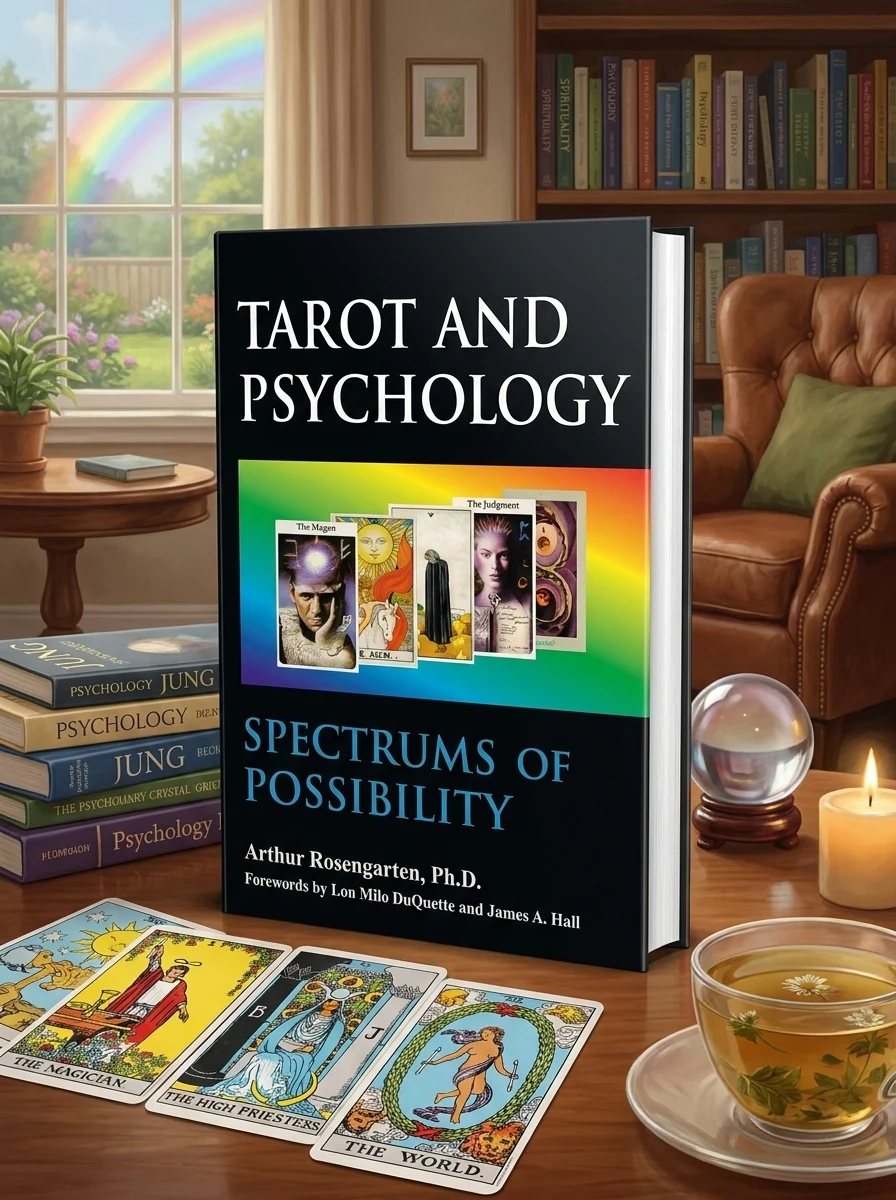
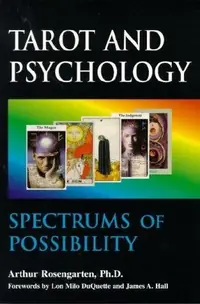
Tarot and Psychology: Spectrums of Possibility

Rosengarten Ph D, Arthur
Reader rating
4.6
(1 reviews) 178 sold
Availability to be confirmed

This edition can be ordered. No arrival date is confirmed.

📚 ABOUT THE BOOK

Uncover the profound psychological insights hidden within the ancient art of Tarot, guided by a clinical expert.

Dr. Arthur Rosengarten, a practicing clinical psychologist, presents a compelling argument for Tarot as a potent tool for self-discovery and spiritual exploration. This work transcends traditional dogma, positioning Tarot as a universally accessible framework for psychological insight. It illuminates how the cards can unveil a vast array of human experience, offering profound awareness without requiring allegiance to any specific belief system. Ideal for those seeking deeper understanding of themselves and the world, it also offers invaluable perspectives for healing professionals.

Key themes
Tarot as Therapeutic Insight Beyond Dogma: Universal Spirituality Unlocking Human Potential
Historical context

This work sits at the intersection of modern clinical psychology and esoteric tarot studies, reflecting a trend toward secularizing spiritual tools for therapeutic use. It bridges the gap between traditional divination practices and contemporary psychological frameworks.


Difficulty
●● Moderate
Fans will love it
Carl Jung · James Hillman · Linda Grayson
🃏 Tarot & Divination
🏛 Paragon House Publishers 📅 2000 📖 312 pages 📔 Paperback 📐 Paperback ISBN: 9781557787842
Fun fact
Dr. Rosengarten's work masterfully redefines Tarot, elevating it from a divinatory curiosity to a serious instrument for psychological and spiritual development. It excels at offering a nuanced, dogma-free approach to self-discovery, making it indispensable for therapists and seekers alike. Those expecting simplistic fortune-telling will be disappointed, but anyone ready for a rigorous, insightful exploration of the human condition will find this a seminal contribution to esoteric literature.

📝 Description: Tarot and Psychology: Spectrums of Possibility

What A Clinical Psychologist Espousing Tarot Cards? Dr. Arthur Rosengarten, in Tarot and Psychology: Spectrums of Possibility, does just that. He explains Tarot to those who may want to learn to use it properly for the greatest good-individuals who desire greater spirituality in their lives, including the benefits of psychological insight and depth, without the baggage of affiliation that invariably accompanies any single set of beliefs. Tarot, they will soon find, operates on many levels of profound meaning from a purely non-affiliated platform in the truest sense. Tarot makes accessible to awareness a full spectrum of psychological and spiritual possibility with little preference for its user's qualifications or beliefs. Rather magically, one might say, Tarot captures the heartbeat of experience. This fact alone should make the deck of human possibility immediately relevant to helping professionals who deal with the heartbeats of experience daily. The use of Tarot as an oracle for creating awareness and gaining insight into particular symptoms, problems or questions-i.e. Tarot divination-is often mentioned as an afterthought, alongside other meditational exercises and alternative spread configurations. Yet today, the vast majority of individuals who have discovered the wonders and mysteries of Tarot have done so through experiences of divination. Card reading, without a doubt, is Tarot's most beguiling and potentially beneficial enterprise. Why dance around the magic? For Tarot to continue to evolve into the 21st century (and beyond) it must have a stronger application emphasis, that is, it must be relevant, accessible, and meaningful to the changing contours of people's lives. It must resonate with all who seek greater meaning, creativity, and awareness, not simply with small segments of the waning New Age. Tarot and Psychology provides an innovative new approach for understanding the psychological and spiritual possibilities of human experience.

💎 Expert review

💎
Esoterica Books editorial team
Occult literature desk
Dr. Rosengarten successfully positions tarot as a tool for psychological insight rather than fortune-telling. However, this book does not suit readers looking for traditional divinatory techniques or those who prefer rigid religious dogma over secular interpretation. It is best for those open to clinical perspectives on spirituality. The text avoids mystical claims in favor of psychological utility, which may disappoint purists seeking esoteric secrets but will resonate with those valuing clinical expertise and universal applicability in their spiritual journey.
✓ EDITOR'S REVIEW

📖 Why choose it

📖

Why this book is worth reading

Readers seeking a profound, non-dogmatic approach to self-discovery will find immense value in this text. It is particularly beneficial for those interested in the psychological underpinnings of tarot rather than its predictive aspects. Practitioners of healing professions will gain invaluable perspectives on using the cards as a framework for understanding human experience. By removing specific belief system requirements, it offers universal accessibility for spiritual exploration and deeper self-awareness.

⭐ Reader reviews

The starting rating comes from the team Esoterica Books —
⭐ Esoterica editorial review Editorial rating 4.6/5
★★★★
If you seek profound self-awareness and spiritual depth without dogmatic adherence, this book is for you. Mental health practitioners, spiritual seekers, and anyone curious about Tarot's deeper psychological dimensions will find Rosengarten's unique perspective illuminating and transformative.

Reader rating

4.6
Based on 1 reviews
5
0
4
1
3
0
2
0
1
0
E
Esoterica Books editorial team

Dr. Rosengarten successfully positions tarot as a tool for psychological insight rather than fortune-telling. However, this book does not suit readers looking for traditional divinatory techniques or those who prefer rigid religious dogma over secular interpretation. It is best for those open to clinical perspectives on spirituality. The text avoids mystical claims in favor of psychological utility, which may disappoint purists seeking esoteric secrets but will resonate with those valuing clinical expertise and universal applicability in their spiritual journey.

❓ Frequently asked questions

Absolutely not. While Tarot can offer insight into specific situations, Dr. Rosengarten's primary focus is on its profound capacity for psychological self-awareness and non-dogmatic spiritual exploration, transcending simple predictive uses.
Not at all. The author skillfully articulates complex psychological and spiritual ideas in an accessible way, making the book valuable for both mental health professionals and anyone seeking deeper personal understanding.

📖 Who should read this

If you seek profound self-awareness and spiritual depth without dogmatic adherence, this book is for you. Mental health practitioners, spiritual seekers, and anyone curious about Tarot's deeper psychological dimensions will find Rosengarten's unique perspective illuminating and transformative.

🎯 Key themes and symbolism

Tarot as Therapeutic Insight

This book champions Tarot as a legitimate and powerful instrument for psychological exploration and healing. It moves beyond mere divination, demonstrating how the card's archetypal narratives can provide profound self-awareness and help individuals navigate personal challenges, making it particularly useful for those in therapeutic fields.

Beyond Dogma: Universal Spirituality

Rosengarten emphasizes Tarot's unique capacity to foster spiritual growth and understanding independent of any specific religious or philosophical doctrine. It offers a path to deeper meaning and connection that respects individual belief systems, providing rich spiritual insight without the constraints or biases of institutionalized thought.

Unlocking Human Potential

The author illustrates how Tarot can unlock a vast range of psychological and spiritual potentials within an individual. It serves as a mirror reflecting the myriad facets of human experience, offering pathways to expanded consciousness and self-realization, regardless of one's background or prior knowledge.

💬 Quotes from the book

“The Tarot deck is not merely a collection of images; it is a mirror reflecting the intricate landscape of the human psyche, inviting profound self-examination.”

“Within these seventy-eight cards lies a universal language of spirit, offering guidance and meaning accessible to all, regardless of their chosen path or doctrine.”

📜 Historical context

While Tarot has long been associated with divination and esoteric traditions, Rosengarten’s work marks a significant evolution by firmly integrating it into contemporary psychological discourse. It challenges the conventional marginalization of Tarot in academic and clinical settings, positioning it as a valid, non-affiliated tool for modern therapeutic insight, bridging ancient wisdom with present-day mental health practices.

📚 Glossary

Divination
Non-Affiliated
Archetype

📔 Questions to reflect on

  1. How might viewing Tarot as a psychological mirror, rather than a predictive tool, change your approach to its symbolism and interpretations?
  2. In what ways could a 'non-affiliated' spiritual practice, as offered by Tarot, enhance your personal sense of meaning without traditional constraints?
  3. Consider a recent personal challenge. How might exploring this issue through the archetypal lens of a Tarot card reveal new insights or possibilities?

You might also like

See more →