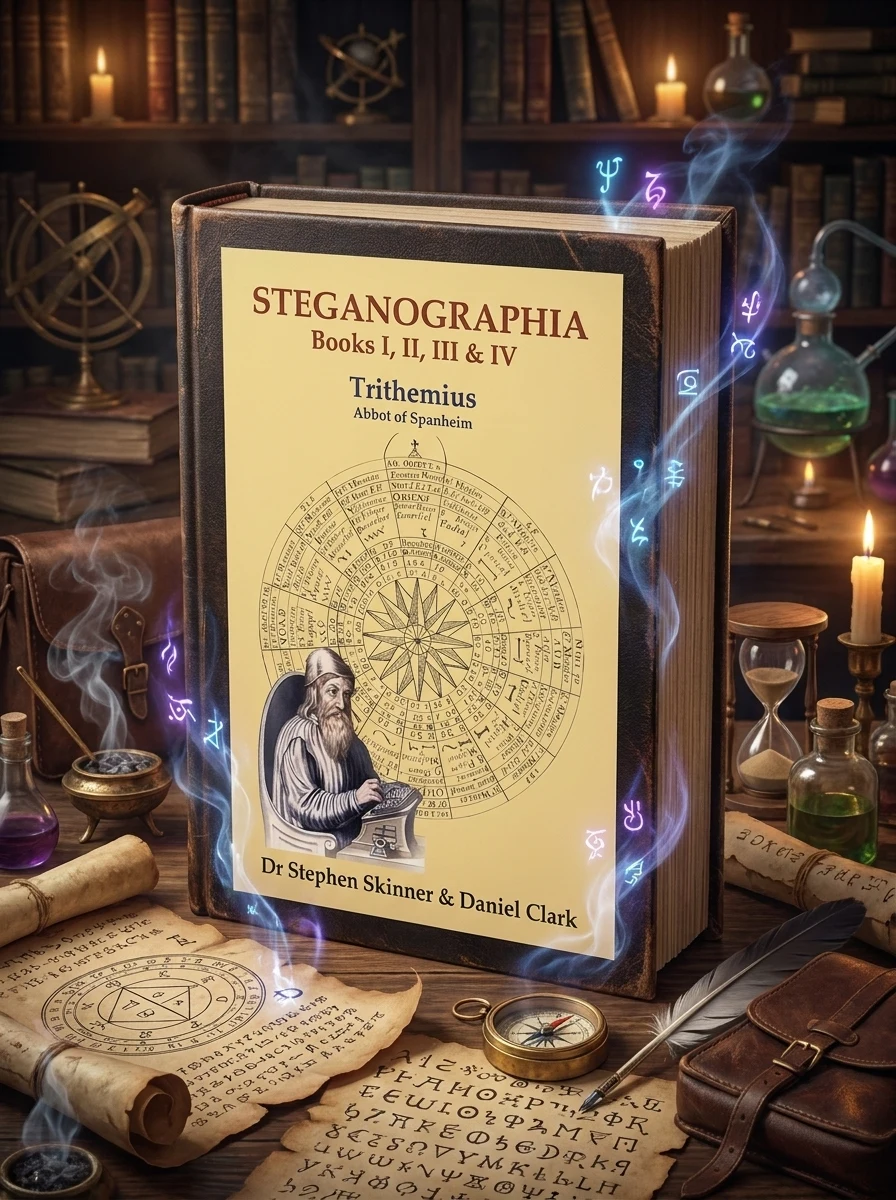
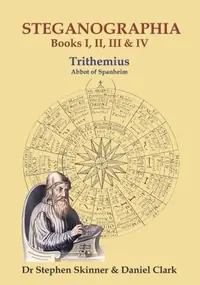
Steganographia: Books I-IV
Skinner, Stephen; , Trithemius; , Clark, DanielThis edition can be ordered. No arrival date is confirmed.
Uncover ancient secrets of spirit evocation and coded communication from a Renaissance master.
Originally penned in 1500 by the influential abbot Johannes Trithemius, mentor to such luminaries as Cornelius Agrippa and Paracelsus, *Steganographia* stands as a pivotal Renaissance grimoire. This renowned work masterfully intertwines methods for spirit evocation with intricate cryptographic techniques, presenting a unique synthesis of esoteric practice and secret communication. It's not merely a historical curiosity but a foundational text exploring the hidden languages of both the spiritual and mundane realms, offering insights into a complex system designed to conceal profound knowledge.
This text emerges from the Renaissance era as a pivotal grimoire that masterfully intertwines spirit evocation with intricate cryptographic techniques, reflecting the period's synthesis of esoteric practice and secret communication. It serves as a foundational work exploring the hidden languages of both spiritual and mundane realms.


📝 Description: Steganographia: Books I-IV
💎 Expert review
📖 Why choose it
Why this book is worth reading
This volume is essential for those fascinated by the intersection of occult history and cryptographic art. Readers seeking to understand the mentorship dynamics of Renaissance masters like Johannes Trithemius will find profound value in its origins. It offers unique insights into a complex system designed to conceal knowledge, appealing to historians of magic and scholars of secret languages alike. By unveiling ancient secrets of spirit evocation, it provides a rare glimpse into how spiritual and mundane realms were once conceptually linked through coded communication.
⭐ Reader reviews
Reader rating
While *Steganographia* is a historically significant grimoire, it may not suit casual readers seeking straightforward spellcraft or modern practical magic guides. Its dense synthesis of cryptography and spirit evocation requires patience and an interest in historical context rather than immediate utility. However, for those willing to engage with its intricate methods, it offers a rewarding exploration of Renaissance esotericism. It is less suitable for those who dislike complex theoretical frameworks or historical analysis, but highly recommended for specialists in occult history.
❓ Frequently asked questions
📖 Who should read this
If you're drawn to the historical intersections of magic and secret communication, or keen to explore foundational Western esoteric texts, this edition is indispensable. Researchers of Renaissance thought, cryptographers, and practitioners seeking depth in spirit work will find its pages profoundly rewarding.
🎯 Key themes and symbolism
Spirit Evocation Rituals
Trithemius details complex methods for summoning spiritual entities, outlining specific procedures and invocations. The text explores the interaction between the human will and the unseen world, providing frameworks for communicating with or commanding various intelligences, often disguised within the cryptographic layers of the work itself.
Esoteric Cryptography
Beyond its magical reputation, *Steganographia* is a groundbreaking treatise on secret writing. It presents sophisticated ciphers and encoding techniques, suggesting that the spirit evocations might themselves be elaborate metaphors for secure communication. This dual nature challenges readers to decipher both its magical and linguistic mysteries.
Renaissance Occult Synthesis
The work exemplifies the intellectual spirit of the Renaissance, where magic, science, and theology often intertwined. Trithemius, a Benedictine abbot, demonstrates how profound spiritual practices were integrated with nascent scientific inquiry, reflecting an era's attempt to understand and influence the cosmos through both divine and arcane knowledge.
💬 Quotes from the book
“Let the celestial intelligences be invoked with pure intent, for their wisdom is veiled in the very letters we craft.”
“The true magician understands that words are but shadows, yet shadows cast by potent light, capable of binding and revealing.”
📜 Historical context
📚 Glossary
- Steganographia
- Johannes Trithemius
- Spirit Evocation
📔 Questions to reflect on
- How might the act of encoding a message relate to the process of spiritual manifestation or invocation?
- Considering Trithemius's context as an abbot, what ethical or theological dilemmas might arise from his work on spirit evocation and secret communication?
- In what ways do modern forms of cryptography or hidden communication echo the principles laid out in *Steganographia*?
✍️ More books by this author Skinner, Stephen; , Trithemius; , Clark, Daniel
All books by this author →
🏛 Books from this publisher Llewellyn Publications
All books from this publisher →

 89
89



You might also like
See more →
 91
91


 91
91