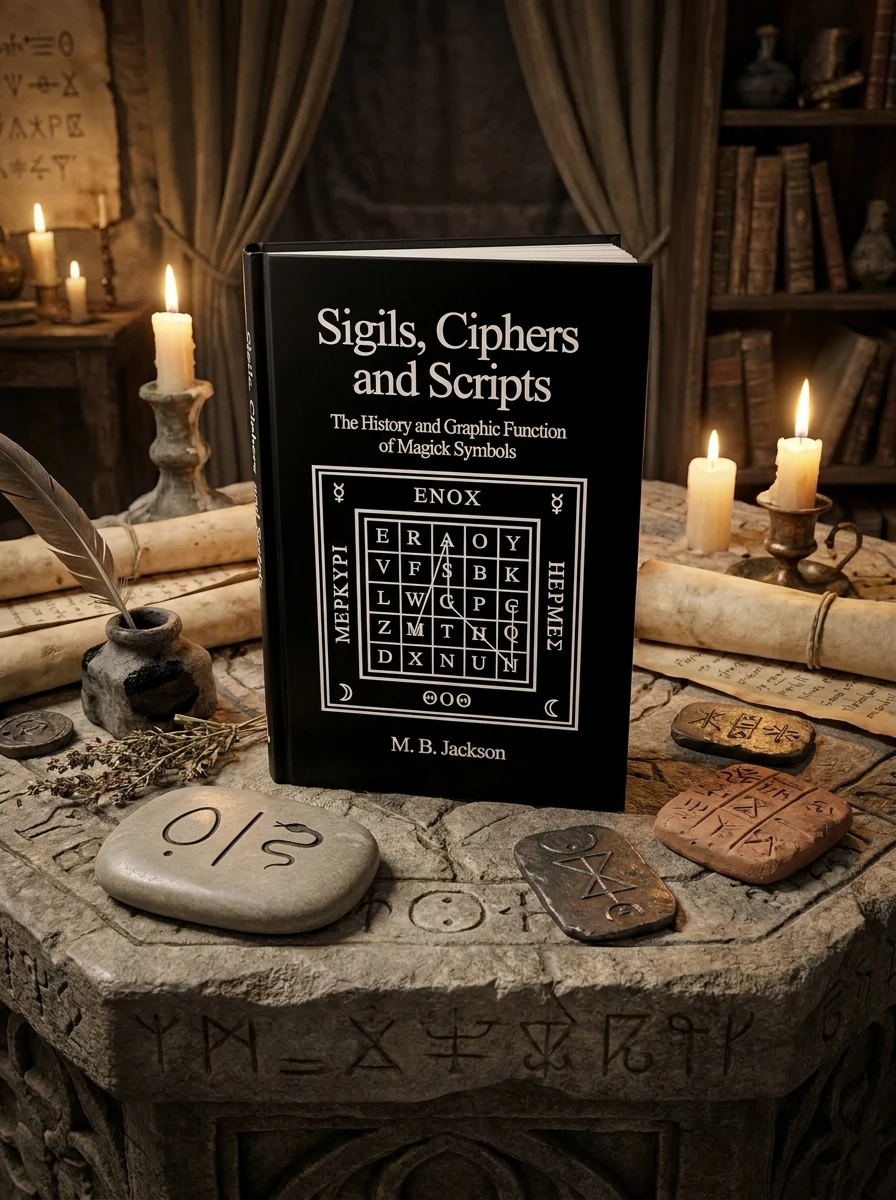
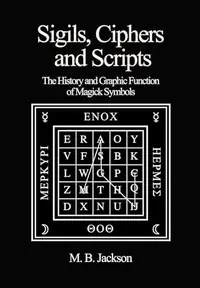
Sigils Ciphers and Scripts: History and Graphic Function of Magick Symbols
Stock reported in the catalog; fulfillment is confirmed with your request.
Uncover the primal origins of magical symbols, from ancient dots to powerful sigils.
This insightful volume delves into the foundational visual language of magic, tracing its lineage from the most elemental prehistoric markings—the primordial dot and the serpentine line. It posits these two ancient forms as the genesis of all subsequent symbolic systems, including sigils, ciphers, and written scripts. Jackson meticulously explores how these fundamental graphic elements evolved into the complex magical symbols used across various traditions, examining their historical development and their inherent energetic functions. Readers will gain a profound appreciation for the power embedded within these visual expressions of occult thought.
This work resides within the ceremonial magic tradition, specifically focusing on the graphic and historical foundations of occult symbolism. It bridges prehistoric visual language with modern esoteric practices by analyzing the evolution of magical signs.


📝 Description: Sigils Ciphers and Scripts: History and Graphic Function of Magick Symbols
💎 Expert review
📖 Why choose it
Why this book is worth reading
Readers who seek a deep, intellectual understanding of the visual grammar behind their magical practice will find this volume indispensable. By tracing the lineage from primordial dots and serpentine lines to complex sigils, Jackson provides a profound appreciation for the energetic functions embedded in these symbols. It is ideal for practitioners who wish to move beyond rote memorization and grasp the historical and graphic logic of magickal tools. This book empowers you to see the primal origins of your craft, offering clarity on how elemental markings evolved into powerful expressions of occult thought. It serves as a vital key for those wanting to connect their current rituals to ancient, foundational visual systems.
⭐ Reader reviews
Reader rating
Jackson’s text offers a compelling exploration of the genesis of magical symbols, effectively linking prehistoric markings to modern ceremonial practices. The analysis of the dot and line as fundamental graphic elements is intriguing and well-researched. However, this book may not suit readers seeking practical spell-casting instructions or immediate ritual applications. Those looking for straightforward, step-by-step guides to evocation or talisman creation might find the historical and theoretical focus too abstract. It is best appreciated by those interested in the scholarly underpinnings of symbolism rather than hands-on technique. While insightful, it requires a patience for graphic history that casual practitioners may lack.
❓ Frequently asked questions
📖 Who should read this
If you've ever pondered the deep origins of magical symbols or the hidden power within a sigil's design, this book is essential. It's perfect for practitioners seeking a deeper understanding of graphic magic, historians of esotericism, or anyone fascinated by the ancient roots of occult communication.
🎯 Key themes and symbolism
Origins of Magical Script
Explores the prehistoric roots of symbolic communication, starting with the fundamental concepts of the point (egg) and the line (serpent). It argues that these elementary forms are the progenitors of all complex magical writing and symbolic systems, revealing how profound meaning emerged from simple strokes.
Graphic Function of Symbols
Delves into the inherent energetic and communicative power of visual symbols. The book analyzes how specific graphic arrangements and their historical evolution contribute to their magical efficacy, moving beyond mere interpretation to understand their active role in occult practice and manifestation.
Evolution of Occult Alphabets
Traces the progression from basic proto-symbols to sophisticated magical alphabets and ciphers. It illustrates how ancient signs transformed into structured systems of occult communication, demonstrating a continuous lineage of symbolic development throughout esoteric history and varied magical traditions.
💬 Quotes from the book
“Every complex magical glyph, no matter how intricate, whispers of its primordial ancestors: the single point of emanation and the nascent line of creation.”
“The true potency of a sigil lies not merely in its intent, but in the archaic resonance of its visual architecture, a language older than words.”
📜 Historical context
📚 Glossary
- Sigil
- Ciphers
- Graphic Function
📔 Questions to reflect on
- Reflect on a common symbol you encounter daily. How might its graphic form connect to the 'dot' or 'line' archetypes discussed in the book?
- Consider a personal intention you wish to manifest. How would you begin to distill its essence into a purely graphic, non-representational symbol, drawing on the principles of elemental forms?
- In what ways do you believe the *visual* structure of written language itself carries a subtle magical or energetic charge, beyond its semantic meaning?
🏛 Books from this publisher Green Magic Publishing
All books from this publisher →
 82
82

 82
82
 86
86
You might also like
See more →

 91
91