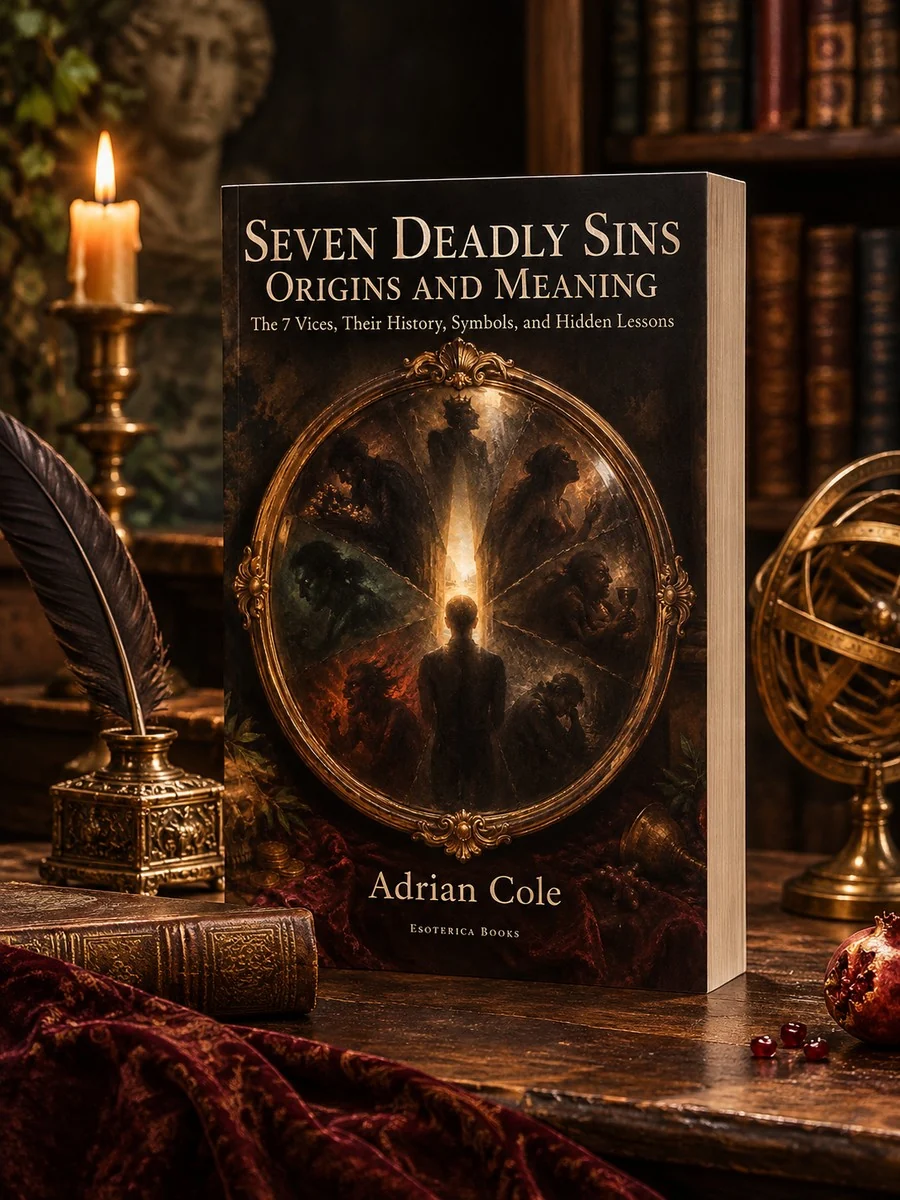
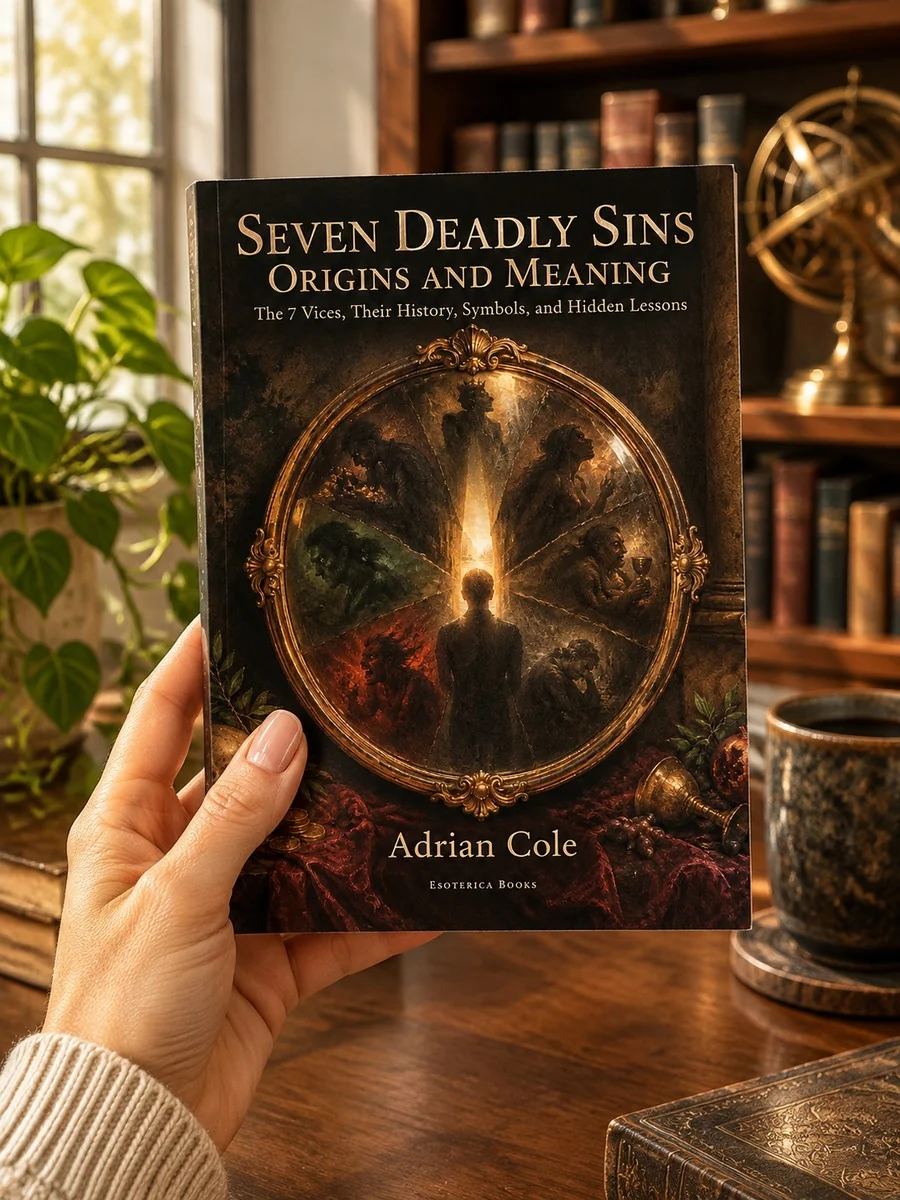
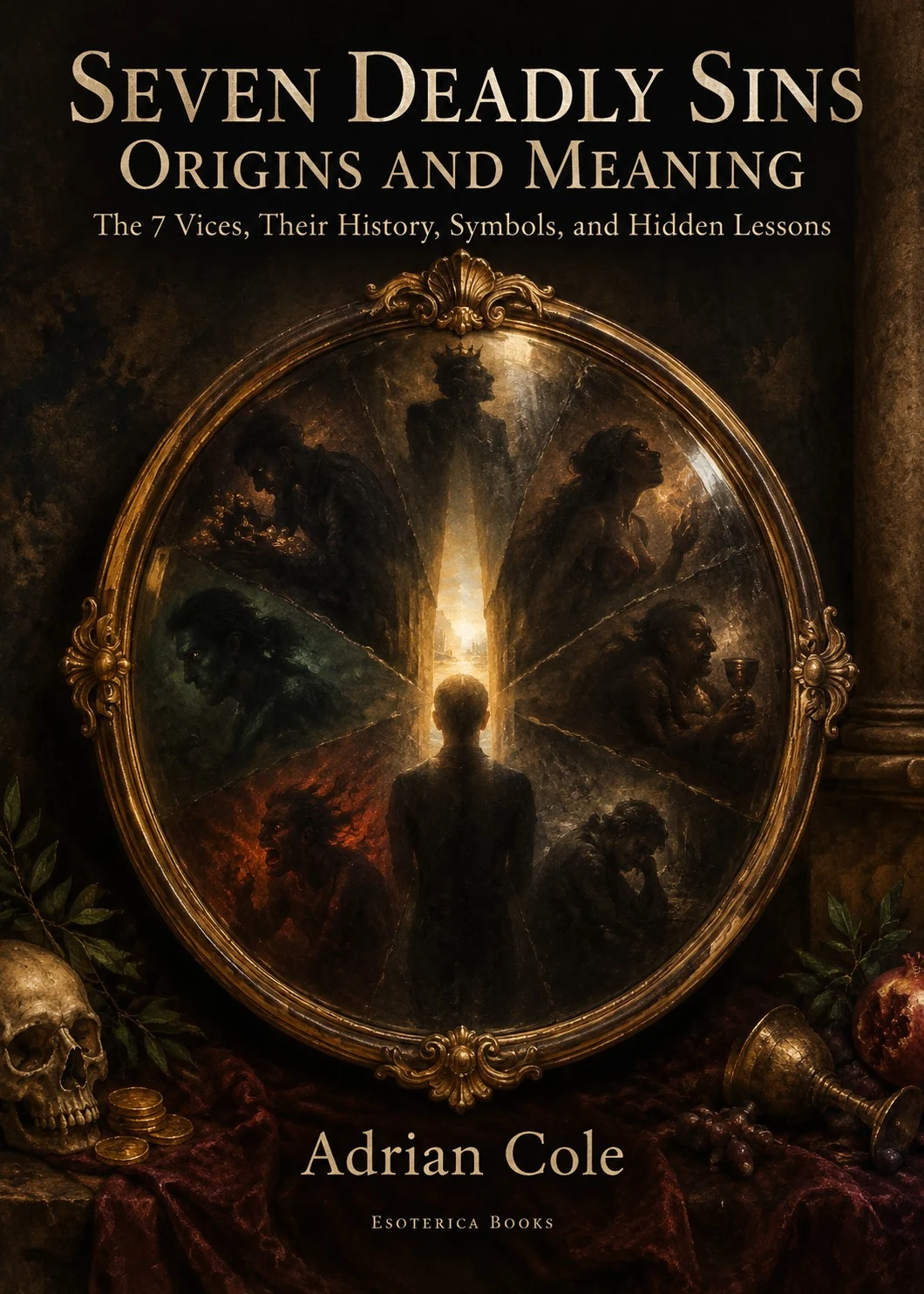
Seven Deadly Sins: Origins and Meaning
Discover the origins, symbolism, and everyday meaning of the seven deadly sins through a practical method of self-reflection.
Why did pride, greed, lust, envy, gluttony, wrath, and sloth become the seven deadly sins? This approachable guide explores their origins in Christian moral and monastic thought, their traditional symbolism, and their influence on how people understand human behavior. Adrian Cole introduces the original S.I.N.S. Method—See, Investigate, Name, Select—to help readers recognize familiar patterns, understand the desires behind them, and connect each vice with a corresponding virtue. Twelve chapters combine historical context, memorable examples, and guided exercises for thoughtful personal reflection.
The seven deadly sins belong to a Christian moral tradition that has influenced religious teaching, literature, visual art, and popular culture. Their symbolism offers a recognizable vocabulary for discussing temptation, character, responsibility, and the virtues traditionally set against destructive tendencies.


📝 Description: Seven Deadly Sins: Origins and Meaning
📖 Why choose it
Why this book is worth reading
The seven deadly sins are familiar names, but their meanings are often reduced to simple stereotypes. This book makes useful distinctions: anger is not automatically wrath, attraction is not automatically lust, and physical tiredness is not the historical meaning of sloth. Its greatest practical contribution is the S.I.N.S. Method, which connects traditional moral ideas with specific everyday decisions. The result is an accessible introduction that combines historical curiosity with a repeatable personal reflection exercise.
⭐ Reader reviews
Reader rating
Adrian Cole offers an accessible introduction to a subject that is often better known through popular references than through its religious and historical context. The strongest feature is the S.I.N.S. Method, which gives the discussion a practical structure: readers move from recognizing a behavior to investigating its meaning, naming its underlying motivation, and selecting a corresponding virtue. The individual chapters also promise useful distinctions, particularly between anger and wrath, attraction and lust, and self-respect and pride. The twelve-chapter progression is logical and approachable. One limitation: readers seeking detailed theological scholarship, extensive primary-source analysis, or comparisons across Christian denominations will find this guide introductory rather than academic.
❓ Frequently asked questions
📖 Who should read this
Ideal for curious beginners, readers interested in Christian symbolism, and anyone exploring the seven deadly sins through history, literature, religion, or everyday human behavior. Particularly suitable for readers who appreciate practical reflection alongside historical explanation.
🎯 Key themes and symbolism
Christian Moral Tradition
Seven Deadly Sins
Vice and Virtue
Self-Reflection Practice
📜 Historical context
📚 Glossary
- Seven Deadly Sins
- Seven Virtues
- Acedia
- Capital Vices
- S.I.N.S. Method
- Corresponding Virtue
📔 Questions to reflect on
- Which of the seven vices do I recognize most readily in my everyday decisions, and what specific situations tend to bring it to my attention?
- When I notice a recurring pattern, what desire, fear, or expectation might be influencing my response?
- Which corresponding virtue—humility, generosity, chastity, kindness, temperance, patience, or diligence—could guide one concrete choice I want to make differently?
📖 Read on the blog
✍️ More books by this author Adrian Cole



🏛 Books from this publisher Esoterica Books
All books from this publisher →



You might also like
See more →



Have a question about this item?
Ask about the edition, condition, delivery or anything else — we reply by email or phone, usually within a day.
