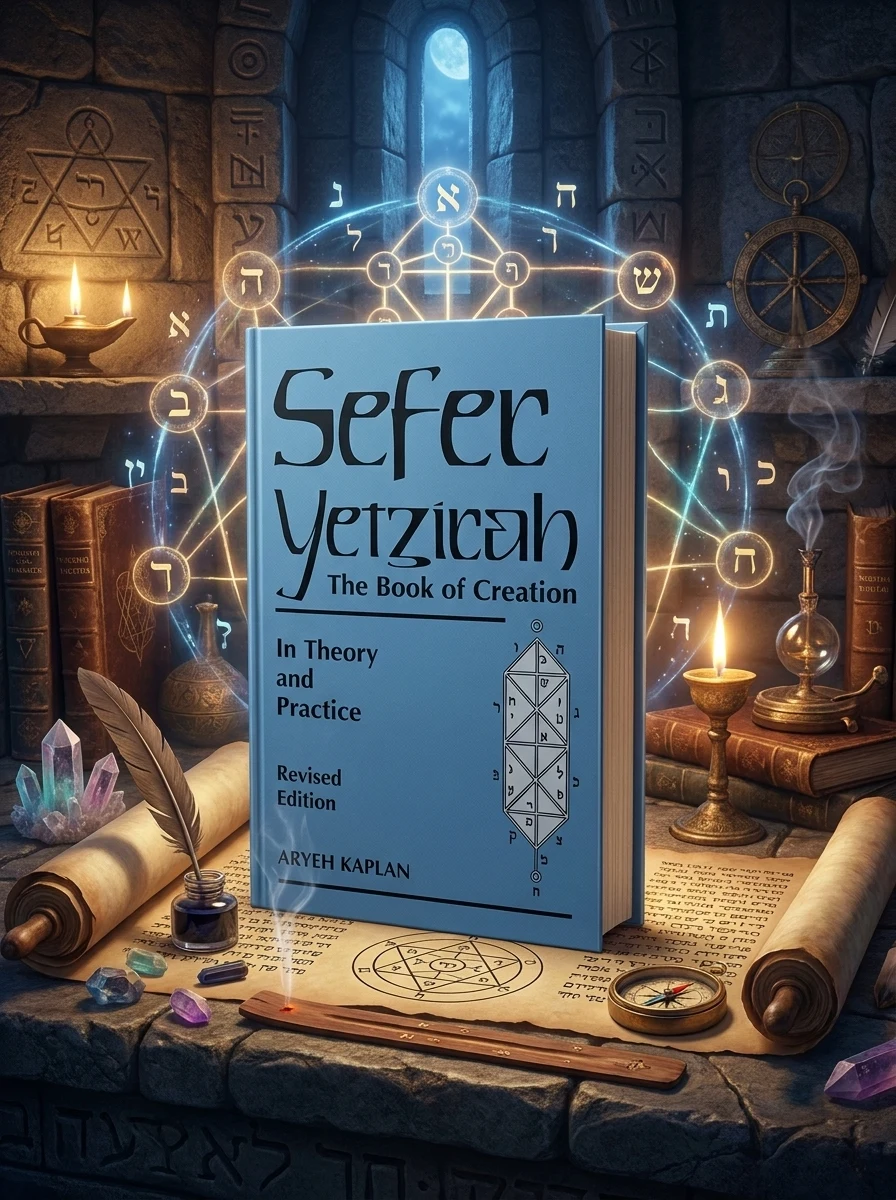
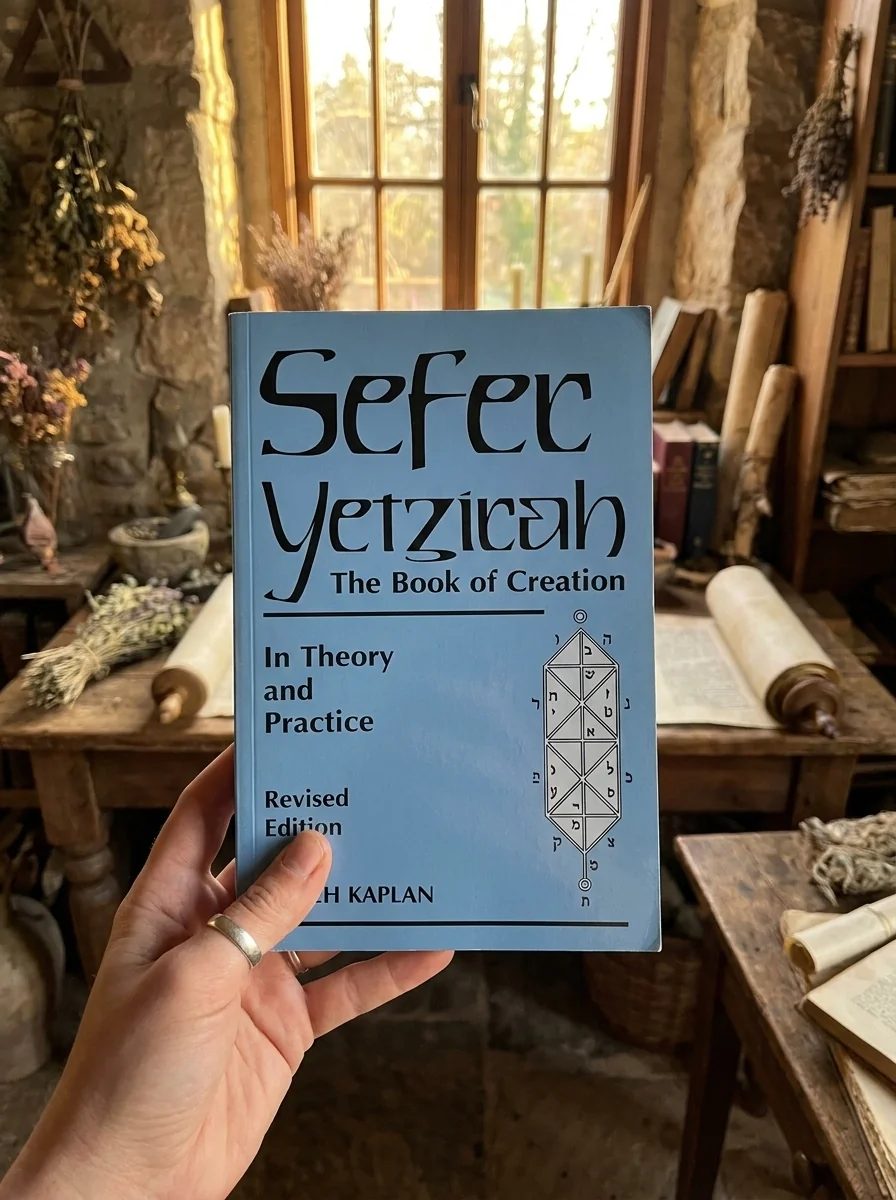
Sefer Yetzirah: The Book of Creation (Revised)
✍️ Kaplan, AryehA landmark translation and study of Kabbalah's oldest text, exploring its meditative and magical dimensions.
This volume provides access to the foundational text of Kabbalistic creation theory. Rabbi Aryeh Kaplan translates and analyzes four distinct historical versions of the work, including the Gra, Saadia, short, and long variants. Drawing on his dual background in physics and Jewish mysticism, Kaplan outlines practical meditative methods alongside theoretical models of the sefirot, angels, and cosmological structure. Extensive commentary and historical source lists offer deep context for serious researchers.
Rooted in ancient Jewish mystical traditions, this edition draws on historical versions, classic commentaries, and sacred texts like Ezekiel's vision. Rabbi Aryeh Kaplan, a prominent twentieth-century American Orthodox scholar, bridges traditional rabbinic knowledge with systematic analysis.


📝 Description: Sefer Yetzirah: The Book of Creation (Revised)
💎 Expert review
📖 Why choose it
Why this book is worth reading
Readers seeking to unlock ancient cosmic blueprints and profound mystical powers will find this revised edition an indispensable companion. Rabbi Aryeh Kaplan illuminates the theoretical depths of the Sefer Yetzirah, guiding you through spiritual domains, the Sefirot, and the essence of souls. This comprehensive journey is designed for those eager to engage with unique meditations that enhance concentration and develop latent telepathic abilities. If you are interested in influencing natural events through divine names and incantations, this text offers a direct path to understanding these magical implications. It is perfect for serious students of esotericism who desire a clear, instructional approach to the heart of creation and its intricate dynamics.
⭐ Reader reviews
Reader rating
Kaplan’s seminal work provides a rigorous yet accessible entry point into one of Judaism's most enigmatic texts. By unveiling meditative practices and magical implications, he transforms abstract theory into actionable spiritual technique. However, this book does not suit casual readers seeking simple narratives or those uninterested in the dense theoretical underpinnings of Kabbalah. It also may disappoint those looking for purely historical analysis without practical application. The focus on telepathic abilities and divine incantations requires a specific mindset to appreciate fully. Readers expecting light, introductory material might find the depth overwhelming, while those seeking practical esoteric tools will appreciate its clarity and comprehensive scope regarding spiritual domains.
❓ Frequently asked questions
📖 Who should read this
If you seek to understand the very wellsprings of Kabbalistic thought, unlock advanced meditative states, or explore the profound connection between consciousness and creation, this essential guide is for you. It offers a unique pathway to deepen your spiritual practice and perception.
🎯 Key themes and symbolism
Meditative Power Techniques
Far beyond mere theory, the Sefer Yetzirah functions as a practical manual for advanced meditative practices. Rabbi Kaplan reveals how specific visualizations, divine names, and symbolic incantations can strengthen inner focus, leading to enhanced concentration and potentially unlocking latent telepathic or telekinetic abilities within the practitioner.
Influencing Natural Events
The profound implications of the Sefer Yetzirah extend to the ability to subtly shape the material world. By understanding and applying its principles, initiates can learn to employ signs, incantations, and divine names to influence or even alter natural occurrences, bridging the gap between spiritual insight and tangible manifestation.
📜 Historical context
📚 Glossary
- Sefer Yetzirah
- Sefirot
- Kabbalah
📔 Questions to reflect on
- How might understanding the '231 gates' or the interplay of divine names shift your perception of language and its inherent power in creation?
- Consider the idea of 'meditation in five dimensions' as discussed in the text. How could such a practice expand your current understanding of consciousness and reality?
- If, as the text suggests, inner focus can influence external events, what ethical considerations arise regarding the development and use of such profound abilities?