US shipping Secure card payment Occult and esoteric books

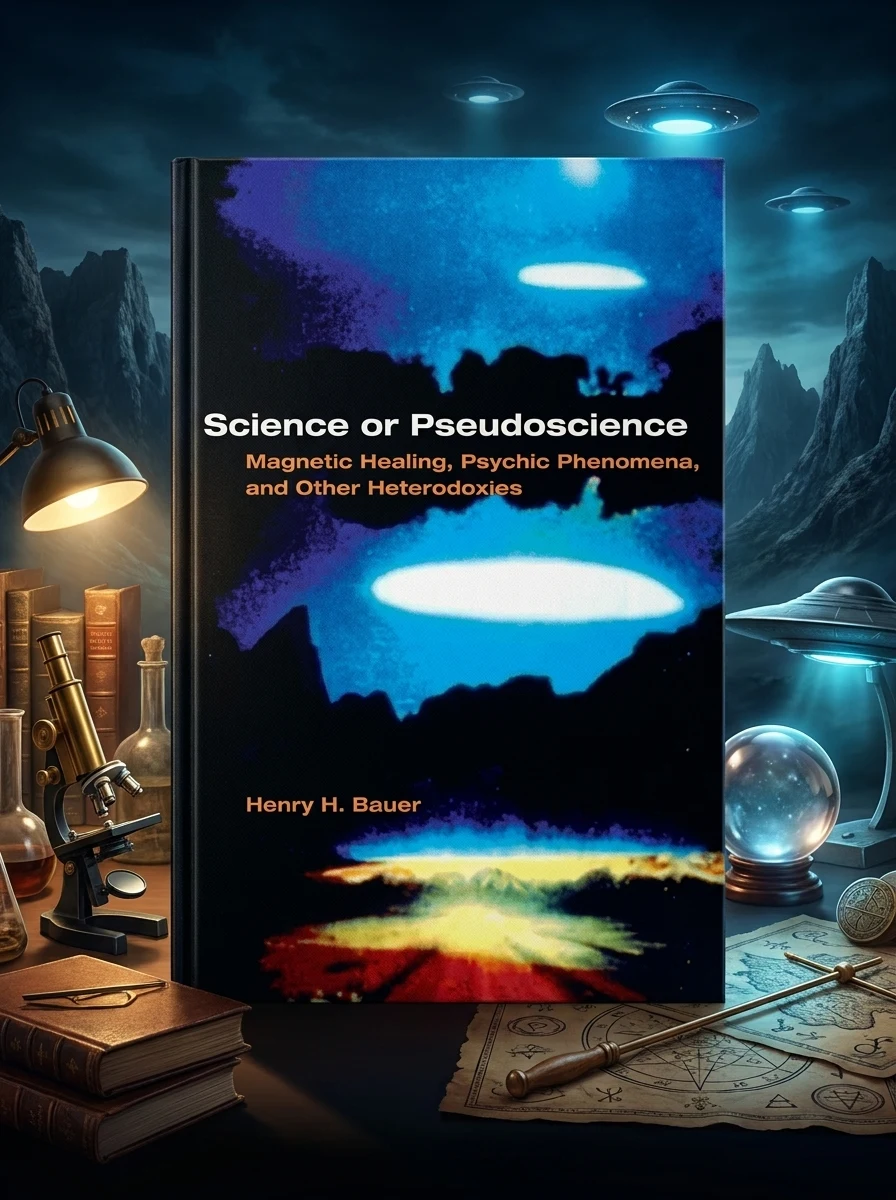
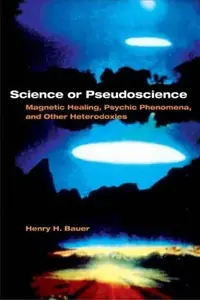
Science or Pseudoscience: Magnetic Healing, Psychic Phenomena, and Other Heterodoxies

Bauer, Henry H
Reader rating
4.5
(1 reviews) 139 sold
Availability to be confirmed

This edition can be ordered. No arrival date is confirmed.

📚 ABOUT THE BOOK

Unmasking the blurred lines between scientific dogma and unexplained wonders.

Henry Bauer challenges the conventional wisdom that rigidly separates scientific inquiry from what is often dismissed as "pseudoscience." He argues this boundary is far more fluid and deceptive than commonly believed. Bauer introduces "anomalistics" not as an antithesis, but as a concurrent path of investigation. While mainstream science tends to attribute unusual phenomena to error or deception, anomalists embrace these occurrences, even if they defy established theories or lack easy replication, viewing them as valuable subjects for further exploration often based on personal accounts.

Key themes
Shifting Scientific Divides Anomalistics as Parallel Inquiry Reevaluating Unexplained Phenomena
Historical context

This work emerges from the ongoing sociological and philosophical debate regarding the demarcation problem in science, challenging the rigid boundaries between established scientific inquiry and heterodox phenomena. It sits within the tradition of anomalistics, questioning the dogmatic separation of empirical evidence from unexplained personal accounts.


Difficulty
●● Moderate
Fans will love it
Carl Sagan's skeptical investigations into paranormal claims · Philip Kitcher's philosophy of science · James Randi's debunking of psychic fraud · Thomas Kuhn's studies on scientific paradigms
🕯️ Occult Philosophy
🏛 University of Illinois Press 📅 2004 📖 296 pages 📔 Paperback 📐 Paperback ISBN: 9780252072161
Fun fact
Henry Bauer delivers a thought-provoking analysis, expertly dissecting the often-dogmatic separation between scientific and anomalous inquiry. While it excels at illuminating the inherent complexities and biases in how knowledge is categorized, those seeking definitive proof or easy dismissal of "fringe" topics may find its nuanced perspective challenging. This book is a vital contribution to the philosophy of science, fostering critical thinking about our intellectual boundaries.

📝 Description: Science or Pseudoscience: Magnetic Healing, Psychic Phenomena, and Other Heterodoxies

Although science attempts to draw a clear line separating its endeavors from those of "pseudoscience," Henry Bauer reveals that the distinction is both equivocal and misleading. Setting aside science's snowy mantle of truth, Bauer presents pseudoscience--or anomalistics--not as the opposite of science but as something that develops parallel to it. Science assumes anomalies--that is, phenomena that contradict the existing store of knowledge--result from error, contamination, or even deception: in short, from bad research technique, at best, and deliberate hoax, at worst. Anomalists, by contrast, accept such occurrences, often on the basis of eyewitness claims, as important in themselves and worthy of further study, even if they contradict prevailing theories and offer a minimal degree of reproducibility. Science or Pseudoscience explores the diffuse and porous borders between mainstream and unorthodoxy. A scientist himself, Bauer points out that some phenomena that have turned out to be spurious, such as polywater and cold fusion, were for a time taken quite seriously by respected members of the scientific community. Other anomalies, such as ball lightning and meteorites, were dismissed by many scientists but turned out to be legitimate discoveries. Meanwhile, science has failed to prove that phenomena encompassed by the "big three" subjects in anomalistics--parapsychology, ufology, and cryptozoology (e.g., the Loch Ness monster)--do not exist. Rather, science theorizes that these phenomena cannot exist, since today's scientific laws seem to hold them to be impossible. Bauer discusses anomalies such as archaeoastronomy (e.g., Stonehenge) and bioelectromagnetics and looks at how institutional, commercial, and political interests influence borderline research in mainstream laboratories. He also draws a distinction between fraud and commercial huckstering, on the one hand, and genuine knowledge-seeking about matters ignored by the established intellectual disciplines, on the other. Bauer notes that the more closely anomalistic research approaches science, the more strenuously it is criticized by the establishment, often in terms of heresy. Reminding us that geniuses are cranks who happen to be right while cranks may be geniuses who happen to be wrong, Science or Pseudoscience offers a measured and thoughtful assessment of this volatile debate.

💎 Expert review

💎
Esoterica Books editorial team
Occult literature desk
Bauer presents a compelling argument that the line between science and pseudoscience is fluid, inviting readers to view 'anomalistics' as a valid investigative path. However, this text may not suit readers who prefer clear-cut distinctions between empirical fact and belief, or those seeking definitive proof for psychic phenomena rather than a methodological critique. It does not cater to those who wish to simply reinforce existing biases against heterodoxies without engaging with the complex epistemological questions raised. Readers expecting a straightforward debunking of paranormal claims may find its sympathetic approach toward personal accounts unsettling, while hardline positivists might dismiss its conclusions as too permissive regarding unreplicable data.
✓ EDITOR'S REVIEW

📖 Why choose it

📖

Why this book is worth reading

This book is essential for readers who find the rigid dichotomy between 'science' and 'pseudoscience' intellectually frustrating or scientifically inaccurate. It offers a refreshing perspective to those interested in the sociology of knowledge, suggesting that dismissing anomalous phenomena solely as error or deception limits our understanding of reality. Ideal for skeptics willing to reconsider their methods and believers seeking validation for their experiences without abandoning critical thought. It bridges the gap for anyone curious about how personal accounts contribute to scientific exploration, providing a nuanced framework for investigating the unexplained rather than simply rejecting it outright.

⭐ Reader reviews

The starting rating comes from the team Esoterica Books —
⭐ Esoterica editorial review Editorial rating 4.6/5
★★★★
For those who question rigid intellectual boundaries or hold an open mind toward unexplained phenomena, this book offers profound insights. If you're fascinated by the philosophy underpinning scientific acceptance and rejection, this is essential reading.

Reader rating

4.5
Based on 1 reviews
5
0
4
1
3
0
2
0
1
0
E
Esoterica Books editorial team

Bauer presents a compelling argument that the line between science and pseudoscience is fluid, inviting readers to view 'anomalistics' as a valid investigative path. However, this text may not suit readers who prefer clear-cut distinctions between empirical fact and belief, or those seeking definitive proof for psychic phenomena rather than a methodological critique. It does not cater to those who wish to simply reinforce existing biases against heterodoxies without engaging with the complex epistemological questions raised. Readers expecting a straightforward debunking of paranormal claims may find its sympathetic approach toward personal accounts unsettling, while hardline positivists might dismiss its conclusions as too permissive regarding unreplicable data.

❓ Frequently asked questions

Not at all. Bauer, a scientist himself, critically examines how science defines its own boundaries and what it chooses to exclude, rather than discrediting the scientific method entirely. It's an exploration of epistemic limits.
It refers to the study of unusual or unexplainable phenomena that don't align with current scientific understanding. Bauer proposes it as a legitimate, parallel field of inquiry, often relying on observations dismissed by mainstream science.

📖 Who should read this

For those who question rigid intellectual boundaries or hold an open mind toward unexplained phenomena, this book offers profound insights. If you're fascinated by the philosophy underpinning scientific acceptance and rejection, this is essential reading.

🎯 Key themes and symbolism

Shifting Scientific Divides

Bauer meticulously demonstrates that the supposed clear separation between established scientific consensus and dismissed "fringe" ideas is surprisingly permeable. He illustrates how phenomena once ridiculed can later gain acceptance, revealing the dynamic and often political nature of scientific categorization, challenging rigid definitions.

Anomalistics as Parallel Inquiry

This work presents "anomalistics" not as a rival to science, but as a complementary mode of investigation. It explores how those who study anomalies approach unusual events differently, valuing direct observation and experiences even when they contradict prevailing scientific frameworks, offering a distinct path to understanding.

Reevaluating Unexplained Phenomena

The book delves into the contrasting attitudes towards anomalies: mainstream science often attributes them to errors or hoaxes, while anomalists consider them significant in their own right. Bauer encourages a critical look at why certain phenomena are accepted or rejected, questioning the mechanisms of scientific gatekeeping.

💬 Quotes from the book

“The boundary between what we label 'science' and 'pseudoscience' is not a fixed, immutable line, but a shifting, often politically drawn frontier.”

“Where science dismisses an anomaly as error, anomalistics seeks to understand it as a phenomenon in its own right, irrespective of current theoretical frameworks.”

📜 Historical context

Bauer's work fits into a rich tradition examining the demarcation problem, echoing philosophers like Karl Popper and Thomas Kuhn who questioned scientific certainty. It offers a contemporary lens on historical instances where scientific consensus shifted, providing a critical look at how new ideas gain or lose legitimacy within established frameworks.

📚 Glossary

Anomalies
Pseudoscience
Anomalistics

📔 Questions to reflect on

  1. Reflect on a time you encountered a phenomenon that defied your understanding or established scientific explanation. How did you process it?
  2. How do your personal criteria for what constitutes 'science' align or diverge from the definitions presented in this book?
  3. If anomalistics were fully embraced as a legitimate field, how might it reshape our understanding of knowledge acquisition and scientific progress?

🏛 Books from this publisher University of Illinois Press

All books from this publisher →

You might also like

See more →