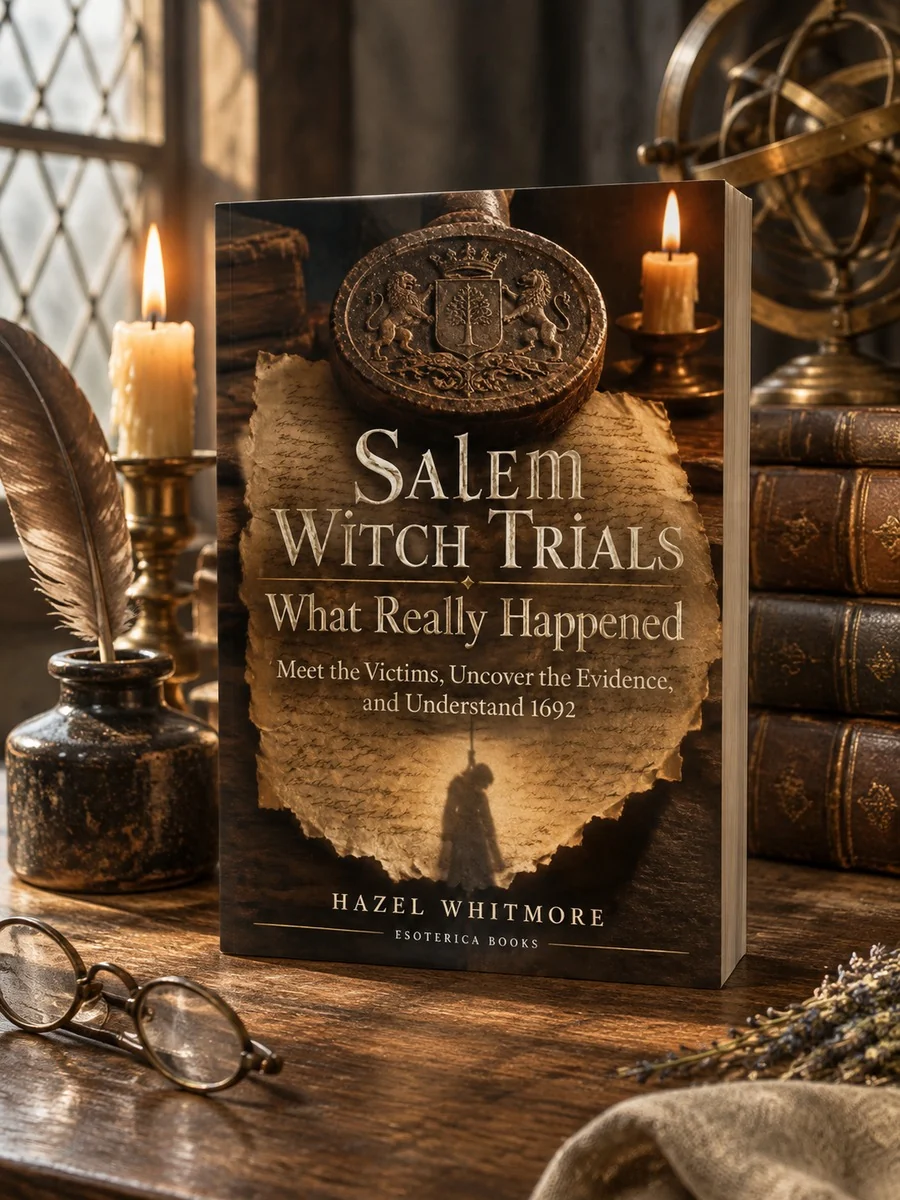
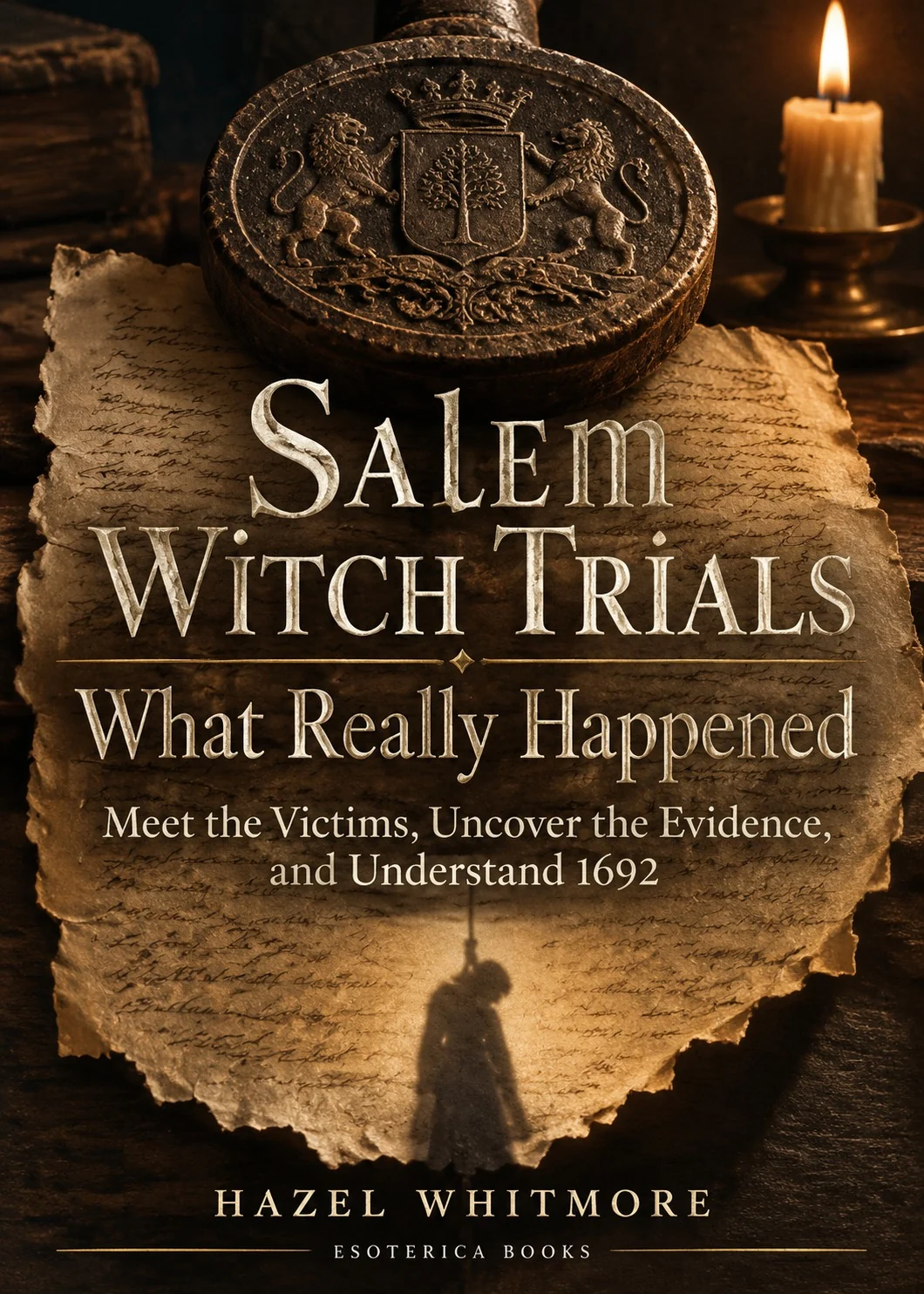
Salem Witch Trials: What Really Happened
Discover the people, evidence, and decisions behind the Salem Witch Trials—and separate history from legend.
What really happened during the Salem Witch Trials of 1692? Hazel Whitmore takes readers into colonial Massachusetts to explore the accusations, courtroom proceedings, executions, and aftermath of one of America's most remembered historical crises. Through the five-step Salem Evidence Path—Locate, Listen, Examine, Connect, and Understand—you will meet the accused, accusers, witnesses, and families while learning to distinguish surviving historical records from rumors and popular myths. From the first accusations to the final prisoner releases in 1693, this accessible guide brings the people and evidence behind Salem's story into focus.
The Salem Witch Trials emerged within a colonial New England community shaped by Puritan religious beliefs, local relationships, and contemporary understandings of witchcraft and supernatural danger. Understanding that cultural setting helps readers examine the accusations and proceedings in their historical context rather than through modern assumptions.


📝 Description: Salem Witch Trials: What Really Happened
📖 Why choose it
Why this book is worth reading
Salem's familiar images can make the story seem straightforward, but the surviving history is considerably more complicated. This book gives you a practical way to investigate it. You will learn to distinguish an accusation from proof, understand why spectral testimony mattered, recognize the difference between Salem Village and Salem Town, and follow the events through their legal aftermath. Its greatest appeal is the combination of human stories and a repeatable evidence-checking method that helps you approach historical claims with greater care.
⭐ Reader reviews
Reader rating
Whitmore's strongest editorial choice is the Salem Evidence Path, which turns a complicated historical episode into five manageable stages of investigation. The preview establishes a useful distinction between documented facts, contemporary beliefs, and unresolved questions. Its opening exercise is particularly effective: readers construct a timeline, identify three early accused women, and sort claims into evidence categories. The attention to Salem Village versus Salem Town and the explanation of spectral evidence also address common sources of confusion. The preview promises attention to individual victims and historical records, giving the project a meaningful human dimension. One limitation: readers seeking extensive archival transcriptions or detailed individual biographies may find this introductory approach too concise. Overall, it is a clear starting point for independent historical exploration.
❓ Frequently asked questions
📖 Who should read this
Ideal for readers curious about the Salem Witch Trials, colonial American history, historical mysteries, and the difference between documented events and popular portrayals. Especially suitable for beginners who want a clear introduction without needing prior knowledge of seventeenth-century history.
🎯 Key themes and symbolism
Historical Evidence
Colonial Community
Accusations and Justice
Victims and Memory
📜 Historical context
📚 Glossary
- Spectral Evidence
- Deposition
- Salem Village
- Accuser
- Afflicted
- Court of Oyer and Terminer
📔 Questions to reflect on
- How does distinguishing documented facts from contemporary beliefs change the way I understand the Salem Witch Trials?
- What can the experiences of the accused, accusers, witnesses, and families teach me about the responsibility involved in judging another person's actions?
- Why is it important to preserve the names and experiences of individual victims when remembering a major historical event?
📖 Read on the blog
✍️ More books by this author Hazel Whitmore



🏛 Books from this publisher Esoterica Books
All books from this publisher →


You might also like
See more →
Have a question about this item?
Ask about the edition, condition, delivery or anything else — we reply by email or phone, usually within a day.
