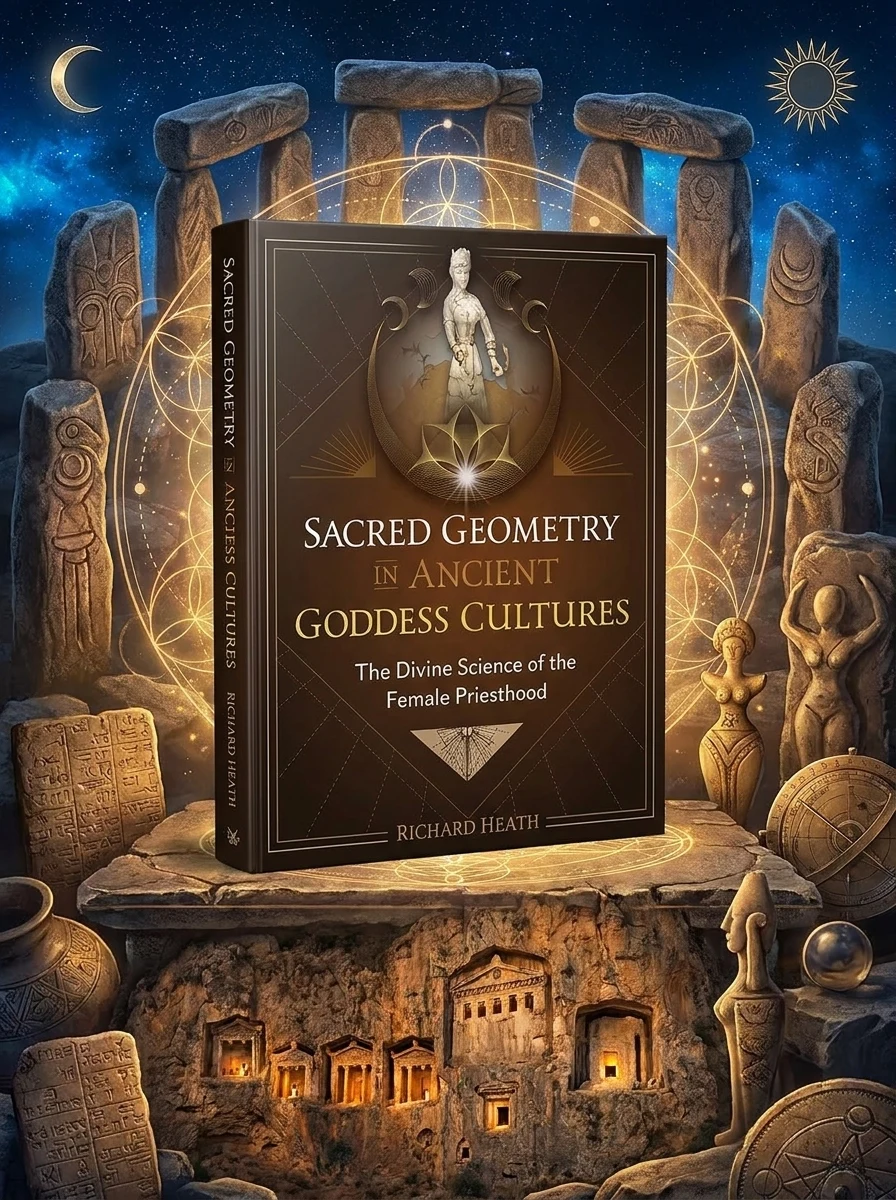
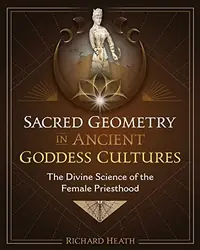
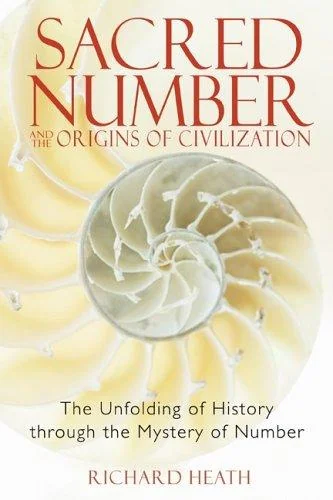
Sacred Geometry in Ancient Goddess Cultures: The Divine Science of the Female Priesthood
Heath, RichardThis edition can be ordered. No arrival date is confirmed.
Uncover the forgotten cosmic wisdom woven into the very fabric of ancient goddess cultures.
Before the rise of classical civilizations, powerful matrilineal societies flourished around the Mediterranean, guided by women who mastered celestial mechanics and sacred geometry. Richard Heath meticulously deciphers the profound cosmological insights these cultures, including those of Malta, Göbekli Tepe, and Minoan Crete, embedded within their megalithic structures and sacred sites. He illustrates how their 'astronomy of the goddesses' was not only an advanced science but also deeply spiritual, revealing a world where time, space, and divinity were intricately linked. This compelling work also traces how some of this ancient knowledge was subtly preserved through early Christian eras.
This work sits at the intersection of alternative archaeology and esoteric history, exploring the spiritual and scientific achievements of pre-classical Mediterranean matrilineal societies. It challenges conventional historical narratives by proposing that ancient goddess cultures possessed advanced cosmological knowledge embedded in their sacred architecture.


📝 Description: Sacred Geometry in Ancient Goddess Cultures: The Divine Science of the Female Priesthood
💎 Expert review
📖 Why choose it
Why this book is worth reading
Readers deeply interested in the roots of Western spirituality and the role of women in ancient history will find this book profoundly rewarding. It offers a compelling alternative view of human development, suggesting that early societies were guided by sophisticated female priesthoods who understood complex celestial mechanics. If you are curious about how sacred geometry might have served as a bridge between the divine and the material world, Heath’s meticulous analysis provides a fascinating lens. This is not just a history book but an invitation to reconsider the spiritual intelligence of our ancestors. You will gain insight into how time, space, and divinity were once woven together in ways that modern science has largely forgotten. It is essential for those seeking to reconnect with the feminine divine aspects of ancient wisdom traditions.
⭐ Reader reviews
Reader rating
Richard Heath presents a dense, academically rigorous argument that may overwhelm casual readers seeking light entertainment. The text demands patience and a willingness to engage with complex technical details regarding megalithic construction and astronomical alignments. It is not suited for those who prefer broad, sweeping historical narratives without supporting data or for skeptics entirely dismissive of non-mainstream archaeological theories. However, for dedicated students of esoteric history, the work is invaluable. It successfully bridges the gap between hard science and spiritual interpretation, though its specific focus on Malta and Göbekli Tepe may feel narrow to some. The editorial team should ensure readers understand this is a specialized study rather than a general overview.
❓ Frequently asked questions
📖 Who should read this
If you're drawn to the hidden histories of advanced ancient civilizations, the profound connections between spirituality and science, or the often-overlooked role of women in early societal development, this exploration into sacred geometry and goddess cultures is for you.
🎯 Key themes and symbolism
Sacred Science of Antiquity
This book unveils how ancient female priesthoods possessed a sophisticated grasp of astronomy and geometry. They meticulously observed celestial bodies, counting time and measuring distances, then encoded these profound discoveries within the very architecture of their temples and monuments, demonstrating a 'divine science' that predates known philosophical traditions.
Matrilineal Cultural Legacy
Explore the advanced societies of Malta, Göbekli Tepe, and Minoan Crete, which were led by women. Heath details how these cultures developed complex systems of understanding the cosmos, reflecting a societal structure where feminine wisdom held paramount importance, deeply influencing their spiritual and scientific endeavors.
Preservation and Transition
The text examines how elements of this ancient wisdom were discreetly maintained, even suggesting that early Christians in Cappadocia played a role in encoding these traditions within rock-cut churches. Furthermore, it analyzes Greek myths as narratives reflecting the significant societal shift from matriarchal to patriarchal systems, offering insight into a lost era.
💬 Quotes from the book
“Across millennia, the echoes of a sophisticated cosmic understanding whisper from stones, challenging our modern perceptions of ancient wisdom.”
“The grand temples and intricate carvings are not merely art; they are celestial maps, geometrical equations, a testament to priestesses who charted the heavens.”
📜 Historical context
📚 Glossary
- Matrilineal cultures
- Megalithic monuments
- Sacred Geometry
📔 Questions to reflect on
- How does envisioning ancient societies led by women, deeply connected to cosmic science, shift your understanding of historical progress and human potential?
- Consider the idea of knowledge being 'encoded' within physical structures. What implications does this have for how we seek and interpret historical truths today?
- Reflect on the transition from matriarchal to patriarchal systems as suggested by Greek myths. How might this shift have altered humanity's relationship with the divine and the natural world?
✍️ More books by this author Heath, Richard
All books by this author →

🏛 Books from this publisher Inner Traditions International
All books from this publisher →



You might also like
See more →




 91
91