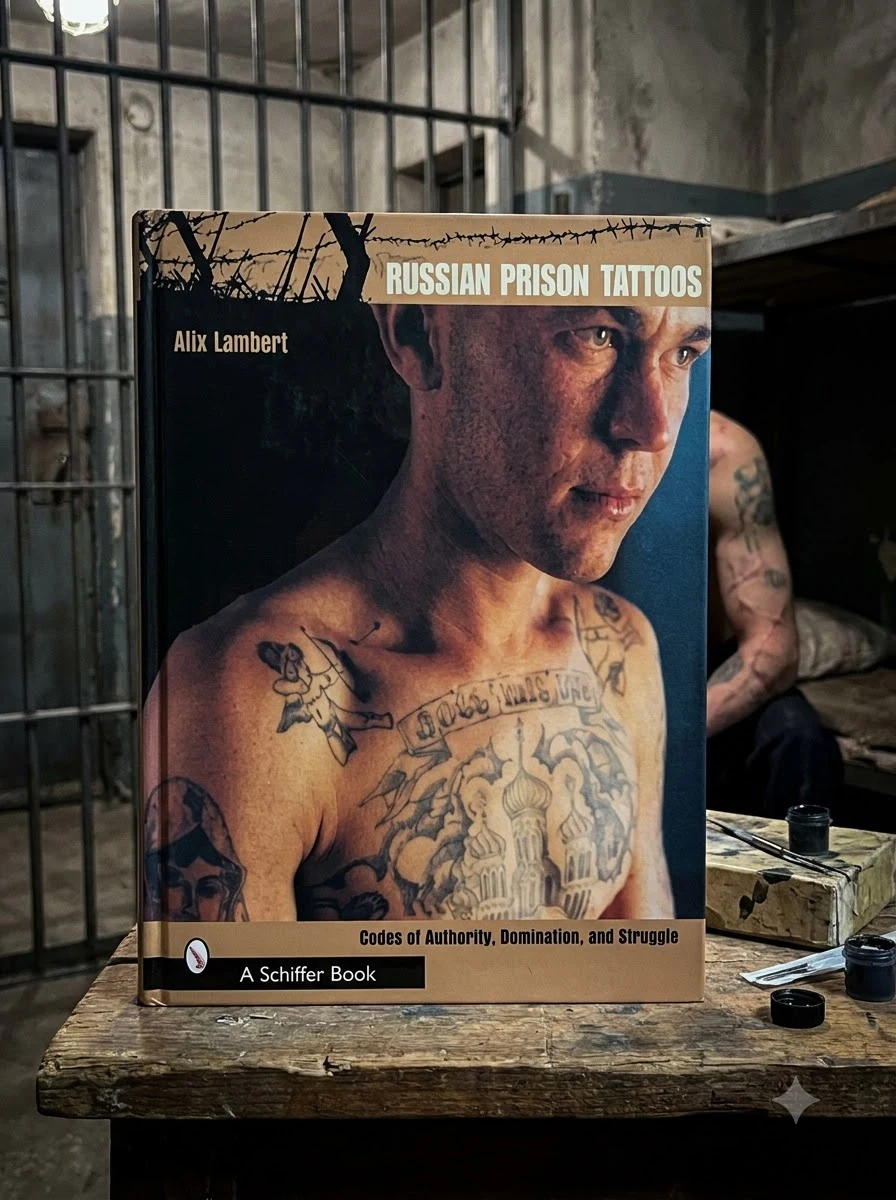


Russian Prison Tattoos: Codes of Authority, Domination, and Struggle
This edition can be ordered. No arrival date is confirmed.
Uncover the secret language etched onto the skin of Russian prisoners.
Delve into the fascinating, brutal world of Russian prison tattoos, where ink transcends mere decoration to become a complex system of power and defiance. Originally forced upon new inmates, these markings evolved into a clandestine visual language, meticulously charting an individual's rank, criminal history, and allegiances within the rigid, often violent, social order behind bars. Alix Lambert's work meticulously deciphers this hidden lexicon, revealing how these permanent symbols both enforced and challenged authority, acting as a profound record of human struggle and intricate social dynamics within a confined world.
This work situates itself within the niche of ethnographic studies regarding criminal subcultures and the semiotics of body modification. It bridges the gap between criminological observation and visual anthropology by decoding a specific, insular system of communication.


📝 Description: Russian Prison Tattoos: Codes of Authority, Domination, and Struggle
💎 Expert review
📖 Why choose it
Why this book is worth reading
This volume offers a profound glimpse into the intricate social mechanics of the Russian penal system, making it essential for those fascinated by non-verbal communication and power structures. Readers interested in how identity is constructed under extreme duress will find immense value here. It serves as a vital resource for sociologists, historians, and anyone studying the intersection of art, punishment, and authority. By revealing how ink became a language of defiance, it provides insight into human resilience and the complex hierarchies that emerge in isolation. It is not merely a catalog of images but a key to understanding a hidden world.
⭐ Reader reviews
Reader rating
Alix Lambert provides a meticulous decryption of Russian prison tattoos, treating them as a serious sociological text rather than mere curiosities. The author successfully charts the rigid social order enforced through these permanent markings. However, readers seeking sensationalized crime narratives or graphic violence for entertainment will find this dry and academic. It is strictly for those willing to engage with complex symbolic systems and historical context. The focus on authority and domination requires a patient reader who appreciates structural analysis over dramatic storytelling. It is an intellectual exercise in decoding silence.
❓ Frequently asked questions
📖 Who should read this
If you're drawn to the hidden meanings within subcultures, the stark realities of social control, or the profound power of non-verbal communication, this exploration into the visual lexicon of Russian prison life offers unparalleled insight. It's for anyone seeking to understand the deep human need for order, even in the most extreme environments.
🎯 Key themes and symbolism
Markings of Power
Explore how these indelible symbols weren't just personal statements but potent tools for establishing and enforcing authority within the prison walls. They dictated who held sway, who was subordinate, and the delicate balance of control among inmates, acting as a visible, unyielding code of conduct in an otherwise chaotic environment.
Clandestine Symbolism
Discover the intricate visual vocabulary developed by prisoners, where each tattoo conveyed specific, often dangerous, information. This secret language allowed inmates to communicate complex messages about their crimes, affiliations, and status, invisible to outsiders but deeply understood within their closed society, creating a coded autobiography.
Subterranean Social Order
Understand how tattoos served as a living blueprint of the prison's internal social structure. They delineated an inmate's place, from the highest-ranking 'thief-in-law' to the lowest pariah, creating a rigid, often unyielding, hierarchy that governed daily life and interactions within the penal system, often with violent consequences.
💬 Quotes from the book
“Each etched line on the body became a silent testament, a permanent ledger of defiance and belonging in a world stripped of both.”
“The skin, once a canvas for individual expression, was transformed into a living document of a collective, coercive history.”
📜 Historical context
📚 Glossary
- Vory v Zakone
- Kupola
- Zek
📔 Questions to reflect on
- How do societal structures, even oppressive ones, give rise to complex systems of communication and hierarchy, and what does this reveal about human adaptability?
- Consider the profound power of permanent body modification in defining identity when external freedoms are absent. What does this tell us about the human need for self-expression and status?
- In what ways do 'secret languages' or codes emerge in other subcultures or restricted environments you know, and how do they function similarly or differently to the prison tattoo system?
🏛 Books from this publisher Schiffer Publishing
All books from this publisher →
 89
89






You might also like
See more →
 91
91
 91
91

 91
91
 91
91