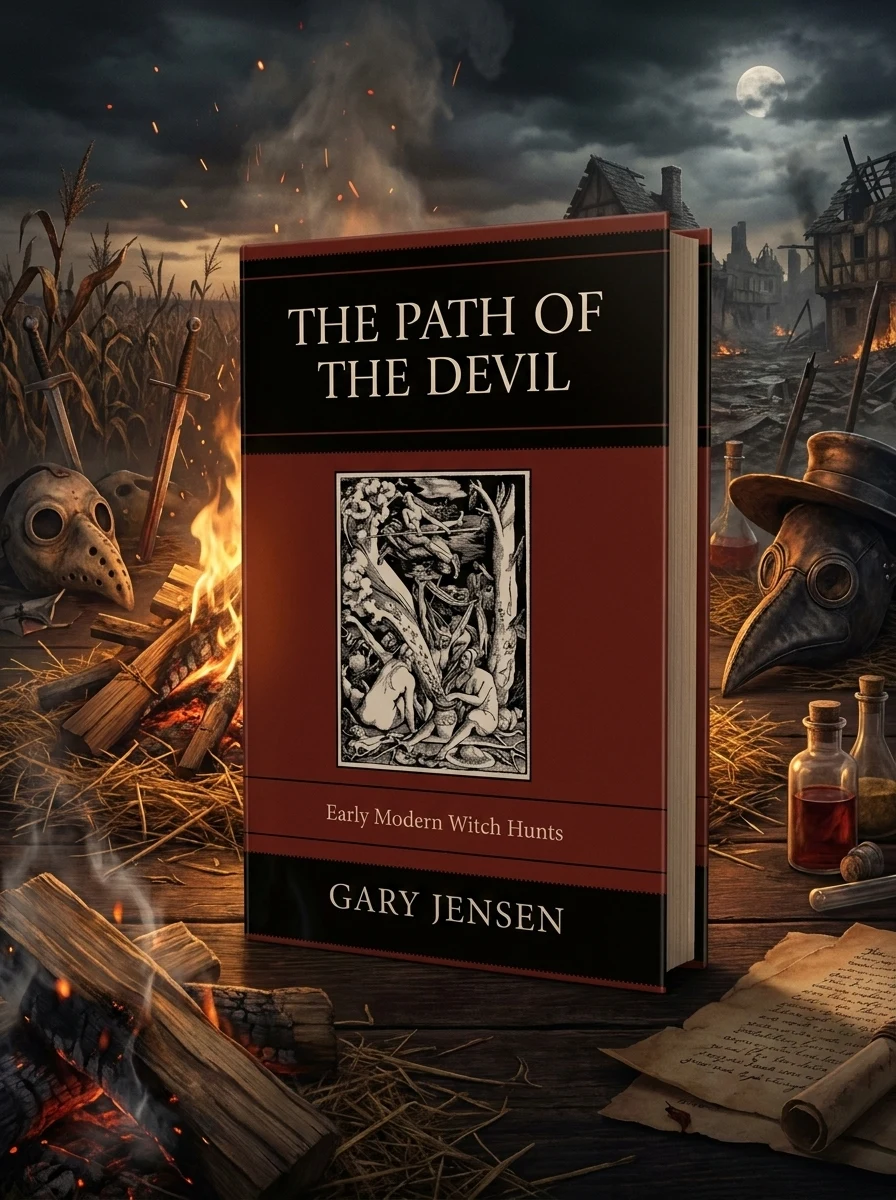

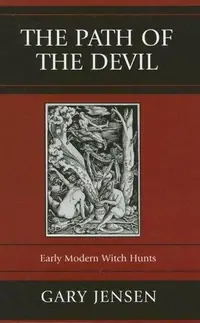
Path of the Devil: Early Modern Witch Hunts
Jensen, Gary 75
75
 Editorial score
How we rate
Editorial score
How we rate
Stock reported in the catalog; fulfillment is confirmed with your request.
Sociology meets sorcery in this stark analysis of how crisis fuels the hunt for witches.
Gary Jensen dismantles the romantic myths surrounding early modern witchcraft by applying rigorous sociological frameworks to historical records. He argues that witch hunts were not merely religious hysteria but complex social mechanisms driven by scapegoating and strategic persecution. By analyzing data on war, disease, and economic instability, Jensen reveals a counterintuitive truth: while warfare often suppresses these hunts, plague and financial ruin actively encourage them. The text culminates in a forensic examination of Salem, framing it as a 'perfect storm' of converging crises that mirrors the structural dynamics of modern moral panics, offering a chillingly logical explanation for irrational collective violence.
This work sits at the intersection of historical sociology and esoteric studies, deconstructing the early modern period's witch hunts through a lens of structural analysis rather than traditional religious or supernatural narrative.


📝 Description: Path of the Devil: Early Modern Witch Hunts
💎 Expert review
📖 Why choose it
Why this book is worth reading
Readers fascinated by the mechanics of collective hysteria and the sociological roots of persecution will find this text indispensable. It appeals to those weary of romanticized witchcraft narratives, offering instead a stark, evidence-based examination of how economic ruin and disease drive moral panics. By framing events like Salem as logical outcomes of converging crises rather than mere insanity, Jensen provides a chillingly rational explanation for irrational violence. This book is ideal for scholars and critical thinkers seeking to understand the structural dynamics of scapegoating in times of instability, bridging the gap between academic rigor and accessible historical insight.
⭐ Reader reviews
Reader rating
Jensen’s forensic approach is rigorous and compelling, successfully dismantling myths with sociological precision. However, this text does not suit readers seeking mystical insights, devotional content, or sympathetic portrayals of witchcraft as a spiritual practice. It is strictly an analytical deconstruction, potentially alienating those interested in the esoteric or magical aspects of the tradition. The focus on war, plague, and financial ruin may feel dry to casual history buffs, but it remains a vital, albeit cold, examination of how crisis fuels the hunt for scapegoats in early modern society.
❓ Frequently asked questions
📖 Who should read this
If you seek empirical, data-driven explanations for historical hysteria rather than spiritual validation, this text provides a critical, academic lens on the mechanics of mass persecution and social breakdown.
🎯 Key themes and symbolism
Sociological Scapegoating
Epidemic-Driven Persecution
Historical Pattern Recognition
💬 Quotes from the book
“Witch hunts functioned as sacrificial ceremonies that allowed communities to discharge their collective anxieties onto a designated scapegoat.”
“Economic hardship and epidemic disease act as accelerants for persecution, whereas war often inhibits the social cohesion required for such hunts.”
📜 Historical context
📚 Glossary
- Strategic Persecution
- Collective Behavior
- Perfect Storm
📔 Questions to reflect on
- How do modern societal crises mirror the scapegoating mechanisms described in early modern witch hunts?
- In what ways does economic insecurity influence community behavior toward marginalized groups today?
- Can collective fear ever be managed without the creation of an 'enemy'?
✍️ More books by this author Jensen, Gary
All books by this author →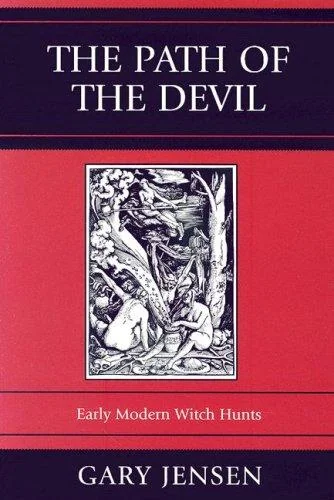
🏛 Books from this publisher Rowman & Littlefield Publishers
All books from this publisher →

 84
84
You might also like
See more →



 91
91