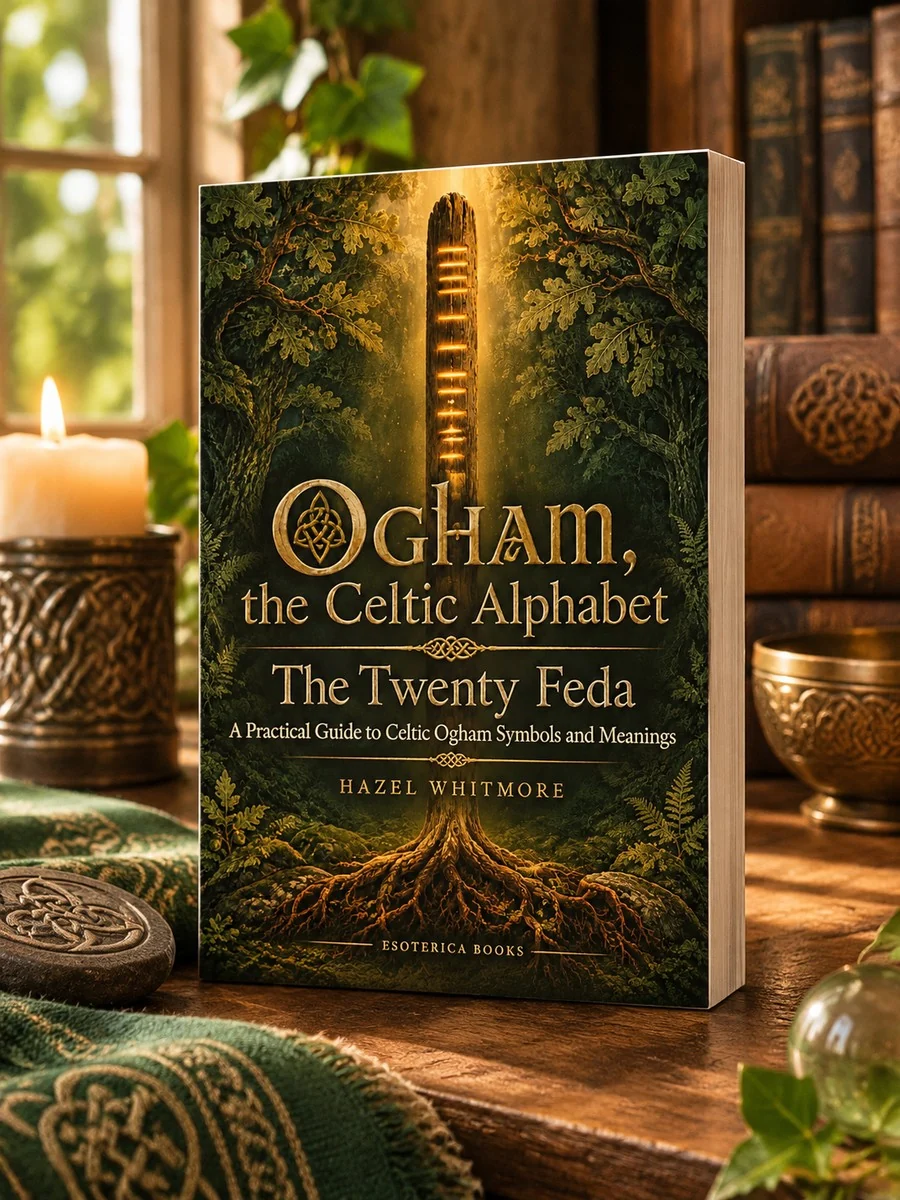
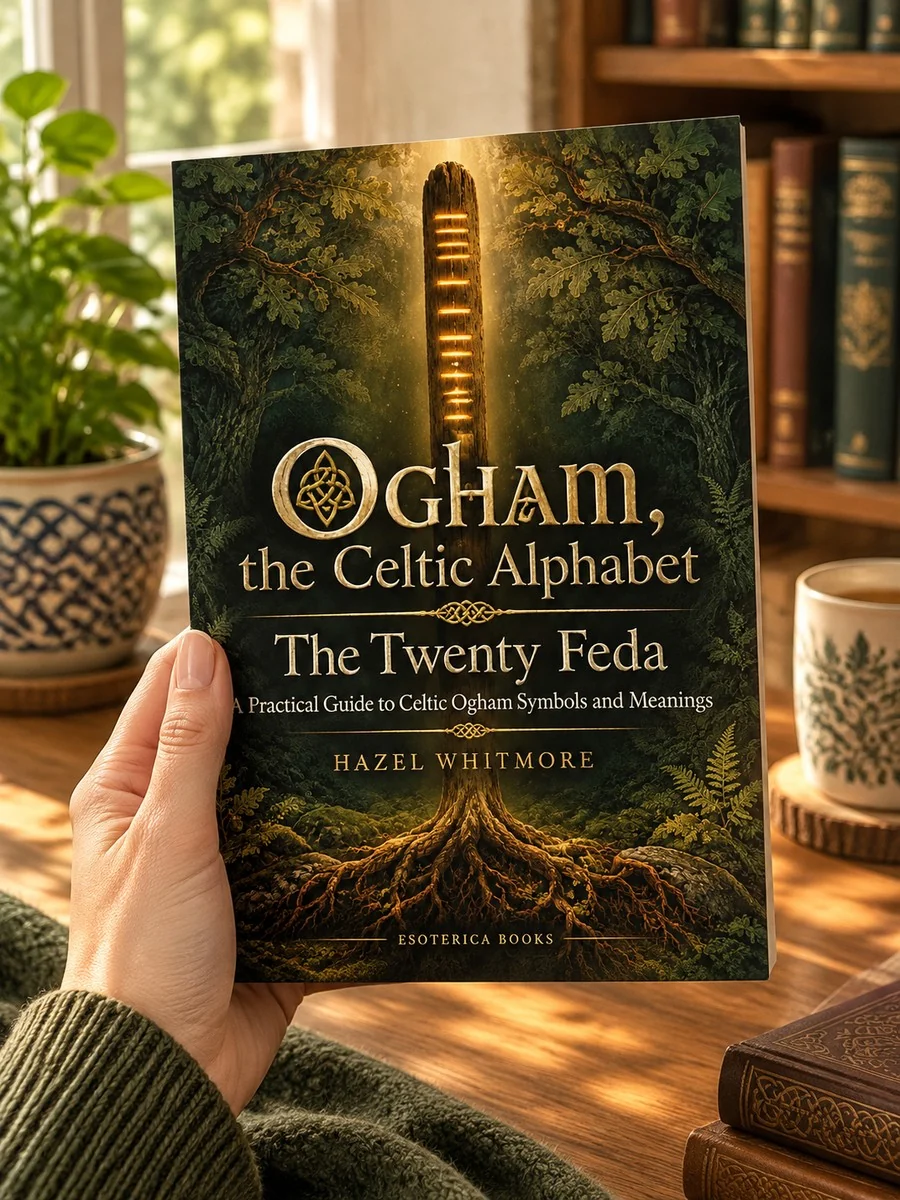
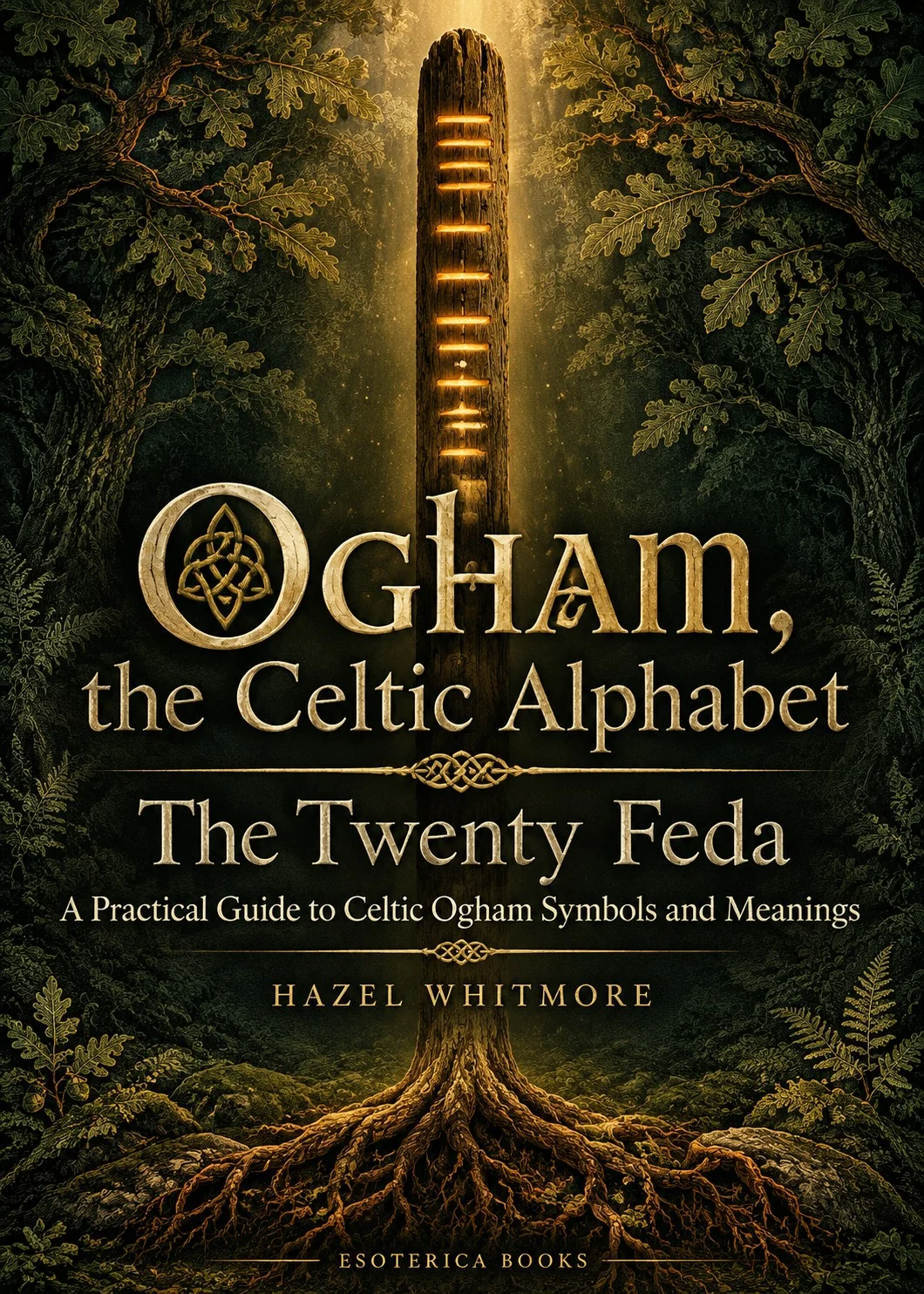
Ogham, the Celtic Alphabet: The Twenty Feda
Meet all twenty Ogham feda and turn their Celtic symbolism into a personal practice of thoughtful readings.
Discover Ogham, the distinctive Celtic writing system particularly associated with Ireland, and explore its twenty traditional letters as symbols for modern spiritual reflection. Hazel Whitmore introduces the F.E.D.A. Method—Find, Explore, Discern, Apply—to help you recognize every fid, understand its traditional associations, create your own wooden casting staves, and develop meaningful readings. Begin with a simple three-stave spread, progress through five practical layouts, explore symbolic combinations, and build a personal Ogham journal. Historical background and contemporary interpretation come together in an approachable, hands-on guide.
Ogham belongs to the early medieval Celtic cultural world, with a particularly strong historical connection to Ireland and inscriptions also found in Britain. Its original role as a writing system is distinct from the contemporary spiritual practice of interpreting its twenty feda through casting and reflection.


📝 Description: Ogham, the Celtic Alphabet: The Twenty Feda
📖 Why choose it
Why this book is worth reading
Ogham can seem intimidating when you first encounter its unfamiliar names, unusual strokes, and competing symbolic interpretations. This guide gives you a practical starting point instead of leaving you with a collection of disconnected meanings. You can begin with paper and a pen, learn the twenty feda systematically, and gradually create a physical set of casting staves. The combination of historical background, traditional associations, worked reading structures, and personal journaling makes the subject approachable without losing its cultural depth.
⭐ Reader reviews
Reader rating
Hazel Whitmore's guide offers a welcoming introduction to Ogham, combining historical orientation with a clearly organized contemporary casting practice. Its strongest feature is the F.E.D.A. Method, which gives beginners a memorable progression from recognizing individual letters to interpreting combinations and recording personal reflections. The practical chapters are particularly appealing: readers can begin with paper and a pen, then create their own twenty-stave set and experiment with five named spreads. The distinction between historical inscriptions and modern divination is an important editorial strength. One limitation is that experienced practitioners seeking advanced historical scholarship or extensive manuscript analysis may find the introductory treatment too basic. Overall, this is a practical beginner's handbook rather than an academic study.
❓ Frequently asked questions
📖 Who should read this
Ideal for beginners curious about the Ogham Celtic alphabet, Irish heritage, tree symbolism, and contemporary Celtic-inspired spiritual practice. Also suitable for readers who already recognize a few Ogham symbols but want a structured approach to casting, interpretation, and journaling.
🎯 Key themes and symbolism
Twenty Ogham Feda
Celtic Tree Lore
Symbolic Divination
Personal Reflection
📜 Historical context
📚 Glossary
- Ogham
- Feda
- Fid
- Aicmí
- Forfeda
- Casting
📔 Questions to reflect on
- Which of the twenty feda catches your attention most strongly, and what do its name, stroke pattern, and traditional associations suggest to you?
- When you perform a three-stave Past–Present–Emerging Possibility reading, what connections emerge between the individual symbols and the question you originally wrote?
- How might keeping a personal Ogham journal help you distinguish traditional symbol associations from the meanings and patterns you discover through your own practice?
📖 Read on the blog
✍️ More books by this author Hazel Whitmore
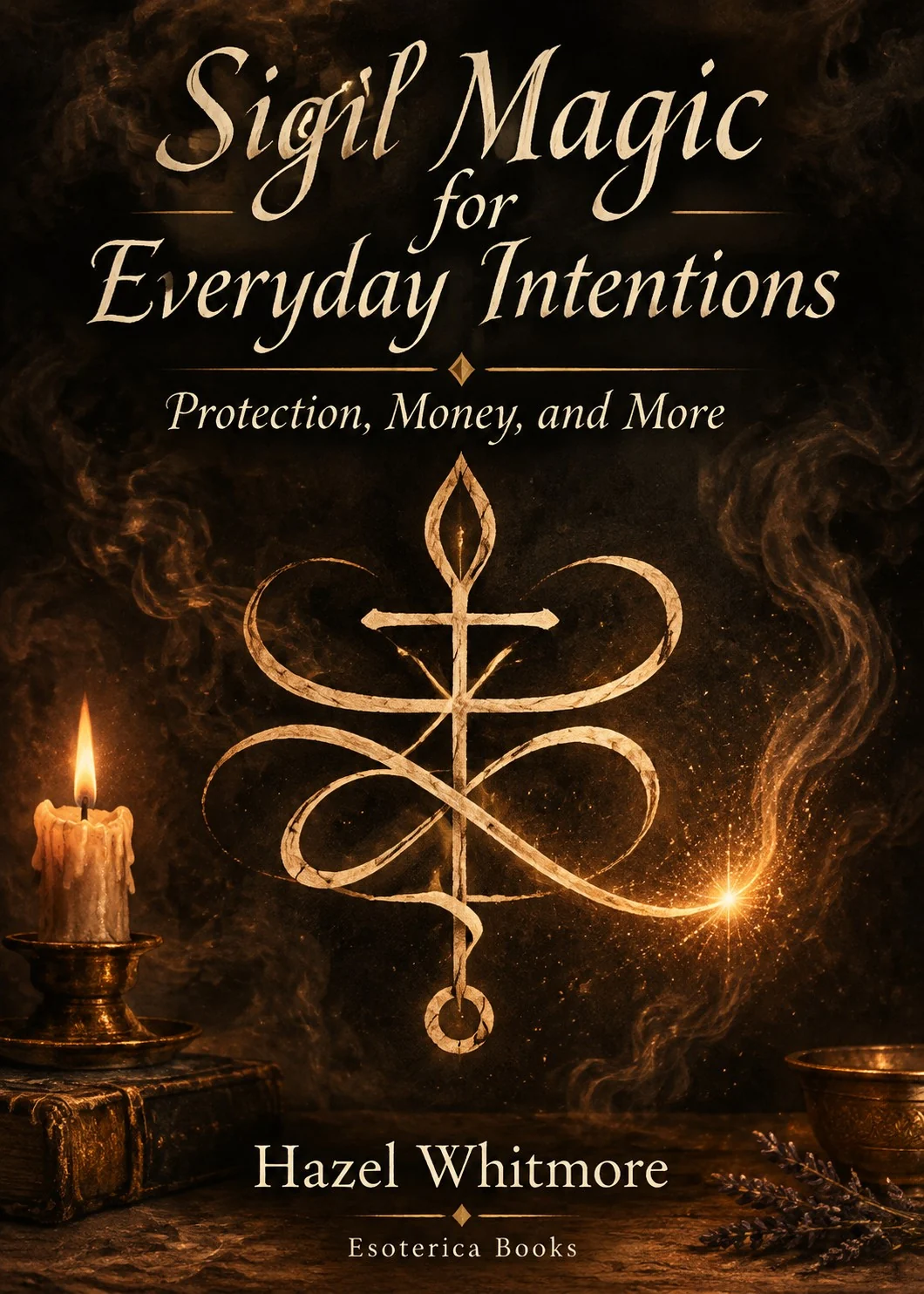


🏛 Books from this publisher Esoterica Books
All books from this publisher →

You might also like
See more →
Have a question about this item?
Ask about the edition, condition, delivery or anything else — we reply by email or phone, usually within a day.
