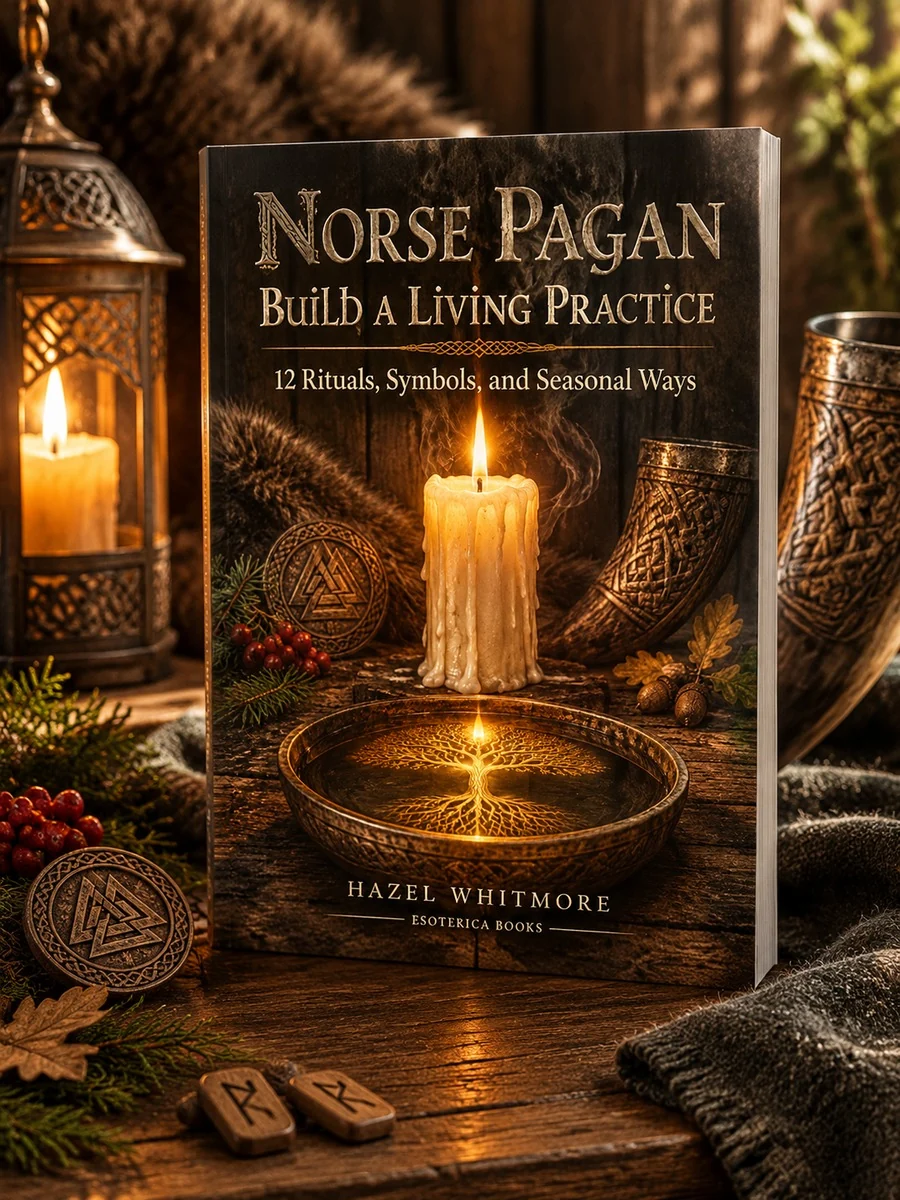
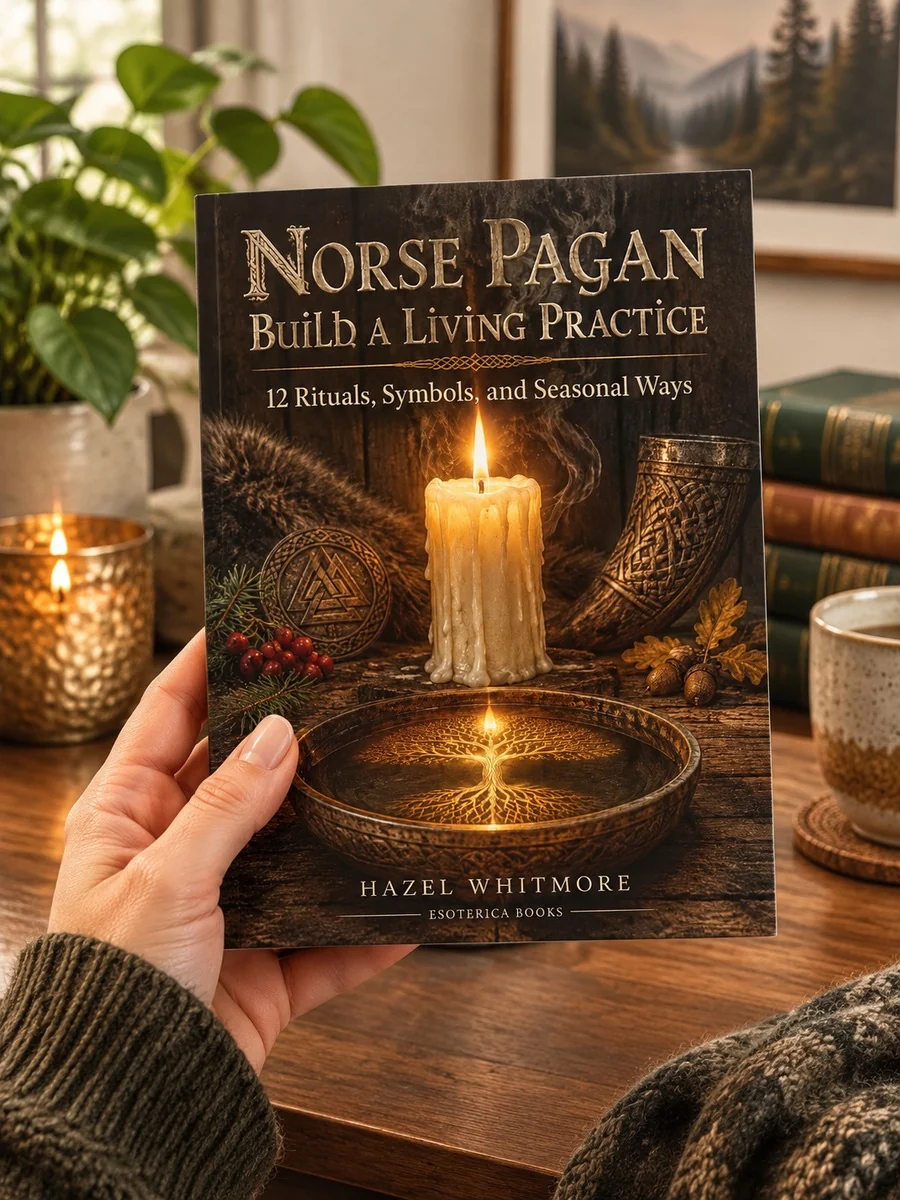
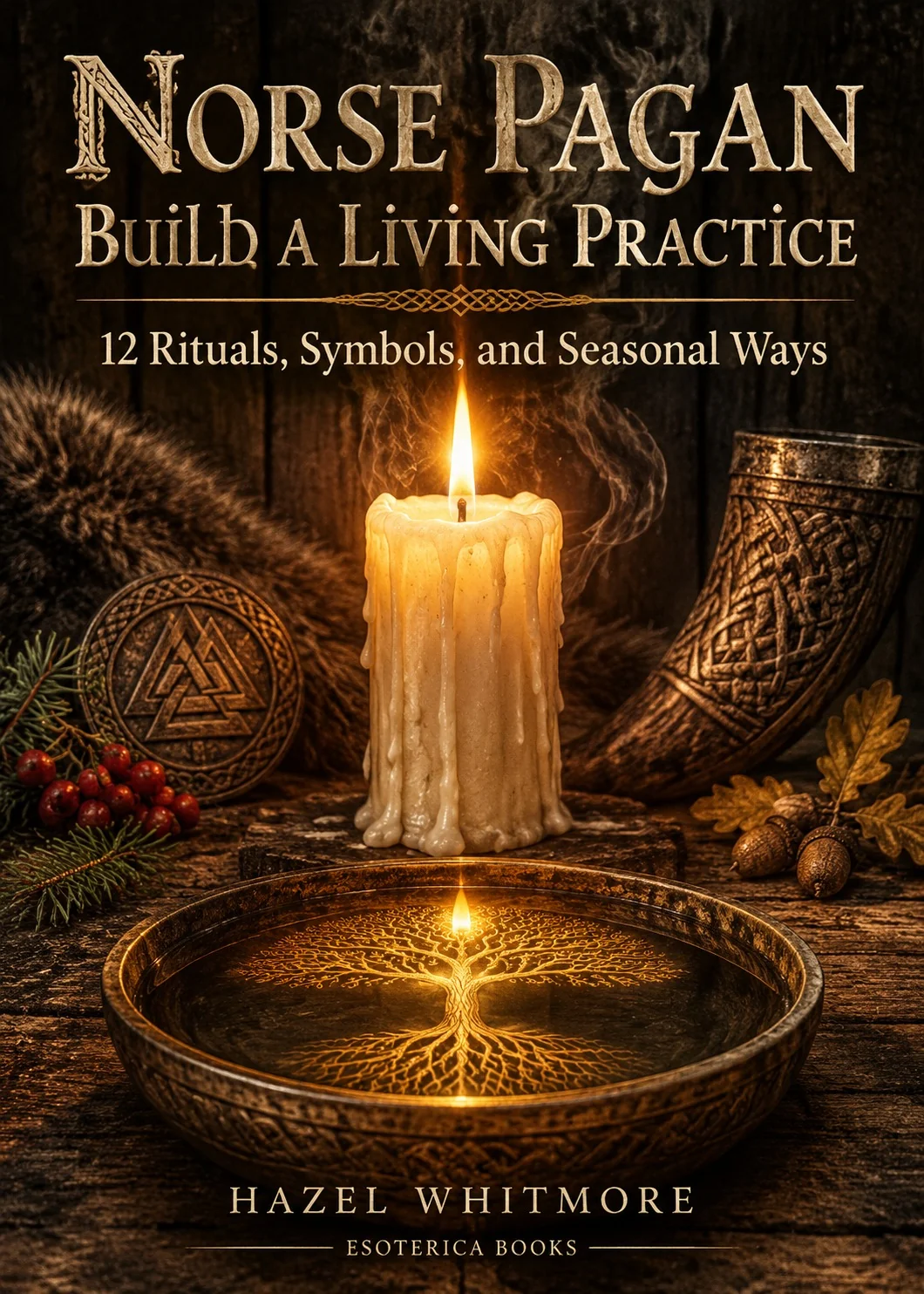
Norse Pagan: Build a Living Practice
Build your Norse Pagan practice from the first offering to a living hearth of your own.
Discover how to build a meaningful Norse Pagan practice with twelve practical rituals, an approachable introduction to the Norse gods, and a simple method for bringing devotion into everyday life. Hazel Whitmore guides beginners through the Aesir and Vanir, Norse mythology, recognizable symbols, home altars, offerings, prayers, ancestor remembrance, and seasonal celebrations. The five-step Hearth and Hall Method takes you from your first household offering to a personal devotional calendar, thoughtful study of the Eddas, and a sustainable modern Heathen practice.
Norse Paganism is a modern umbrella term for spiritual practices inspired by pre-Christian Norse religion and mythology. Heathenry is a commonly used name for contemporary Germanic Pagan practice, encompassing diverse communities and individual approaches to the gods, ancestors, rituals, and seasonal observances.


📝 Description: Norse Pagan: Build a Living Practice
📖 Why choose it
Why this book is worth reading
Starting a Norse Pagan practice can be confusing when different sources offer different explanations of the gods, symbols, and rituals. This book gives you a practical starting point instead of leaving you with a collection of unfamiliar names and ideas. You can follow a complete first-offering ceremony, arrange a modest altar, learn the stories behind recognizable symbols, and establish seasonal observances. Its greatest appeal is the connection between learning and doing: every stage contributes to a personal practice you can continue developing at home.
⭐ Reader reviews
Reader rating
Hazel Whitmore's guide has a clear beginner-friendly structure and an appealing emphasis on practical devotion. The Hearth and Hall Method gives readers five memorable stages, while the twelve chapters cover the essentials of a household practice: first offerings, deity introductions, altar arrangements, symbols, prayers, ancestors, seasonal celebrations, and runic reflection. The sample first-night ritual is particularly useful, providing concrete materials, timings, and suggested words rather than vague encouragement. We also appreciate the attention to differences among contemporary Heathens and the distinction between historical evidence and modern interpretation. One limitation: experienced practitioners seeking advanced historical research or detailed academic discussions of Norse religion may find the introductory treatment too basic.
❓ Frequently asked questions
📖 Who should read this
Ideal for beginners curious about Norse Paganism, readers exploring modern Heathenry, and anyone who wants practical guidance for creating a home altar, making offerings, learning Norse symbols, and observing seasonal traditions. Also suitable for mythology enthusiasts interested in developing a personal devotional practice.
🎯 Key themes and symbolism
Norse Gods
Home Altar Rituals
Seasonal Celebrations
Modern Heathen Practice
📜 Historical context
📚 Glossary
- Heathenry
- Blót
- Aesir and Vanir
- Yggdrasil
- Elder Futhark
- Eddas
📔 Questions to reflect on
- What first drew me toward Norse Paganism, and which stories, gods, or traditional values would I like to understand more deeply?
- What objects, words, and household traditions would make my altar feel welcoming and personally meaningful?
- How might I incorporate offerings, ancestor remembrance, and seasonal celebrations into a devotional rhythm that reflects my values?
📖 Read on the blog
✍️ More books by this author Hazel Whitmore
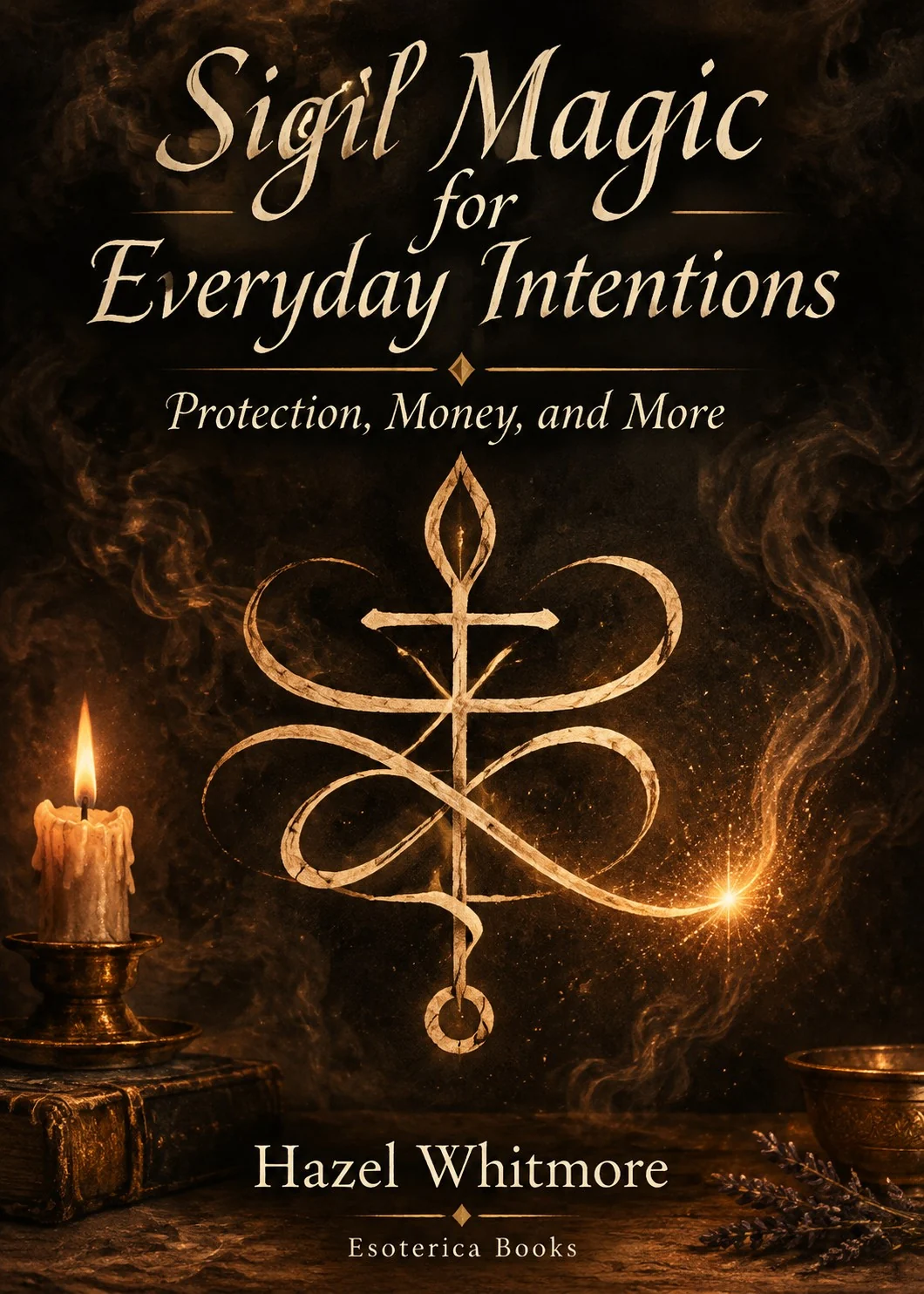


🏛 Books from this publisher Esoterica Books
All books from this publisher →
You might also like
See more →
Have a question about this item?
Ask about the edition, condition, delivery or anything else — we reply by email or phone, usually within a day.
