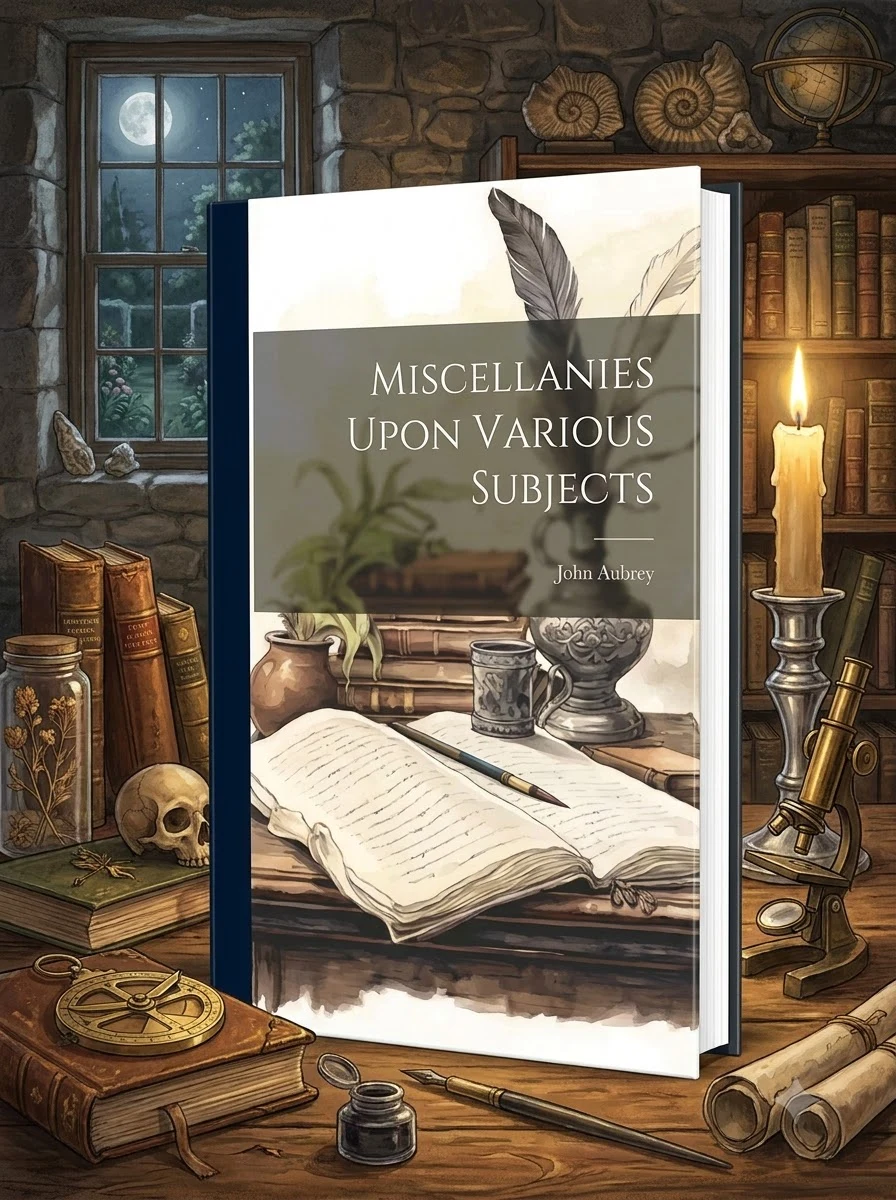
Miscellanies Upon Various Subjects
Aubrey, JohnStock reported in the catalog; fulfillment is confirmed with your request.
A 17th-century mind obsessed with the strange, the sacred, and the mundane secrets of daily life.
John Aubrey’s eccentric collection serves as a window into the intellectual chaos of the 1600s. He blends hard scientific observation with wild folklore, creating a tapestry of human experience that defies easy categorization. From literary critiques to ghost stories, Aubrey’s idiosyncratic voice captures the era’s fascination with the boundary between reason and superstition. This volume preserves his relentless curiosity, offering readers a raw, unpolished look at how early modern thinkers attempted to map the unknown territories of the human psyche and the natural world.
This work emerges from the intellectual chaos of the 1600s, capturing the era's intense fascination with the boundary between reason and superstition. It reflects the early modern attempt to map unknown territories of the human psyche and natural world through a lens of relentless curiosity.


📝 Description: Miscellanies Upon Various Subjects
💎 Expert review
📖 Why choose it
Why this book is worth reading
Readers fascinated by the eccentric mind of the seventeenth century will find immense value in this unpolished glimpse into historical thought. Those who enjoy the intersection of folklore, science, and daily life secrets will appreciate Aubrey’s raw documentation of human experience. It is ideal for scholars or hobbyists interested in how early modern thinkers navigated the strange, the sacred, and the mundane without rigid categorization. The book offers a unique window into an era where wild folklore coexisted with hard scientific observation, satisfying those who crave authenticity over polished narrative. It rewards patience with a tapestry of idiosyncratic voices that defy easy classification.
⭐ Reader reviews
Reader rating
This exceeded my expectations. It reads better in small doses — a chapter at a time with notes. Some chapters demand a slow, careful read, and that's exactly the point. Good, with the caveats above.
Arrived faster than expected and well packaged. Every rereading turns up something I missed. The material is presented clearly and the structure makes it easy to revisit key passages. The font runs small in the appendices. Still worth having on the shelf.
First purchase from this shop. It reads better in small doses — a chapter at a time with notes. I found myself reading passages aloud just to sit with them. Five stars from me.
Honestly wasn't sure what to expect, but I'm impressed. Some chapters demand a slow, careful read, and that's exactly the point. The print is clean and easy on the eyes for long sessions. Five stars from me.
Arrived faster than expected and well packaged. Some chapters demand a slow, careful read, and that's exactly the point. Not a light read, but far more accessible than I feared. I'd have loved an index, but that's on the original text. Still worth having on the shelf.
This volume serves as a vital artifact for understanding the eclectic nature of 17th-century inquiry, blending literary critique with ghost stories and scientific notes. However, it is not suited for readers seeking a cohesive narrative arc or polished prose; the idiosyncratic voice may feel disjointed to those preferring structured argumentation. It also disappoints those looking for purely occult instruction, as the content spans the mundane alongside the supernatural. While invaluable for tracing the evolution of esoteric thought and the mapping of the human psyche, casual readers expecting a traditional narrative will likely find the lack of polish and the chaotic blend of subjects frustrating rather than illuminating.
❓ Frequently asked questions
📖 Who should read this
Readers fascinated by the origins of ethnography and the history of science will find this essential. It appeals to those who enjoy fragmented narratives, folklore enthusiasts, and anyone interested in the intellectual transition from superstition to modern rationality.
🎯 Key themes and symbolism
Folklore and Scientific Inquiry
Aubrey does not separate myth from data. He records local legends with the same rigor as astronomical observations, suggesting that superstition is a valid lens for understanding cultural history. This approach bridges the gap between empirical science and the oral traditions of the common people, validating both as sources of truth.
The Architecture of Memory
The author treats memory as a physical space, mapping how individuals and societies retain knowledge. He explores the fragility of recollection and the ways anecdotes survive across generations. This thematic focus highlights the human desire to preserve identity against the erosion of time and forgetting.
Anecdotal History
Rather than grand narratives, Aubrey favors the intimate detail. He collects trivialities, gossip, and personal quirks to construct a more authentic portrait of his era. This method elevates the mundane, arguing that true history resides in the specific, often overlooked moments of individual lives rather than in official records.
💬 Quotes from the book
“A collection of observations on the habits and beliefs of the common folk, recorded with the precision of a naturalist.”
“The mind is a library where memories are stored in chaotic, non-linear shelves.”
📜 Historical context
📚 Glossary
- Polymath
- Miscellany
- Public Domain
📔 Questions to reflect on
- What local legends or superstitions have been passed down in your family, and how do they coexist with your modern worldview?
- If you were to catalog your own memories as a historical document, which trivial details would you include to define your era?
- How does the act of recording folklore preserve cultural identity compared to official historical records?
✍️ More books by this author Aubrey, John
All books by this author →
🏛 Books from this publisher Legare Street Press
All books from this publisher →
 83
83
 87
87
You might also like
See more →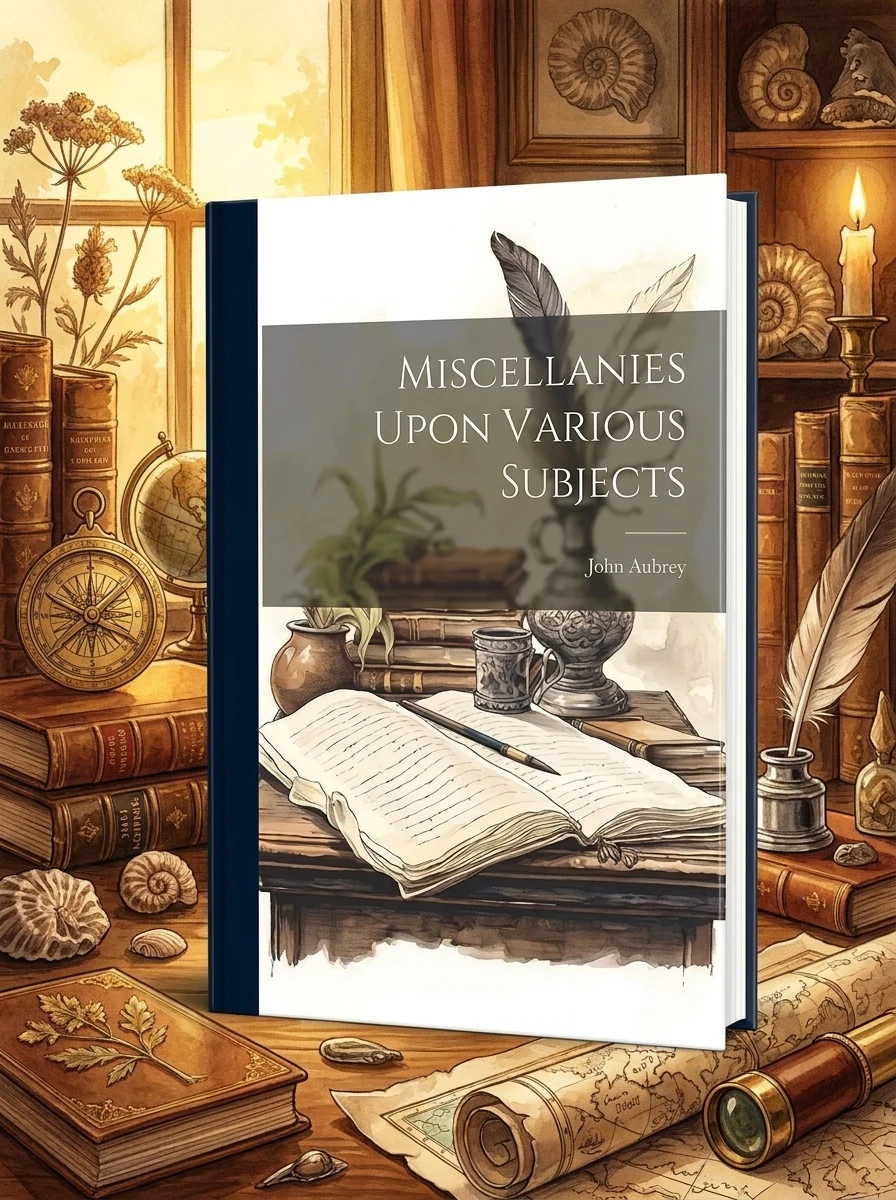 80
80