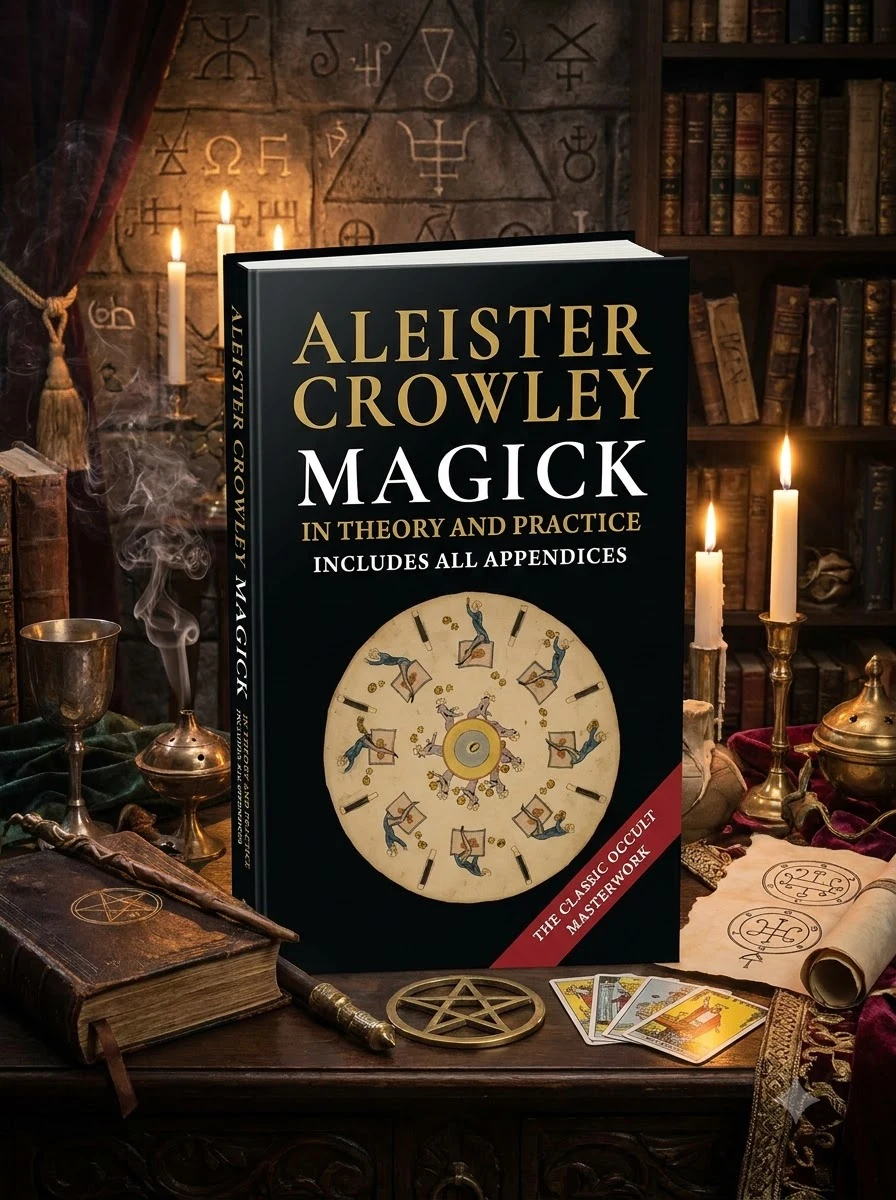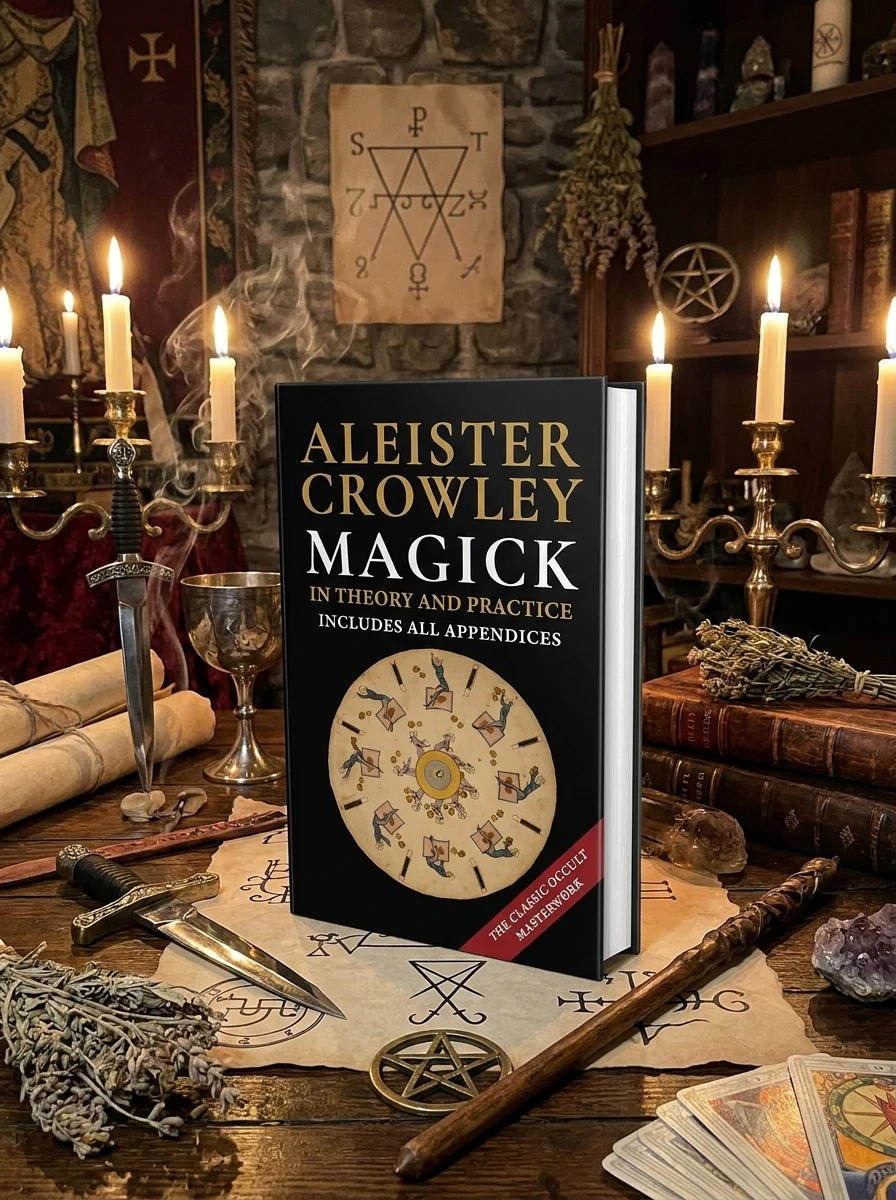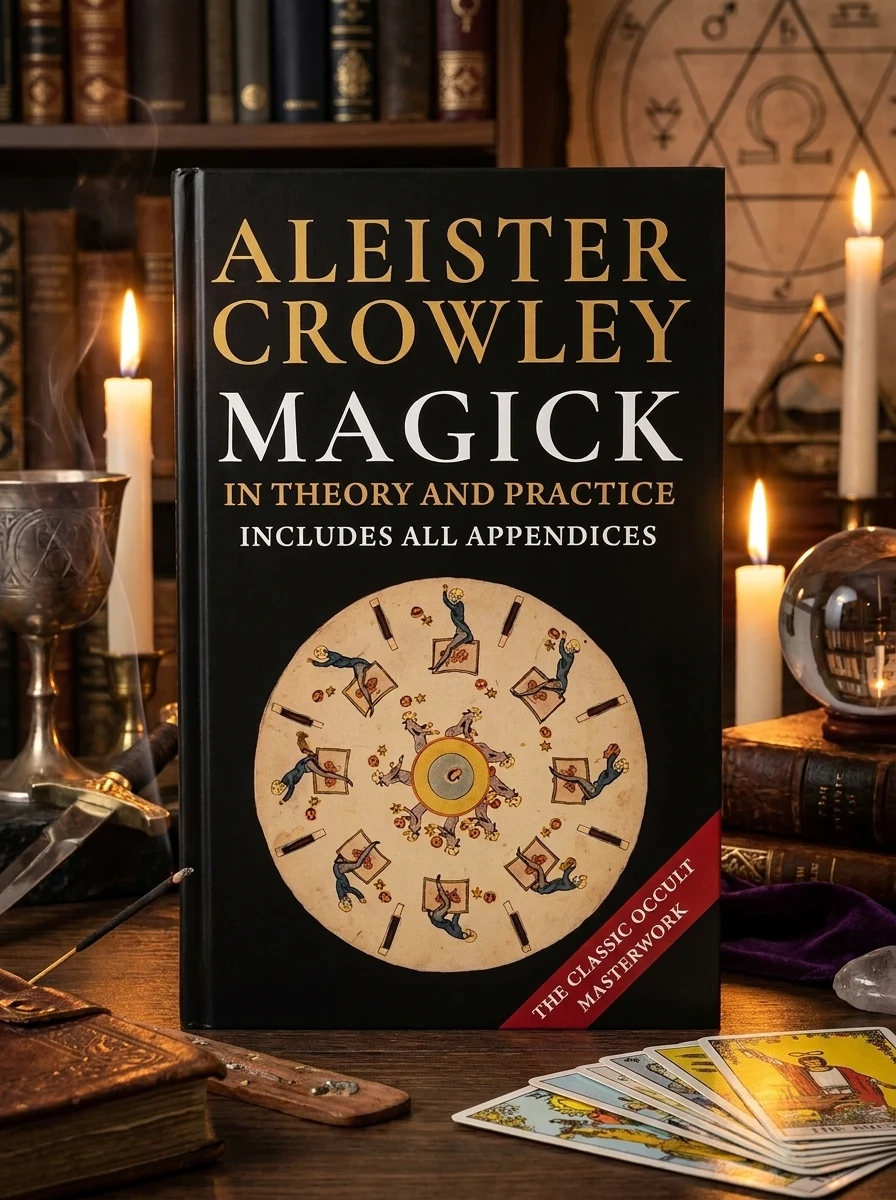
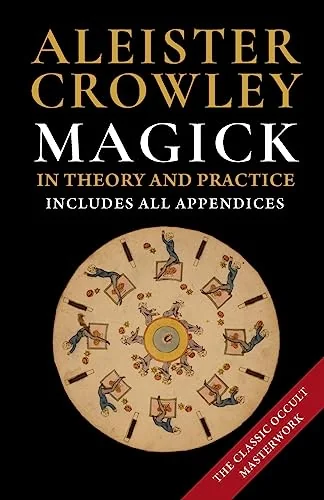
Magick in Theory and Practice
✍️ Crowley, AleisterThis edition from Echo Point Books & Media presents Crowley's core instructional manual on ceremonial magic. Drawing from his background as a British mystic and the founder of Thelema, Crowley defines magic as the act of causing change in conformity with Will through targeted thoughts and actions. The text guides practitioners through both the mental discipline and physical preparation required for ritual work. It includes step-by-step procedures for specific ceremonies such as the Star Ruby banishing, backed by extensive reference notes and bibliographical sources for deeper study.


📝 Description: Magick in Theory and Practice
💎 Expert review
📖 Why choose it
Why this book is worth reading
This essential volume is a must-read for anyone delving into contemporary occultism, Hermetic traditions, or magical studies. Crowley distills his vast knowledge, presenting magick as the deliberate exertion of will to effect change in reality. Despite his notorious public persona, this work offers a surprisingly accessible and comprehensive exploration of the subject. It is crucial for understanding his Thelemic philosophy and its profound impact on esoteric thought. Readers seeking to unveil the science and art of shaping reality through the power of their will will find this an invaluable guide to the theory and practice of their craft.
⭐ Reader reviews
Reader rating
Crowley presents magick as a systematic discipline, blending academic rigor with active practice in this cornerstone of esoteric literature. However, it is not for the faint-hearted or those seeking gentle spirituality. The text demands intellectual engagement with complex Hermetic concepts and may alienate readers uncomfortable with Crowley's controversial legacy or his unapologetic focus on willful power. It is best suited for serious students of occultism who appreciate direct, uncompromising instruction over comforting dogma. Those expecting a traditional religious guide will likely find its tone too stark and its assertions too bold for their tastes.
❓ Frequently asked questions
📖 Who should read this
If you seek a foundational understanding of modern magical theory and practice, or wish to explore the origins of Thelema, this book is indispensable. It offers a clear entry point into complex esoteric concepts, inviting both seasoned students and curious newcomers to engage with its profound teachings.
🎯 Key themes and symbolism
Defining Will-Driven Change
Crowley famously articulates magick not as supernatural trickery, but as the precise science and art of aligning one's actions and intentions with a desired outcome. This foundational concept redefines personal transformation and external influence as a direct consequence of focused will, moving beyond simplistic notions of the supernatural into a structured, intentional practice.
Foundations of Thelema
This text provides a deep dive into the practical applications and theoretical underpinnings of Thelema, the spiritual system Crowley himself founded. Readers gain insight into the principles that govern this unique esoteric path, which emphasizes individual will and the pursuit of one's True Will as central tenets of spiritual evolution and magical endeavor.
Theory Meets Practice
Unique to Crowley's approach is his dual role as both a profound scholar of esoteric traditions and an active, experienced practitioner. This book masterfully weaves together historical occult knowledge with personal insights and practical applications, offering a holistic understanding that transcends mere academic study or ungrounded speculation, providing a truly comprehensive guide.
📜 Historical context
📚 Glossary
- Magick
- Thelema
- Liber ABA, Book Four
📔 Questions to reflect on
- How might understanding "Magick as the Science and Art of causing Change to occur in conformity with Will" alter your perception of personal agency and influence in your daily life?
- Reflect on Crowley's dual role as scholar and practitioner. How does this blend of theoretical knowledge and practical experience enhance the authority and depth of his teachings compared to purely academic or experiential works?
- Consider Crowley's "diabolical image" versus his aim for an "accessible" text. What is the impact of an author's reputation on the reception and interpretation of their work, and how do you approach such biases?