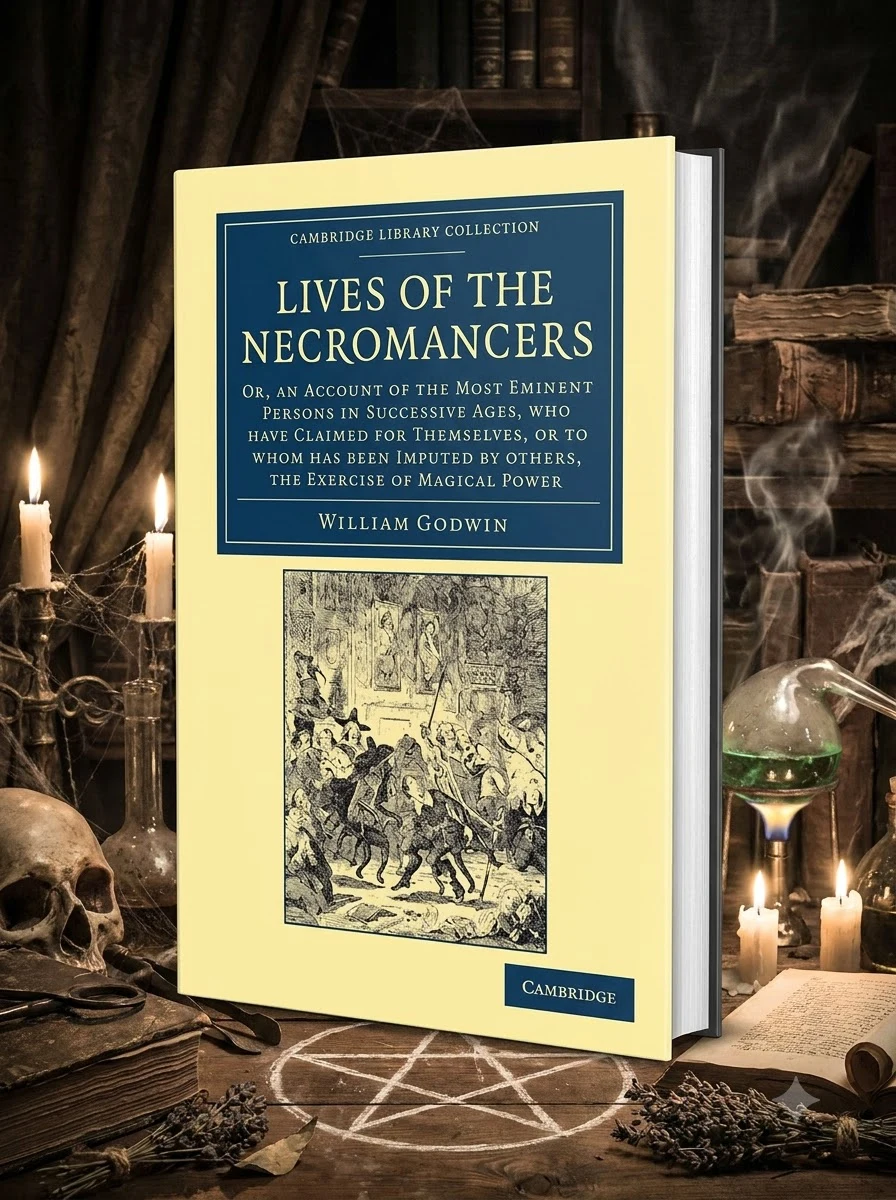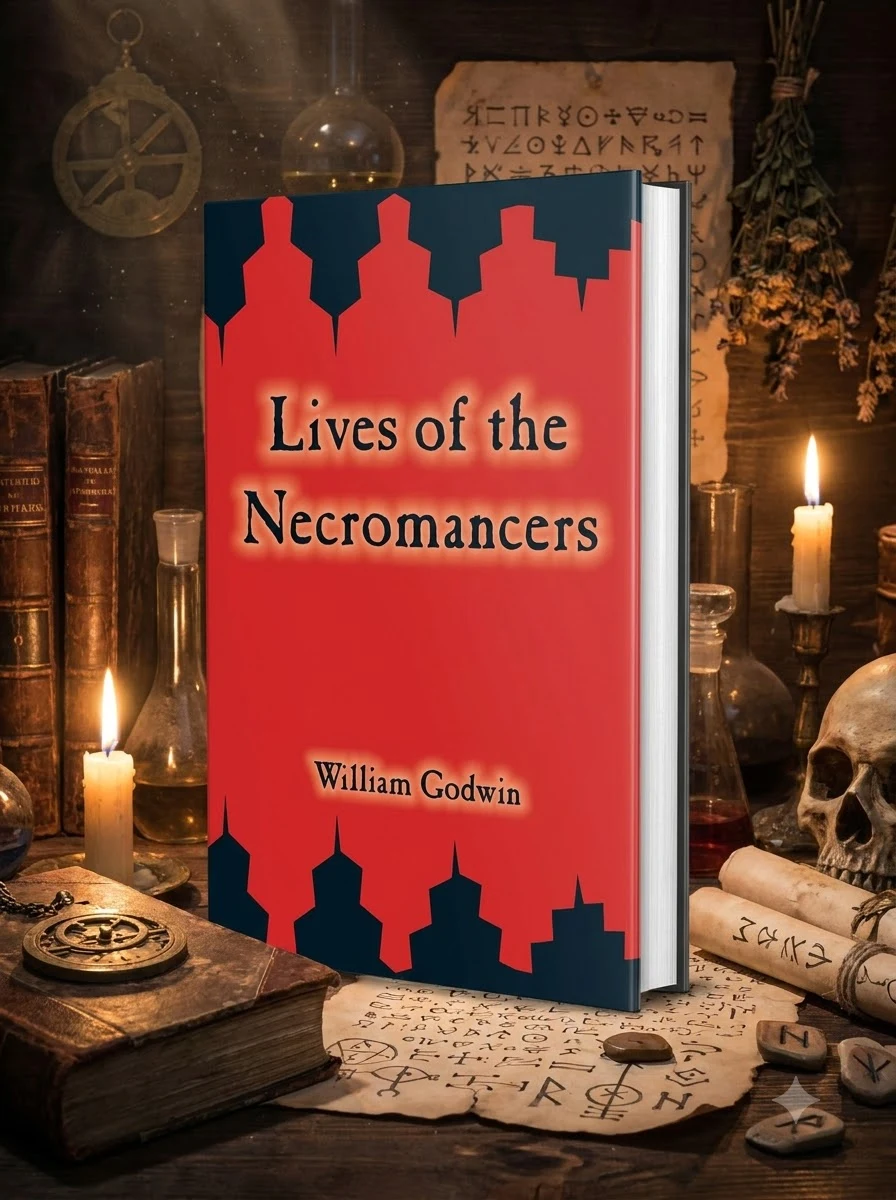
Lives of the Necromancers
Godwin, William

Stock reported in the catalog; fulfillment is confirmed with your request.
Unmask the enduring human fascination with the spectral and the power of belief.
William Godwin's seminal work delves into the historical accounts and philosophical underpinnings of necromancy, not as a practical guide, but as a lens through which to examine human credulity. Written in the early 19th century, this book meticulously compiles narratives of those who claimed to communicate with the dead, or were believed to do so. Godwin's primary objective is to illuminate the profound human tendency to believe in the extraordinary, offering a compelling study of historical superstition and the societal forces that shaped such beliefs throughout various epochs.
This work stands as a seminal 19th-century examination of historical superstition, situating itself within the intellectual tradition of scrutinizing societal forces and human credulity rather than promoting occult practice.


📝 Description: Lives of the Necromancers
💎 Expert review
📖 Why choose it
Why this book is worth reading
Readers fascinated by the psychological underpinnings of belief will find profound value in this text, as it peels back the layers of historical superstition to reveal the enduring human fascination with the spectral. It is ideal for those who prefer analyzing the power of belief systems over practical magical instruction. By examining narratives of individuals claiming communication with the dead, Godwin offers a compelling study of how societal forces shape extraordinary perceptions. This book serves as a vital lens for understanding credulity, making it essential for scholars and enthusiasts interested in the intersection of philosophy, history, and the occult mind.
⭐ Reader reviews
Reader rating
Godwin’s meticulous compilation provides a rigorous philosophical underpinning to necromancy, treating it not as a practical guide but as a historical artifact of human credulity. While intellectually stimulating for those interested in the sociology of belief, this work may disappoint readers seeking actionable esoteric techniques or dramatic supernatural narratives. It is strictly an analytical study of societal forces and historical accounts, lacking the atmospheric allure often associated with the genre. Readers expecting practical occult instruction or entertaining ghost stories will find it dry and overly academic. However, for those willing to engage with its dense examination of how belief shapes reality, it offers a unique and necessary perspective on the enduring power of superstition.
❓ Frequently asked questions
📖 Who should read this
If you're fascinated by the history of occult beliefs, the psychology of superstition, or the societal impact of extraordinary claims, this book is for you. Dive into a scholarly exploration of humanity's long relationship with the unseen.
🎯 Key themes and symbolism
Historical Necromancy Explored
Godwin meticulously chronicles the varied historical manifestations of necromancy, from ancient civilizations to his contemporary period. This provides a rich tapestry of cultural practices and beliefs surrounding death, spirits, and the desire to transcend the veil, showcasing how these practices evolved and were perceived across different eras and societies.
The Nature of Credulity
At its core, this book serves as a profound philosophical inquiry into human credulity. Godwin dissects the psychological and social mechanisms that lead individuals and communities to embrace fantastical narratives, even in the absence of empirical evidence. He aims to demonstrate how easily the human mind can be swayed by superstition and fervent belief.
Skepticism and Rational Inquiry
Through his comprehensive survey of necromantic traditions, Godwin implicitly champions a spirit of rational inquiry. He encourages readers to critically analyze extraordinary claims, providing a historical framework that subtly critiques unexamined belief. The work stands as an early example of Enlightenment thinking applied to the study of occult phenomena.
💬 Quotes from the book
“The annals of human history are replete with tales of the supernatural, each echoing a profound desire for agency beyond the mundane.”
“It is not the reality of spirits we seek to prove, but the enduring human capacity to invent and believe in them, despite all reason.”
📜 Historical context
📚 Glossary
- Necromancy
- Credulity
- Esoteric
📔 Questions to reflect on
- Reflect on a time you or someone you know believed in something extraordinary without concrete evidence. What factors contributed to that belief?
- How do historical accounts of necromancy reflect broader societal anxieties or desires of their respective eras? Consider modern-day parallels.
- Godwin suggests credulity is a fundamental human trait. Do you agree? What are the potential benefits and drawbacks of this capacity for belief?
✍️ More books by this author Godwin, William
All books by this author →
🏛 Books from this publisher University Press of the Pacific
All books from this publisher →
You might also like
See more →