US shipping Secure card payment Occult and esoteric books

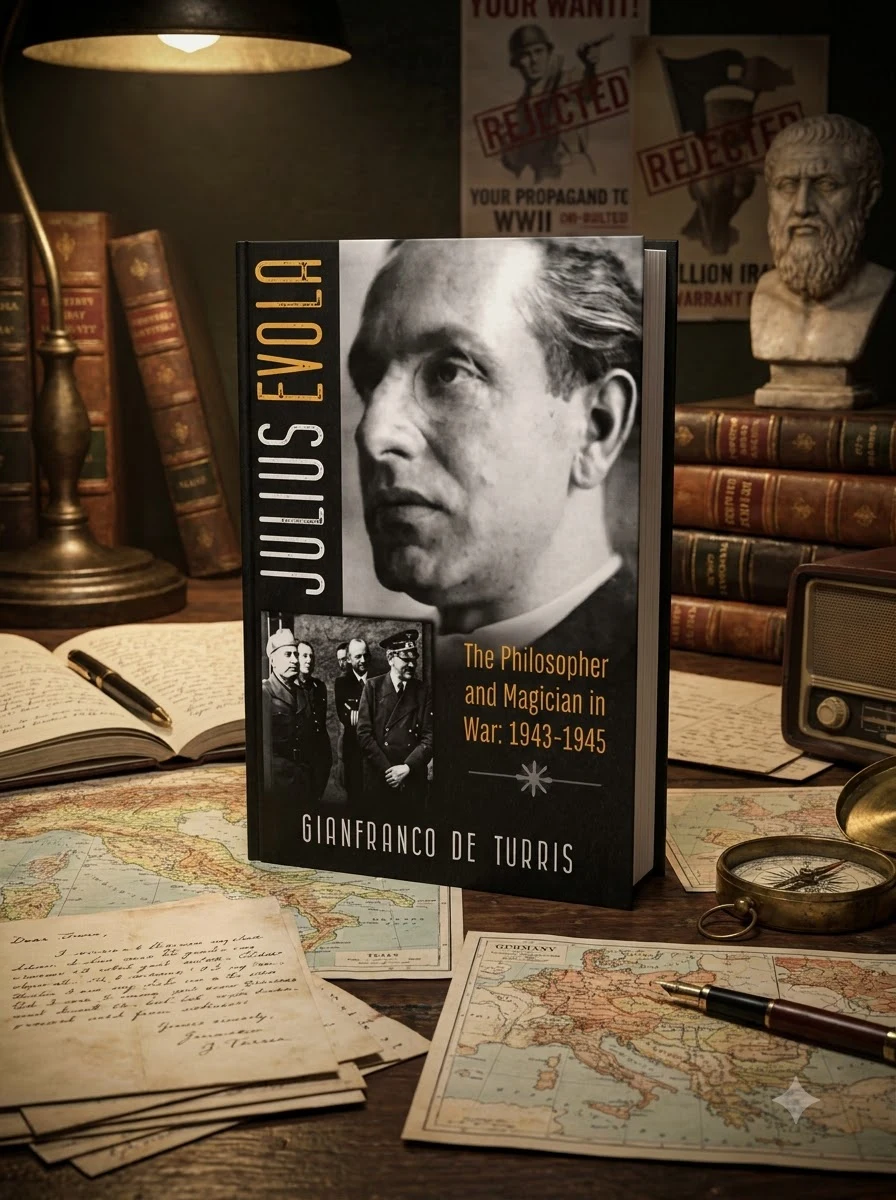
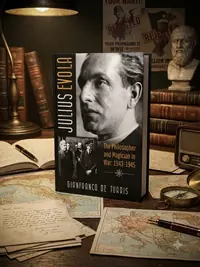
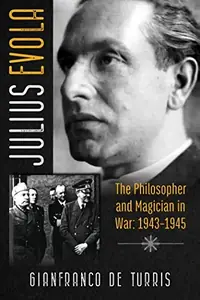
Julius Evola: The Philosopher and Magician in War: 1943-1945

de Turris, Gianfranco
Reader rating
4.7
(1 reviews) 40 sold
Availability to be confirmed

This edition can be ordered. No arrival date is confirmed.

📚 ABOUT THE BOOK

Uncover the real Julius Evola, his wartime journey stripped of fascist myths.

Gianfranco de Turris, an executor of Julius Evola's estate and long-time acquaintance, offers an unprecedented look into the enigmatic philosopher's life during World War II. This volume meticulously details Evola's activities across Italy, Germany, and Austria from 1943 to 1945, dismantling the persistent, inaccurate label of him as a Fascist ideologue. Through fresh documentation, private correspondence from the Hakl and Scaligero archives, and direct conversations with those who knew Evola, de Turris clarifies the Baron's fervent opposition to totalitarianism, presenting him instead as a committed "radical traditionalist" whose complex wartime narrative has been deeply misunderstood.

Key themes
Evola's Wartime Journey Rejecting Totalitarian Ideologies Unveiling the Authentic Evola
Historical context

This work sits at the intersection of Western esotericism and modern political philosophy, specifically addressing the complex legacy of radical traditionalism during the mid-20th century. It engages with the historical narratives surrounding occult thought and its practitioners amidst the turmoil of World War II.


Difficulty
●●● Demanding
Fans will love it
Julius Evola's other philosophical works · Historical biographies of esoteric figures in WWII · Studies on radical traditionalism and anti-totalitarianism
🕯️ Occult Philosophy
🏛 Inner Traditions International 📅 2020 📖 320 pages 📔 Hardcover 📐 Hardcover ISBN: 9781620558065
Fun fact
This is a pivotal work for anyone serious about understanding Julius Evola. De Turris, with his unique access and deep insight, meticulously dissects decades of misinformation, presenting a nuanced and rigorously researched account of Evola's wartime years. It excels at clarifying his genuine philosophical opposition to totalitarianism, essential for moving beyond facile categorizations. While it won't satisfy those seeking a simple condemnation or uncritical adoration, it provides an invaluable, often startling, re-evaluation that firmly establishes itself as a definitive resource in Evola studies.

📝 Description: Julius Evola: The Philosopher and Magician in War: 1943-1945

An intimate portrait of Evola and his wartime activities that rebuts many of the Fascist pseudo-myths about him - Traces the Baron's activities in Italy, Germany, and Austria during World War II - Clarifies Evola's relations with Nazism and Fascism and reveals how he passionately rejected both ideologies because they were totalitarian - Draws on personal conversations with those who knew Evola, new documentation never before made public, and letters from the Hakl and Scaligero archives Baron Giulio Cesare Andrea Evola, known to the English-speaking world as Julius Evola (1898-1974), was an Italian philosopher, magician, painter, occultist, Orientalist, linguist, and champion mountain climber. Often considered a pillar of Neo-Fascist thought, Evola opposed Fascism and called himself a "radical traditionalist." In this exploration of Evola's inner and outer life from World War II into the early 1950s, Gianfranco de Turris, who knew Evola when he was alive and is the executor of his estate, offers a new portrait of Julius Evola and debunks many of the pseudo-myths about his activities during the war. Drawing on personal conversations with those who knew him and new documentation never before made public, including letters from the Hakl and Scaligero archives, the author traces Evola's activities--including his time on the run and living under assumed names--in Italy, Germany, and Austria from 1943 into the mid-1950s. He shares a thorough account of the Baron's sojourn at Hitler's headquarters in Rastenburg, his work for the German secret military services, and his passionate rejection of the racial theories that were the core of Nazi ideology. The author outlines Evola's critiques of Fascism and Nazism and also explores Evola's disapproval of the Italian Social Republic because it was destroying traditional values in favor of modernity. Detailing the Baron's occult and magical work during the war, de Turris shows that the only thing Evola took with him when he escaped Italy was the UR Group papers, material that would later become the three-volume work Introduction to Magic. Sharing details from Evola's long hospital stays during and after the war, the author proves that the injury that led to Evola's paralysis was caused by an Allied bombing raid in Vienna and not, as rumor has it, by a sex magic act gone horribly wrong. The author shares photographs from the time period and the Baron's correspondence with René Guenon on the possibility of restoring the spiritual and magical power of an authentic Freemasonry. Offering conclusive evidence that Evola was not part of the Nazi regime, de Turris sheds light on the inner workings of this legendary occult figure and what Evola believed was the best approach for the magus to take in the modern world.

💎 Expert review

💎
Esoterica Books editorial team
Occult literature desk
De Turris offers a meticulously documented correction to the pervasive mischaracterization of Julius Evola, relying on fresh archival evidence and personal conversations. While valuable for scholars of radical traditionalism and esoteric history, this text is not suited for general readers seeking light biographical fare or those predisposed to accepting established political narratives without scrutiny. It demands attention to dense historical detail and philosophical context. Readers looking for a straightforward condemnation or endorsement of Evola's politics may find the nuanced defense frustrating. However, for those willing to engage with primary sources and complex ideological landscapes, it provides a crucial, albeit specific, perspective on a controversial figure’s wartime activities and intellectual stance.
✓ EDITOR'S REVIEW

📖 Why choose it

📖

Why this book is worth reading

Readers seeking to separate historical fact from political myth will find this volume indispensable. Gianfranco de Turris, acting as an executor of Evola's estate, provides intimate access through private correspondence and direct accounts that dismantle the reductive label of Fascist ideologue. This book is essential for those fascinated by the nuanced life of a radical traditionalist who opposed totalitarianism. It offers a rare, documented glimpse into the wartime journey across Italy, Germany, and Austria, revealing a figure whose complex narrative has been deeply misunderstood. By stripping away fascist myths, de Turris presents Evola not as a mere political actor, but as an enigmatic philosopher and magician navigating extreme historical currents with intellectual integrity.

⭐ Reader reviews

The starting rating comes from the team Esoterica Books —
⭐ Esoterica editorial review Editorial rating 4.7/5
★★★★
If you're fascinated by controversial intellectual figures, the intersection of philosophy and esotericism, or the complex history of World War II's intellectual undercurrents, this book is essential. It offers a vital re-evaluation for anyone seeking to understand Julius Evola beyond popular…

Reader rating

4.7
Based on 1 reviews
5
0
4
1
3
0
2
0
1
0
E
Esoterica Books editorial team

De Turris offers a meticulously documented correction to the pervasive mischaracterization of Julius Evola, relying on fresh archival evidence and personal conversations. While valuable for scholars of radical traditionalism and esoteric history, this text is not suited for general readers seeking light biographical fare or those predisposed to accepting established political narratives without scrutiny. It demands attention to dense historical detail and philosophical context. Readers looking for a straightforward condemnation or endorsement of Evola's politics may find the nuanced defense frustrating. However, for those willing to engage with primary sources and complex ideological landscapes, it provides a crucial, albeit specific, perspective on a controversial figure’s wartime activities and intellectual stance.

❓ Frequently asked questions

No, it primarily aims to clarify historical inaccuracies regarding his wartime activities and his relationship with Fascism and Nazism. It focuses on presenting a factual account of his actions and ideological separation from these totalitarian regimes, rather than a defense or endorsement of his broader philosophy.
The author, Gianfranco de Turris, draws on personal conversations with individuals who knew Evola, as well as previously unpublished documentation from the Hakl and Scaligero archives. This fresh material offers intimate insights and concrete evidence to debunk long-standing myths about Evola's role during World War II.

📖 Who should read this

If you're fascinated by controversial intellectual figures, the intersection of philosophy and esotericism, or the complex history of World War II's intellectual undercurrents, this book is essential. It offers a vital re-evaluation for anyone seeking to understand Julius Evola beyond popular misconceptions.

🎯 Key themes and symbolism

Evola's Wartime Journey

This book meticulously chronicles Evola's movements and engagements throughout Italy, Germany, and Austria during the tumultuous years of World War II. It goes beyond mere dates, exploring the specific contexts and challenges he faced, painting a vivid picture of his personal and intellectual odyssey during one of history's darkest periods, revealing his activities in unprecedented detail.

Rejecting Totalitarian Ideologies

A central focus is the definitive clarification of Evola's stance on Nazism and Fascism. The author presents compelling evidence, including Evola's own writings and personal testimonies, demonstrating his passionate philosophical rejection of both movements. This work argues that Evola viewed these totalitarian systems as antithetical to his traditionalist worldview, actively countering prevailing historical misconceptions.

Unveiling the Authentic Evola

Drawing on newly accessible archives and intimate personal accounts from individuals who knew Evola, this biography debunks numerous "pseudo-myths" surrounding his wartime actions and beliefs. It seeks to present a more accurate, nuanced portrait of the philosopher, magician, and occultist, moving beyond simplistic labels to reveal the complex figure behind the controversy.

💬 Quotes from the book

“The evidence from the newly unearthed correspondence unequivocally demonstrates Evola's philosophical distance from both Fascist doctrine and Nazi racial theories.”

“Eyewitness accounts from individuals who shared Evola's wartime circumstances paint a vivid picture of a man fiercely committed to his own esoteric path, often at odds with the political currents surrounding him.”

📜 Historical context

Julius Evola occupies a contentious, yet undeniably significant, position within 20th-century Traditionalism and esoteric thought. Often mischaracterized, his work has been subject to both fervent admiration and severe condemnation. This book contributes to a crucial re-evaluation of his life, especially his pivotal wartime years, offering historical clarity that distinguishes his 'radical traditionalist' philosophy from the political extremism he vocally opposed.

📚 Glossary

Radical Traditionalist
Neo-Fascist
Occultist

📔 Questions to reflect on

  1. How does understanding a controversial figure's actions during a historical crisis, like WWII, challenge or affirm your initial perceptions of them?
  2. Consider how historical narratives can be shaped by myth and political agendas. What responsibility do we have to seek out nuanced truths, even in uncomfortable subjects?
  3. Evola called himself a 'radical traditionalist.' How might this concept inform an individual's approach to modern societal challenges, and where might its limitations lie?

🏛 Books from this publisher Inner Traditions International

All books from this publisher →

You might also like

See more →