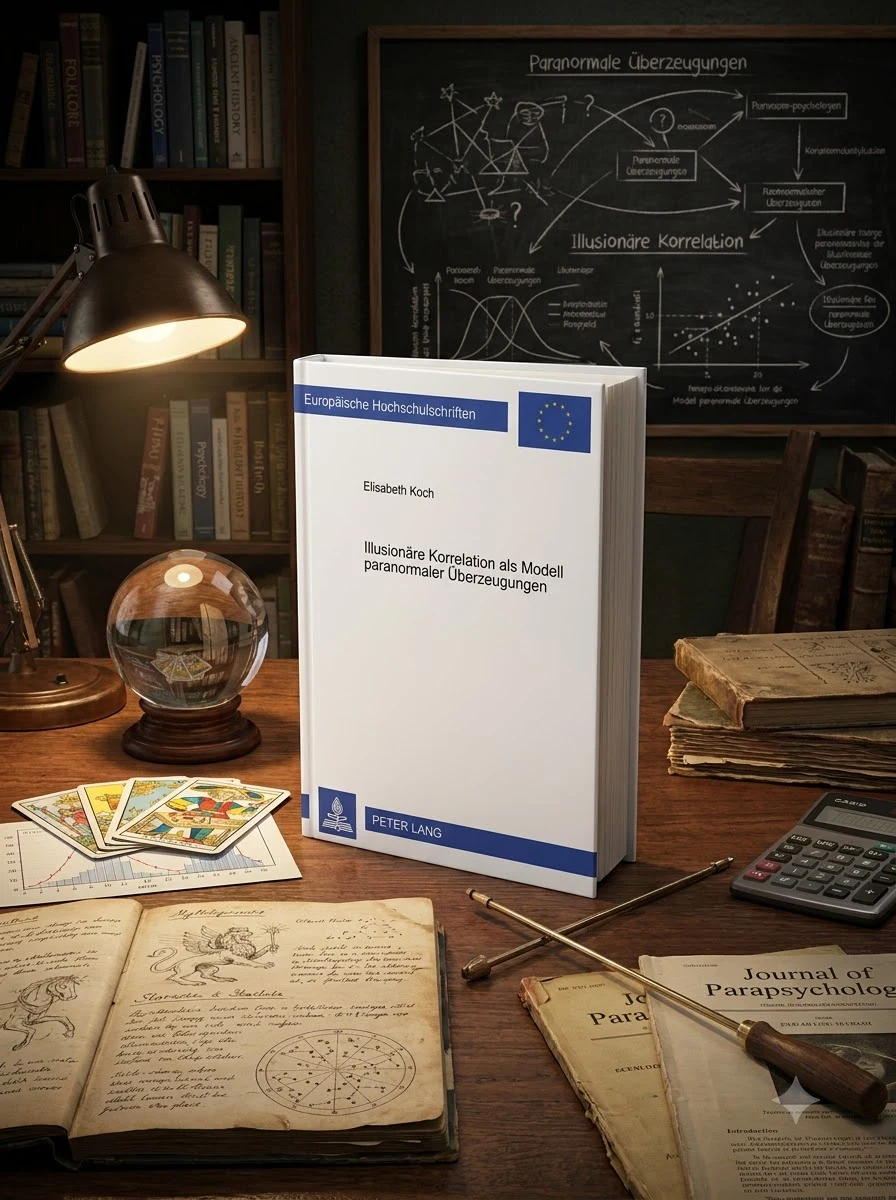
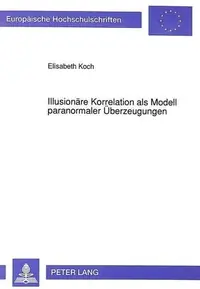
Illusionaere Korrelation ALS Modell Paranormaler Ueberzeugungen Koch, Elisabeth


This edition can be ordered. No arrival date is confirmed.
Uncover the psychological roots of paranormal belief, revealing how our minds construct the supernatural.
Elisabeth Koch's insightful study delves into the pervasive nature of paranormal beliefs, seeking their psychological roots. Moving beyond anecdotal accounts, she first offers a comprehensive framework for conceptualizing and classifying various types of paranormal convictions, grounded in the mental processes that form and sustain them. A key contribution is the exploration of 'illusory correlation' as a powerful explanatory model for how certain supernatural beliefs take root. The work meticulously reviews prior research on subjective correlation judgments, drawing vital connections to the emergence of paranormal thought, culminating in experimental validation.
This work sits at the intersection of cognitive psychology and paranormal studies, applying rigorous academic frameworks to the analysis of supernatural belief systems within contemporary esoteric discourse.


📝 Description: Illusionaere Korrelation ALS Modell Paranormaler Ueberzeugungen Koch, Elisabeth
💎 Expert review
📖 Why choose it
Why this book is worth reading
This book is an essential resource for serious students of the occult who seek to understand the mechanics behind their own convictions. Elisabeth Koch provides a vital psychological framework that moves beyond mere anecdote, offering readers a clear lens through which to view the construction of supernatural beliefs. By exploring 'illusory correlation,' the text empowers individuals to recognize how the mind fabricates connections in the absence of evidence. It is particularly valuable for those interested in the cognitive underpinnings of esoteric practices, providing a scholarly yet accessible entry point into understanding why paranormal ideas persist. Readers who wish to ground their spiritual inquiries in psychological reality will find this study both enlightening and intellectually rigorous.
⭐ Reader reviews
Reader rating
Koch’s analysis is a robust academic contribution that successfully bridges the gap between cognitive science and paranormal phenomenology. The exploration of illusory correlation offers a compelling model for understanding belief formation, making it a standout text for those interested in the structural basis of supernatural conviction. However, this work is not suitable for casual readers seeking mystical inspiration or practical magical techniques. Those looking for anecdotal ghost stories or traditional esoteric instruction will likely find the dense focus on experimental validation and mental processes dry and overly clinical. It demands a willingness to engage with psychological theory rather than spiritual dogma.
❓ Frequently asked questions
📖 Who should read this
If you're fascinated by the human mind's capacity for belief and the origins of supernatural thought, this rigorous psychological inquiry is for you. Ideal for those seeking to understand the cognitive underpinnings of why we believe in the paranormal, rather than just what we believe.
🎯 Key themes and symbolism
Defining Paranormal Beliefs
Koch meticulously outlines what constitutes a paranormal belief, moving beyond vague notions. She establishes a structured framework for understanding these convictions, identifying distinct types and their underlying psychological architectures, setting a new standard for academic discourse in the field.
The Illusion of Connection
This book introduces illusory correlation as a crucial mechanism explaining the genesis of certain paranormal beliefs. It explores how our minds perceive connections between unrelated events, leading to the conviction of supernatural influences, even when no objective link exists.
Mental Roots of Belief
The author delves into the cognitive processes responsible for forming and maintaining paranormal convictions. By examining the psychological machinery at play, the book sheds light on why certain beliefs persist and how our subjective interpretations shape our understanding of the world.
💬 Quotes from the book
“The widespread prevalence of paranormal convictions has, until now, lacked systematic empirical investigation into its cognitive architecture.”
“Our analysis demonstrates how the mind, in its quest for meaning, can construct associations that, while experientially compelling, lack an objective basis.”
📜 Historical context
📚 Glossary
- Paranormal Beliefs
- Illusory Correlation
- Subjective Correlation Judgment
📔 Questions to reflect on
- Reflect on a personal belief you hold that might be influenced by perceived, rather than objective, correlations. How might this book's concepts apply?
- Considering the mechanisms of illusory correlation, how might societies inadvertently perpetuate collective paranormal beliefs?
- How does understanding the psychological underpinnings of belief change your perspective on the nature of 'truth' in esoteric studies?
📖 From the series “Europaeische Hochschulschriften / European University Studie”
All books in the series →

🏛 Books from this publisher Peter Lang Gmbh, Internationaler Verlag Der Wissenschaften
All books from this publisher →

You might also like
See more →