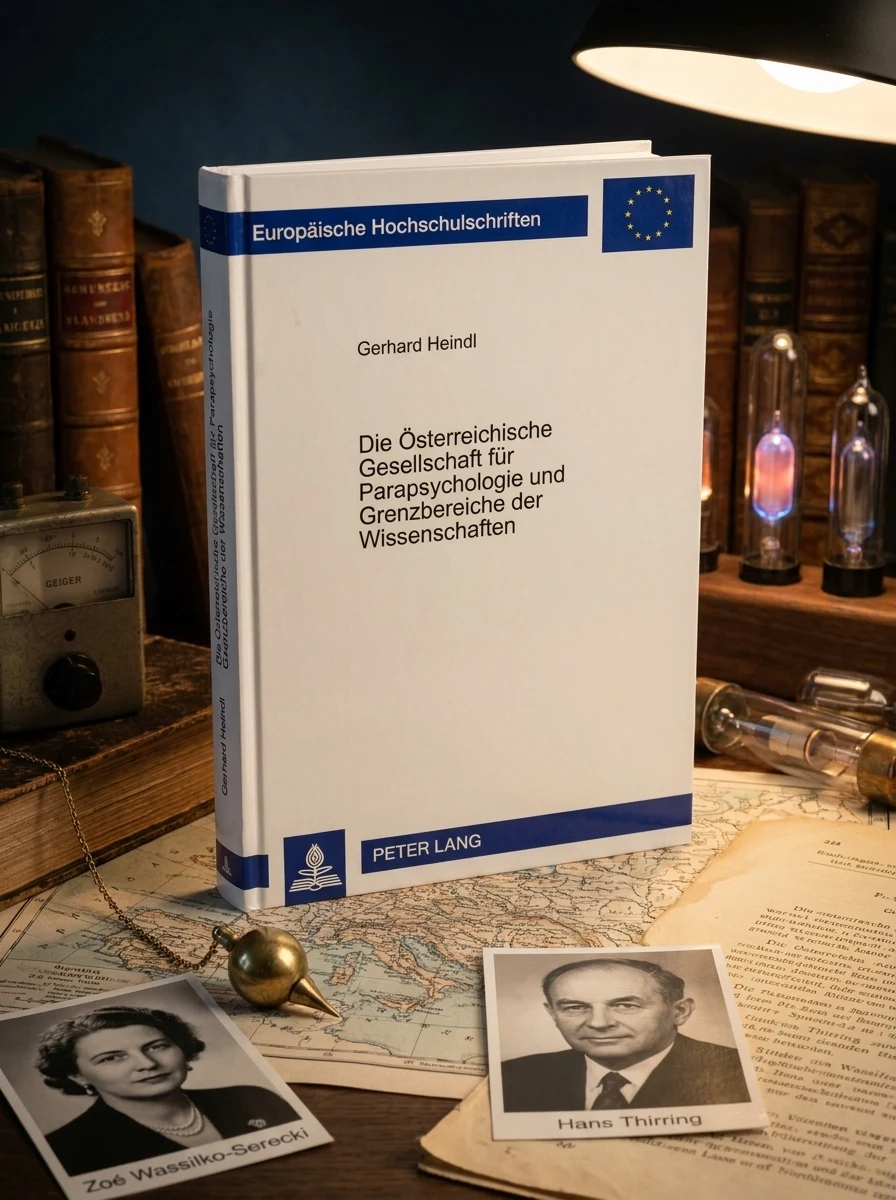
Die Oesterreichische Gesellschaft Fuer Parapsychologie Und Grenzbereiche Der Wissenschaften: 1927-1963 Mit Einem Statistischen Anhang Bis 1997 Heindl, Gerhard
 90
90
 Editorial score
How we rate
Editorial score
How we rate
This edition can be ordered. No arrival date is confirmed.
Delve into Austria's secret history of psychic research, from aristocratic salons to scientific labs.
Gerhard Heindl meticulously chronicles the fascinating journey of the Austrian Society for Parapsychology and Allied Sciences. Beginning with its 1927 inception by visionary figures like Countess Zoé Wassilko-Serecki and physicist Hans Thirring, the book traces the society's institutional evolution through 1963, extending its statistical analysis to 1997. This volume offers an unparalleled look at how a Central European nation grappled with the scientific investigation of psychic phenomena, detailing the challenges, methodologies, and intellectual currents that shaped early parapsychological inquiry. It's a vital record of a unique intersection between scientific rigor and the esoteric.
This work sits firmly within the historiography of early 20th-century European parapsychology, documenting the institutional efforts to legitimize psychic research through scientific rigor in Central Europe. It serves as a crucial record of the intersection between esoteric inquiry and academic methodology during a transformative period for Austrian intellectual history.


📝 Description: Die Oesterreichische Gesellschaft Fuer Parapsychologie Und Grenzbereiche Der Wissenschaften: 1927-1963 Mit Einem Statistischen Anhang Bis 1997 Heindl, Gerhard
💎 Expert review
📖 Why choose it
Why this book is worth reading
Scholars and enthusiasts of the intersection between science and the occult will find immense value in this meticulous chronicle. It offers an unparalleled look at how Austrian intellectuals grappled with psychic phenomena, moving beyond mere anecdote to examine the structural evolution of a specific society from its aristocratic salons to scientific labs. Readers interested in the rigorous methodologies and intellectual currents that shaped early parapsychological inquiry will appreciate the detailed institutional history. This book is essential for those seeking to understand the unique cultural context of Central European esotericism, providing a vital record of how visionary figures attempted to bridge the gap between the supernatural and the scientific through organized academic pursuit.
⭐ Reader reviews
Reader rating
This volume is a dense, scholarly account best suited for specialists in parapsychology or Austrian intellectual history. While it provides valuable insights into the institutional evolution from 1927 to 1963, its academic tone and statistical appendices may alienate casual readers seeking narrative flair. It does not suit those looking for practical spiritual guidance or entertaining ghost stories. The focus on administrative details and scientific rigor might feel dry to general audiences. However, for researchers studying the legitimization of psychic research in Europe, it is an indispensable primary resource that captures the complex dialogue between esotericism and academia during this pivotal era.
❓ Frequently asked questions
📖 Who should read this
If you're fascinated by the intersection of science and the unknown, or curious about the historical roots of parapsychology in Europe, this detailed account is for you. Researchers, historians of science, and anyone drawn to the lesser-known currents of spiritual and psychological inquiry will find it immensely rewarding.
🎯 Key themes and symbolism
Institutionalizing the Unknown
This book meticulously chronicles the establishment and development of the Austrian Society for Parapsychology. It reveals how pioneering figures sought to bring academic rigor and organizational structure to the study of psychic phenomena, illustrating the complex journey from fringe interest to a structured field of inquiry within Central European intellectual circles.
Early Psychic Research
Delve into the methods and findings of early parapsychological investigations conducted by the society. The text explores the types of phenomena studied, the experimental approaches employed, and the intellectual debates surrounding these boundary sciences, offering a unique window into the nascent stages of organized psychic research.
Austrian Esoteric History
Beyond mere chronology, the book situates the society's work within the broader intellectual and cultural landscape of Austria from the interwar period through the Cold War. It highlights the unique contributions of Austrian thinkers and researchers to the global understanding of mind, spirit, and the subtle energies beyond conventional science.
💬 Quotes from the book
“The challenge for the newly formed society was not merely to observe, but to devise protocols robust enough to withstand the skepticism of mainstream science while acknowledging the elusive nature of the phenomena under investigation.”
“From the drawing rooms of Viennese aristocracy to the lecture halls of the university, the pursuit of 'boundary sciences' attracted a diverse coterie of thinkers, united by a shared curiosity for the unseen.”
📜 Historical context
📚 Glossary
- Parapsychology
- Grenzbereiche der Wissenschaften
- Historiography
📔 Questions to reflect on
- How might the cultural and political climate of early 20th-century Austria have uniquely shaped the development and acceptance of parapsychological research?
- Reflect on the inherent tension between scientific skepticism and the open-minded inquiry required to investigate phenomena that challenge established paradigms.
- In what ways do modern scientific "fringe" topics echo the challenges faced by early parapsychologists in seeking institutional recognition and funding?
📖 From the series “Europaeische Hochschulschriften / European University Studie”
All books in the series →

🏛 Books from this publisher Peter Lang Gmbh, Internationaler Verlag Der Wissenschaften
All books from this publisher →

You might also like
See more →