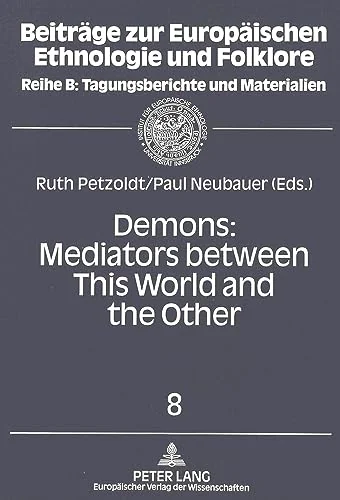
Demons: Mediators between This World and the Other: Essays on Demonic Beings from the Middle Ages to the Present
A chronological essay collection tracing European demonic traditions from classical antiquity to the present.
This academic volume gathers scholarly perspectives on how demonic entities have been conceptualized throughout Western history. Beginning with roots in ancient classical thought, the text details how European medieval thinkers systematized these spiritual intermediaries, creating frameworks that persisted into modern culture. Through the lenses of German literary criticism, philosophy, and cultural anthropology, the contributing essays analyze the evolving representation of demons in literature and society.
This work sits within European and American academic scholarship, connecting classical antiquity and medieval European thought to modern cultural studies. It draws on literary and philosophical traditions from institutions across Germany, Austria, Canada, and the United States.


📝 Description: Demons: Mediators between This World and the Other: Essays on Demonic Beings from the Middle Ages to the Present
💎 Expert review
📖 Why choose it
Why this book is worth reading
This collection is indispensable for scholars, historians of religion, and serious occult practitioners who seek to understand the structural evolution of demonic archetypes. By tracing the lineage from classical antiquity to contemporary narratives, it reveals how these figures functioned as vital conduits between the material and unseen realms. Readers will gain a profound appreciation for the psychological and societal impact of these beings, moving beyond sensationalist tropes to grasp their enduring role in shaping human belief systems. It is particularly valuable for those interested in the systemic reinterpretation of evil and the historical mechanics of spiritual mediation.
⭐ Reader reviews
Reader rating
While academically rigorous and historically comprehensive, this book demands a patience that casual readers may lack. It offers no quick fixes or sensationalist thrills but rather a dense, chronological exploration of demonic systematization. Those seeking practical grimoires or immediate magical results will find it dry and overly theoretical. However, for those willing to engage with the intellectual weight of how medieval thought structured the 'other,' it is a rewarding, albeit demanding, deep dive into the shifting masks of demonic identity across centuries.
❓ Frequently asked questions
📖 Who should read this
If you are drawn to the serious academic study of folklore, religious history, or cultural anthropology, this collection is for you. It offers profound insights into how humanity has conceptualized and interacted with the 'other' throughout history.
🎯 Key themes and symbolism
Demonic Evolution
The book meticulously charts how perceptions of demonic entities have transformed across epochs, from the nuanced 'daimones' of ancient Greece to the codified devils of medieval Christian theology. It explores how cultural shifts and philosophical currents reshaped these beings, reflecting humanity's evolving understanding of good, evil, and the liminal spaces between.
Mediating Entities
A central theme is the role of demons as crucial intermediaries. These beings are presented not merely as antagonists but as figures that bridge different worlds, ideas, and belief systems. They often serve as conduits for explaining inexplicable phenomena, articulating spiritual anxieties, or embodying the unknown, linking the mundane with the esoteric.
Enduring Influence
This volume highlights the pervasive and lasting impact of demonic traditions on human culture. From ancient myths to modern folklore, literature, and even popular media, the essays demonstrate how these archetypal figures continue to shape our fears, fascinations, and moral frameworks, proving their enduring power across millennia.
📜 Historical context
📚 Glossary
- Demonology
- Esotericism
- Liminal
📔 Questions to reflect on
- How have your personal or cultural understandings of 'demons' been shaped by historical narratives, and how might this book challenge those preconceptions?
- Consider a contemporary cultural phenomenon where a 'demonic' archetype appears. How does its portrayal connect to or diverge from the historical traditions discussed in this work?
- Reflect on the concept of 'mediation' as applied to demonic beings. In what ways do these figures still serve as intermediaries for modern anxieties or spiritual questions?
📖 Read on the blog
🏛 Books from this publisher Peter Lang Gmbh, Internationaler Verlag Der Wissenschaften
All books from this publisher →



You might also like
See more →


Have a question about this item?
Ask about the edition, condition, delivery or anything else — we reply by email or phone, usually within a day.
