
Hunt the Devil: A Demonology of Us War Culture


This edition can be ordered. No arrival date is confirmed.
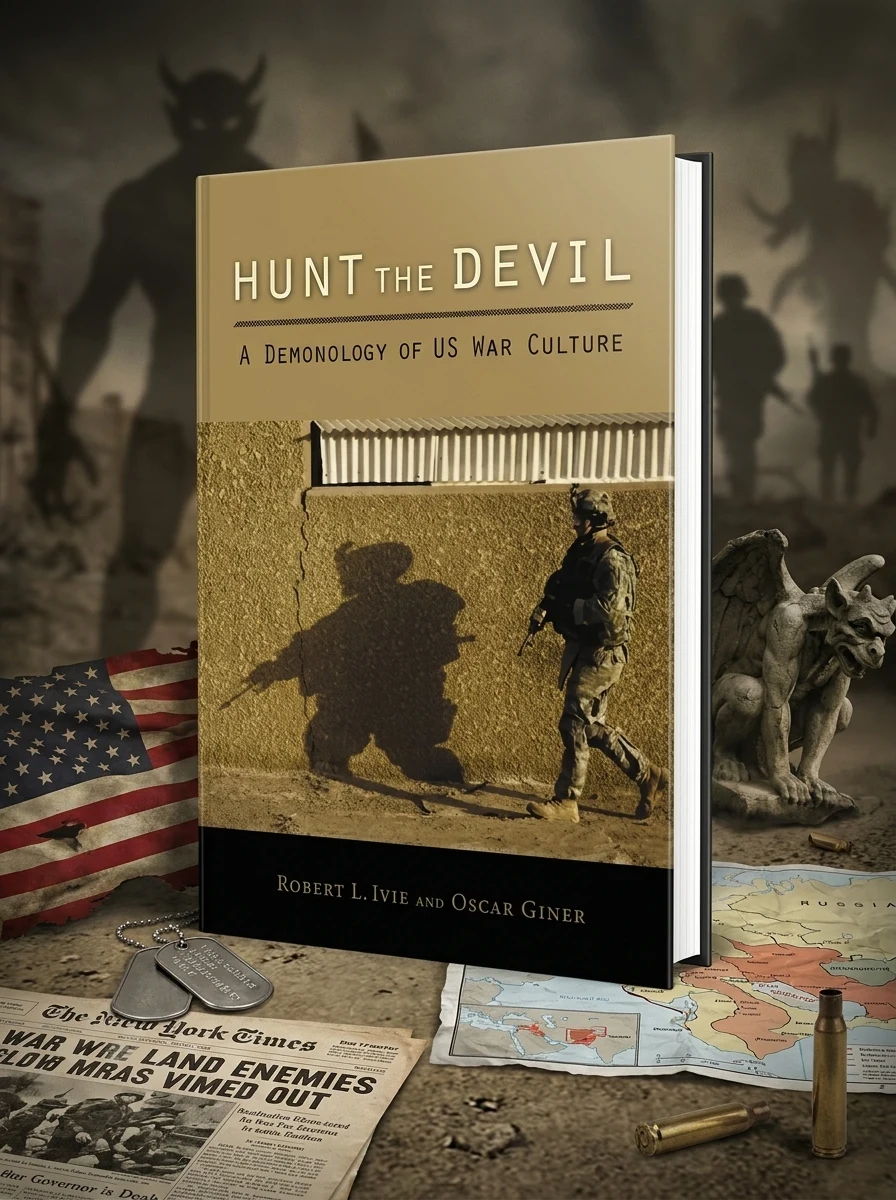
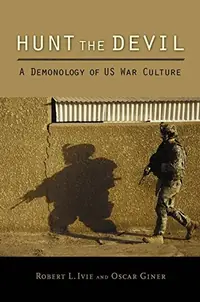
Unmasking the devil in America's wars, this book reveals a disturbing, cyclical pattern of fear and conflict.
Robert L. Ivie and Oscar Giner delve into the unsettling persistence of demonic imagery within U.S. war culture. Their incisive analysis traces how the archetype of the 'Devil' has been projected onto perceived enemies throughout American history, from colonial times to the post-9/11 era. The authors meticulously demonstrate that military deployments are frequently part of a mythic cycle, where an imagined evil necessitates 'redemptive' warfare, often at the cost of cherished democratic ideals. It's a critical look at how national identity and conflict are inextricably linked through these powerful, recurring narratives.
This work sits at the intersection of political theology and critical war studies, examining how religious archetypes shape modern American military engagement. It contributes to the broader esoteric tradition of analyzing how collective mythology influences geopolitical actions.


📝 Description: Hunt the Devil: A Demonology of Us War Culture
💎 Expert review
📖 Why choose it
Why this book is worth reading
Readers fascinated by the hidden religious undercurrents of politics will find this book essential. It offers a profound lens for understanding how national identity is constructed through mythic cycles of fear and redemption. Those interested in the psychological mechanisms behind conflict, particularly within the American context, will appreciate the meticulous tracing of demonic imagery from colonial times to the post-9/11 era. It challenges you to see warfare not just as policy, but as a spiritual narrative that often undermines democratic ideals. This is for the intellectually curious seeker who wants to unmask the deeper, cyclical patterns of fear and conflict that drive us.
⭐ Reader reviews
Reader rating
Ivie and Giner provide a rigorous, albeit dense, analysis of demonic archetypes in U.S. war culture. While their academic approach may alienate casual readers seeking accessible narratives, it is precisely what makes the argument compelling for scholars. The book does not suit those who prefer straightforward historical accounts devoid of theological critique or literary analysis. It demands patience and a willingness to engage with complex mythic structures. However, for those willing to delve into the unsettling persistence of these images, the insights are both disturbing and necessary for a full understanding of modern conflict.
❓ Frequently asked questions
📖 Who should read this
If you're fascinated by the intersection of political rhetoric, cultural narratives, and military history, this book is for you. Readers interested in critical analyses of American foreign policy and the psychological underpinnings of conflict will find it particularly illuminating.
🎯 Key themes and symbolism
Demonization of Adversaries
The book explores how various U.S. opponents, from historical figures like 'witches' and 'Indians' to modern 'terrorists,' have been systematically cast as demonic. This recurring tactic serves to dehumanize the enemy, simplify complex geopolitical issues, and rally public support for military action, framing conflicts as moral crusades against absolute evil.
Cycle of Redemptive War
Ivie and Giner argue that American history reveals a cyclical pattern where the perceived 'Devil' reappears, necessitating 'exorcism' through warfare. This pattern suggests a deeply ingrained cultural narrative where military engagement is seen not just as a strategic move, but as a righteous act to cleanse or redeem, even when it compromises democratic principles.
The Trickster Archetype
Beyond the Devil, the authors introduce the Trickster, an archetype whose democratic impulses offer a counterpoint to the rigid, binary thinking of demonization. This figure represents a potential for disruption and reevaluation of established narratives, suggesting alternative ways of understanding conflict and national identity that challenge the perpetual cycle of 'evil' and 'redemption'.
💬 Quotes from the book
“The persistent framing of geopolitical rivals as inherently malevolent entities reveals a deep-seated cultural predisposition to simplify complex conflicts into moral absolutes.”
“This cyclical need for an external 'devil' to confront often overshadows critical self-reflection, subtly eroding the very democratic values it purports to defend.”
📜 Historical context
📚 Glossary
- Demonization
- Redemptive War
- Trickster Archetype
📔 Questions to reflect on
- Reflect on a recent or historical conflict. How were the 'enemies' portrayed in popular culture or political rhetoric? Do you see elements of 'demonization' at play?
- Consider the idea of 'redemptive war.' Can you identify instances where military action was framed as a moral necessity to purge evil, and what were the broader consequences?
- How might embracing the 'Trickster' archetype, with its democratic and disruptive impulses, challenge or alter the traditional narratives surrounding national identity and conflict?
🏛 Books from this publisher University Alabama Press
All books from this publisher →



You might also like
See more →