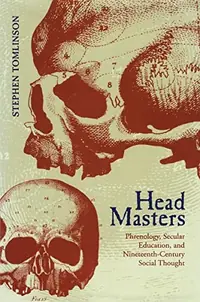
Head Masters: Phrenology, Secular Education, and Nineteenth-Century Social Thought


This edition can be ordered. No arrival date is confirmed.
Unearth phrenology's profound, often unsettling, influence on nineteenth-century American thought and education.
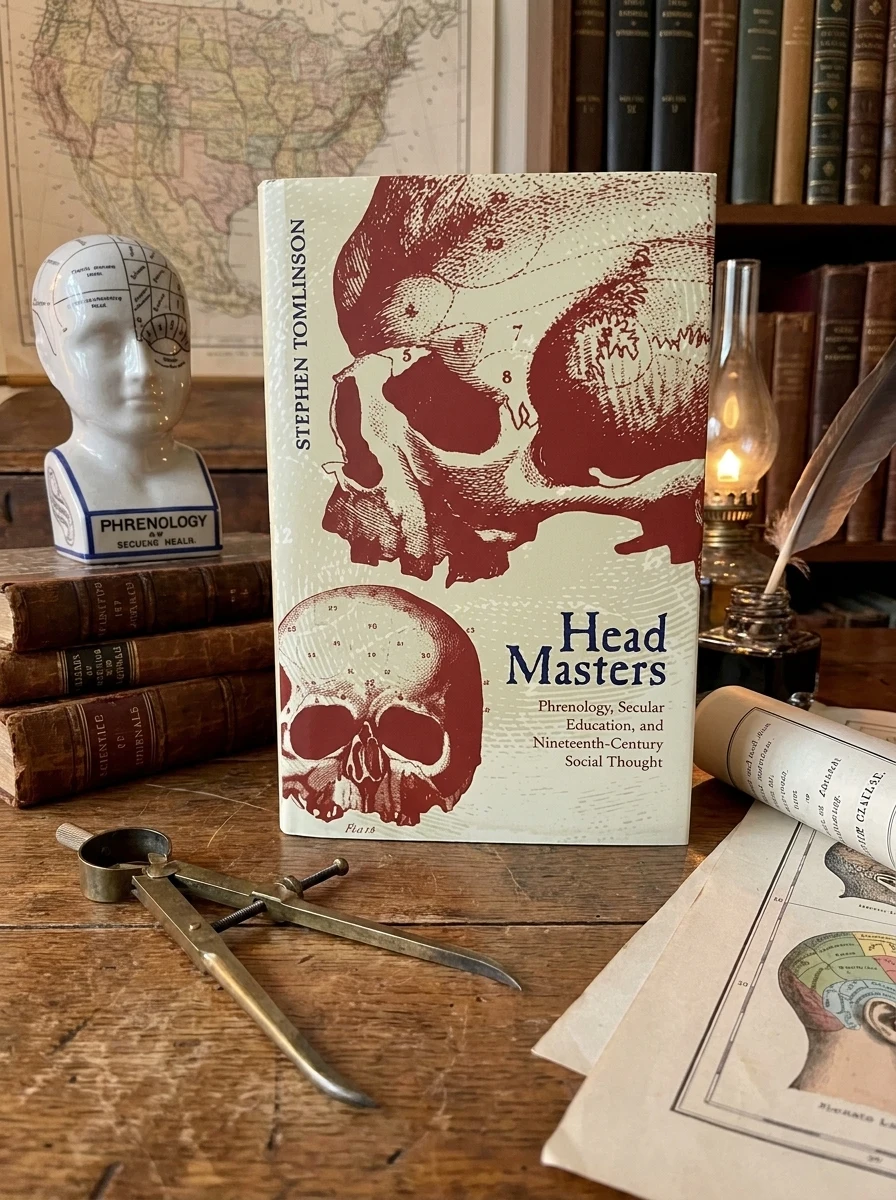
Stephen Tomlinson's "Head Masters" challenges conventional views, asserting phrenology's significant, not peripheral, role in shaping 19th-century education. Far from a mere anecdote, this skull-reading discipline was once considered a legitimate scientific endeavor, a pioneering physiological psychology embraced by leading intellectuals and medical figures. The book meticulously traces its journey from European theorists like Gall and Combe to American reformers, notably Horace Mann. It reveals how phrenological principles of human classification, inheritance, and development underpinned progressive educational practices, while simultaneously exposing its complicity in perpetuating societal biases concerning class, race, and gender.
This work situates phrenology within the rigorous intellectual landscape of nineteenth-century social thought and secular education reform in America. It explores how physiological psychology transitioned from European theory to become a cornerstone of progressive educational practices.


📝 Description: Head Masters: Phrenology, Secular Education, and Nineteenth-Century Social Thought
💎 Expert review
📖 Why choose it
Why this book is worth reading
This book is essential for those seeking to understand the complex roots of modern educational systems and the historical construction of human classification. Readers fascinated by how seemingly pseudoscientific frameworks can exert profound influence on societal structures will find this analysis deeply rewarding. It offers a nuanced look at how leading intellectuals and medical figures once embraced phrenology, revealing its dual role in advancing progressive practices while simultaneously reinforcing harmful biases regarding class, race, and gender. By tracing the journey from European theorists to American reformers like Horace Mann, the text provides critical insight into the intersection of science, education, and social control. It is particularly valuable for scholars and history enthusiasts who wish to look beyond conventional narratives and uncover the unsettling yet significant legacy of skull-reading in shaping contemporary thought.
⭐ Reader reviews
Reader rating
Tomlinson delivers a meticulous historical account that challenges peripheral views of phrenology, positioning it as central to nineteenth-century educational reform. While intellectually rigorous and well-researched, this book may not suit readers seeking light entertainment or those with a strong aversion to academic historical analysis. It is best suited for those willing to engage with dense discussions on physiological psychology and its societal implications. The candid exposure of phrenology's complicity in perpetuating biases might be uncomfortable for some, but it is necessary for a complete understanding of the era's social thought. Those looking for simple answers or uncritical praise of historical figures should look elsewhere; this text demands critical engagement with uncomfortable truths about scientific legitimacy and social power.
❓ Frequently asked questions
📖 Who should read this
If you are captivated by the intersections of science, social history, and educational philosophy, this book is for you. It offers a fresh, critical perspective on intellectual movements often oversimplified, inviting a deeper understanding of the complexities of 19th-century thought.
🎯 Key themes and symbolism
Phrenology's Scientific Stature
This work re-evaluates phrenology, demonstrating that it was widely accepted as a credible scientific theory of human nature during its time. It delves into how prominent scientists and medical professionals actively championed its principles, viewing it as a foundational physiological psychology rather than a pseudoscientific curiosity, thereby influencing mainstream intellectual discourse.
Educational Reform Roots
Tomlinson meticulously links phrenological concepts to the bedrock of 19th-century educational reform. Figures like Horace Mann, often celebrated for their progressive ideals, drew heavily from phrenological notions of human development and classification. The book illustrates how these seemingly scientific tenets provided a framework for new pedagogical approaches and societal betterment through schooling.
Societal Bias & Classification
Beyond its scientific and educational implications, the book critically examines how phrenology inadvertently codified and reinforced existing social prejudices. Its systems of human classification, ostensibly based on skull conformation, became entangled with prevailing stereotypes regarding class, race, and gender, thus lending a false scientific legitimacy to discriminatory attitudes prevalent in the 19th century.
💬 Quotes from the book
“The intellectual landscape of the early nineteenth century readily accommodated phrenological tenets, viewing them not as fringe science but as a foundational physiological psychology.”
“Beneath the veneer of scientific objectivity, phrenological frameworks inadvertently reinforced societal hierarchies, codifying existing prejudices regarding class, race, and gender into ostensibly empirical categories.”
📜 Historical context
📚 Glossary
- Phrenology
- Horace Mann
- Franz-Joseph Gall
📔 Questions to reflect on
- How does understanding phrenology's past scientific credibility change your perception of historical 'progress' in scientific thought?
- Reflect on how seemingly objective scientific theories can inadvertently reinforce or legitimize existing social biases. Can you identify modern parallels?
- Consider how educational reforms throughout history might have been influenced by contemporary (and perhaps now debunked) theories of human nature. What are the ethical implications?
🏛 Books from this publisher University Alabama Press
All books from this publisher →



You might also like
See more →