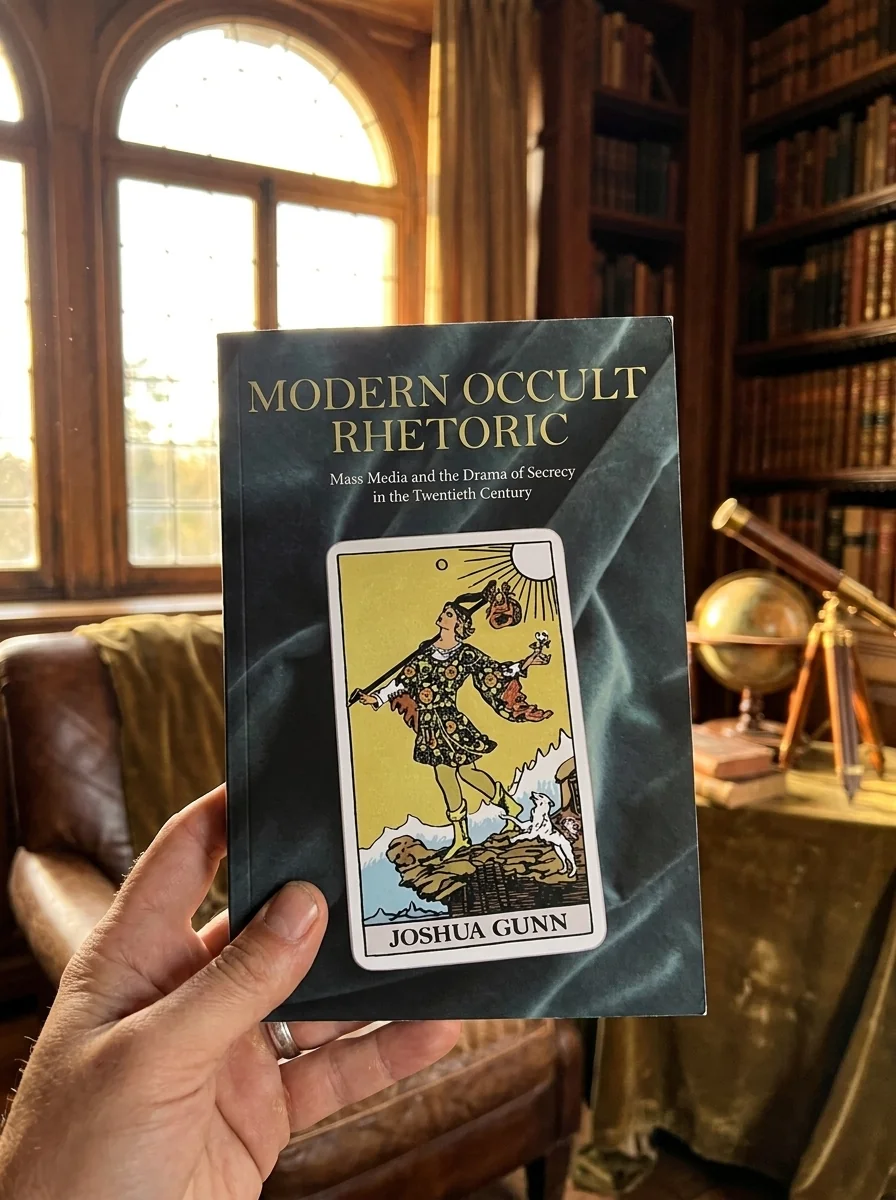
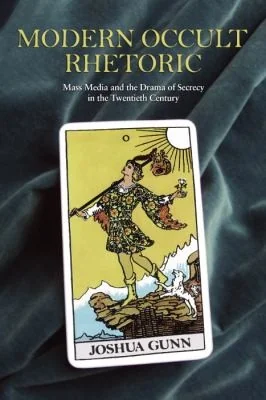
Modern Occult Rhetoric: Mass Media and the Drama of Secrecy in the Twentieth Century
Currently unavailable
This book is sold out right now. Leave your email — we'll let you know if it comes back, and you'll get 10% off any book today.
In stock now — readers of this book also loved:






Joshua Gunn redefines "occult" beyond traditional magic, treating it as a rhetorical strategy deeply embedded in American discourse. He explores how secrecy, often tied to language and symbols, pervades cultural, political, and religious spheres. Gunn reveals that from academic jargon to media panics, the idea of hidden meaning, just beyond articulation, is a recurring theme. This work argues that such patterns stem from a widespread cultural unease with the limits of language itself, making the "occult" a fundamental lens for understanding modern communication.


Praise for this book
“Gunn's work is a comprehensive examination of society's hierarchies of mystery and elitism--a subject that has been largely ignored by rhetorical scholars--and Gunn tackles it with erudition, insight, and most importantly, humor. Modern Occult Rhetoric is original, provocative, extremely well written, and throughtfully argued.”
📝 Description: Modern Occult Rhetoric: Mass Media and the Drama of Secrecy in the Twentieth Century
💎 Expert review
📖 Why choose it
Why this book is worth reading
Readers fascinated by the intersection of language, power, and secrecy will find this book indispensable. It offers a profound lens for understanding how hidden meanings shape our cultural, political, and religious landscapes. If you have ever felt that modern communication relies on unspoken rules or that media panics stem from deeper linguistic anxieties, this text provides the theoretical framework to articulate those feelings. It is ideal for scholars and critical thinkers who wish to look beyond surface-level interpretations of media and uncover the rhetorical structures that govern public discourse. By redefining the occult as a mode of communication rather than just magic, it empowers readers to decode the subtle mechanisms of influence in contemporary society.
⭐ Reader reviews
Reader rating
Joshua Gunn presents a rigorous academic argument that redefines the 'occult' not as supernatural practice but as a rhetorical strategy embedded in American culture. The book is intellectually stimulating for those interested in semiotics and media theory, offering fresh insights into how secrecy functions in public discourse. However, it is dense with theoretical jargon and may feel inaccessible to casual readers seeking practical occult knowledge or simple historical narratives. Those looking for traditional magical instruction or light entertainment will likely find this work too abstract and academically demanding. It is best suited for university-level students and researchers who enjoy deconstructing the limits of language and power.
❓ Frequently asked questions
📖 Who should read this
If you question how hidden meanings shape public discourse, or if you're fascinated by the intersection of language, power, and cultural anxieties, this insightful analysis offers a fresh perspective. It's for those who seek to decode the unspoken narratives governing modern society.
🎯 Key themes and symbolism
The Occult as Idiom
Moving beyond traditional definitions, Gunn presents the occult as a pervasive cultural idiom, a distinct mode of expression and interpretation. He illustrates how diverse practices like Freemasonry or even television production utilize forms of "textual criticism" that inherently engage with hidden or coded meanings.
Language's Hidden Limitations
A central tenet of Gunn's work is that the recurring presence of "secret" or "unexpressible" meanings in Western culture stems from a deep-seated popular anxiety about language itself. He explores how the perceived inability of words to fully capture truth fosters a dramatic interplay of revelation and concealment.
📜 Historical context
📚 Glossary
- Occult (Gunn's definition)
- Rhetoric
- Satanic Panic
📔 Questions to reflect on
- Consider a piece of jargon or specialized language you encounter daily. How does its use create a sense of 'secrecy' or exclusion for outsiders?
- Reflect on a recent news story or cultural phenomenon. In what ways did the media presentation imply hidden meanings or unarticulated truths?
- Think about a personal experience where you felt something significant couldn't be fully expressed in words. How did this limitation shape your understanding or the communication itself?
📖 Read on the blog
🏛 Books from this publisher University Alabama Press
All books from this publisher →


You might also like
See more →


Have a question about this item?
Ask about the edition, condition, delivery or anything else — we reply by email or phone, usually within a day.
