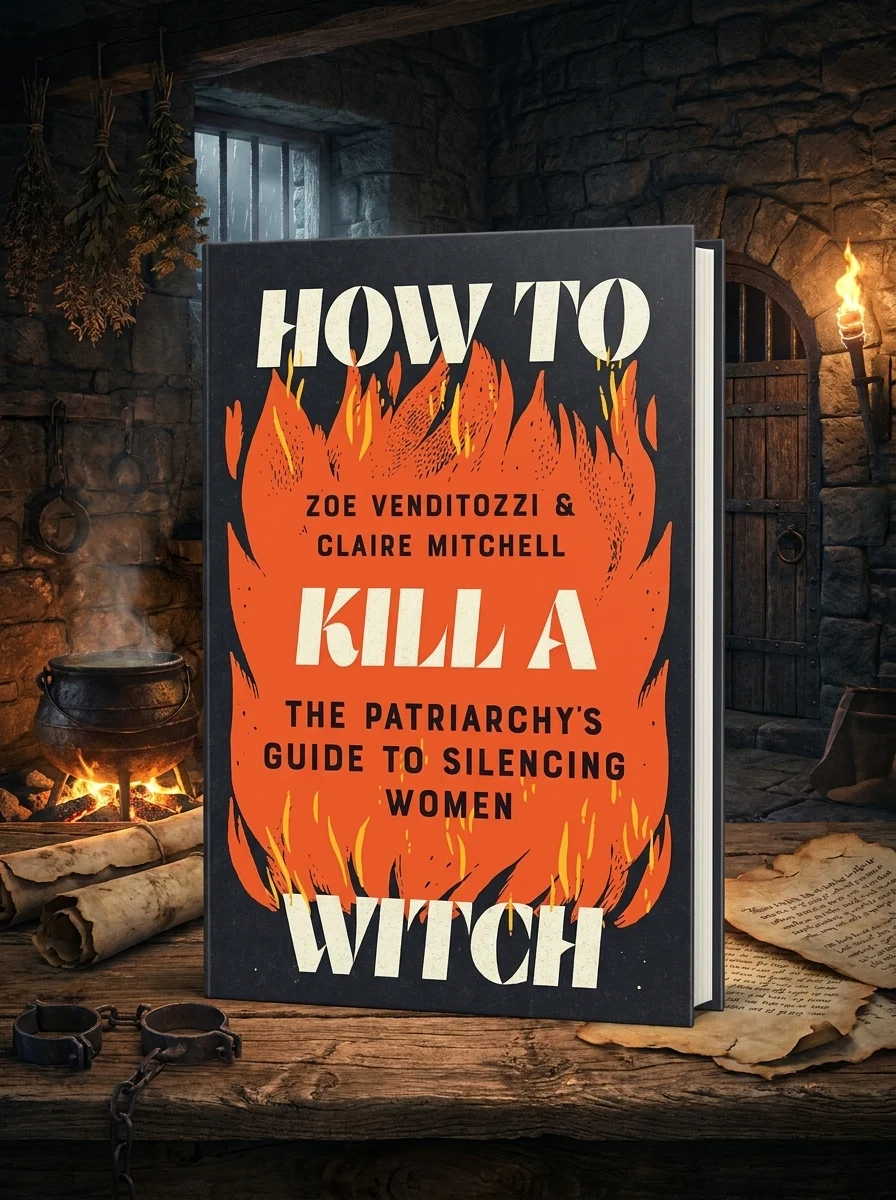

How to Kill a Witch: The Patriarchy's Guide to Silencing Women


Stock reported in the catalog; fulfillment is confirmed with your request.
Unmask the chilling bureaucratic machinery that condemned countless women as witches.
This compelling volume delves into Scotland's harrowing witch trials, specifically the 1563 Witchcraft Act that codified violence against women. Authors Venditozzi and Mitchell expose the systematic, often absurdly bureaucratic, process through which countless women were identified, accused, and executed as witches. From a feminist lens, they illuminate how societal anxieties—like crop failures and starvation—were weaponized, casting women as convenient scapegoats. This historical examination reveals a deeply misogynistic era, tracing its influence far beyond Scotland and highlighting a foundational moment in patriarchal control and the silencing of female voices throughout history.
This work situates itself within feminist historical analysis and esoteric studies, examining the intersection of religious law, gender politics, and occult persecution in early modern Europe. It serves as a critical counter-narrative to traditional witchcraft histories by focusing on the systemic silencing of women through state-sanctioned violence.


📝 Description: How to Kill a Witch: The Patriarchy's Guide to Silencing Women
💎 Expert review
📖 Why choose it
Why this book is worth reading
Readers seeking to understand the deep roots of gender-based oppression will find profound value in this examination. It offers a necessary lens for those interested in how historical anxieties were weaponized against marginalized groups, particularly women. By exposing the bureaucratic machinery behind the silencing of female voices, the book empowers readers to recognize patterns of patriarchal control that persist today. Those passionate about social justice, historical accountability, and the reclamation of lost narratives will appreciate this clear, compelling exposure of how societal fears were projected onto scapegoats. It is an essential read for anyone wishing to grasp the foundational moments that shaped modern attitudes toward gender, power, and the accusation of witchcraft.
⭐ Reader reviews
Reader rating
This volume provides a sharp, feminist critique of Scotland's 1563 Witchcraft Act, effectively highlighting the absurd bureaucratic processes used to condemn women. While it succeeds in illuminating the misogynistic underpinnings of these trials, readers expecting detailed magical practices or traditional occult history may find it lacking. It is strictly a sociological and historical analysis rather than a guide to esoteric practice. Those looking for practical spellwork or supernatural accounts will likely feel disconnected. However, for those interested in the political weaponization of fear, this text is undeniably powerful and well-researched.
❓ Frequently asked questions
📖 Who should read this
If you're drawn to the shadowed corners of history, seeking to understand the systemic oppression of women, or keen to explore the origins of patriarchal control, this essential read awaits. It’s for those who believe that understanding the past is key to dismantling its legacies in the present.
🎯 Key themes and symbolism
Patriarchy's Silencing Mechanism
The book meticulously dissects how the 1563 Witchcraft Act served as a formidable tool of theocratic and patriarchal dominance. It uncovers the systematic oppression and violence against women, revealing how societal fears were expertly manipulated to strip women of agency and voice, cementing male authority through terror and legal codification.
The Absurdity of Justice
This work exposes the chillingly detailed and often illogical administrative procedures behind witch accusations, trials, and executions. It illustrates how an intricate legal framework, despite its inherent absurdity, was wielded to legitimize state-sanctioned violence against women, transforming suspicion into a codified path to condemnation.
Enduring Legacy of Fear
Beyond Scotland, the authors trace how the misogynistic fervor ignited by the Witchcraft Act fanned the flames of similar persecutions worldwide. The book draws crucial connections, demonstrating how these historical events established precedents for the suppression of women, echoing in various forms of control and demonization even today.
💬 Quotes from the book
“The irony of 'justice' being served by procedures so utterly devoid of reason would be comical, were it not for the devastating human cost.”
“To understand the silencing of women today, we must first unearth the historical blueprints of their systemic suppression.”
📜 Historical context
📚 Glossary
- Witchcraft Act (1563)
- Reformation
- Misogyny
📔 Questions to reflect on
- How do historical narratives of persecution, like the witch hunts, continue to shape contemporary societal views on women and power?
- Consider the mechanisms of 'theocratic control' described in the book. Where do you see similar mechanisms at play in modern society, albeit in different forms?
- The book highlights how fears like crop failure were weaponized. Can you identify modern anxieties that are similarly exploited to scapegoat specific groups or individuals?
🏛 Books from this publisher Sourcebooks
All books from this publisher →




You might also like
See more →