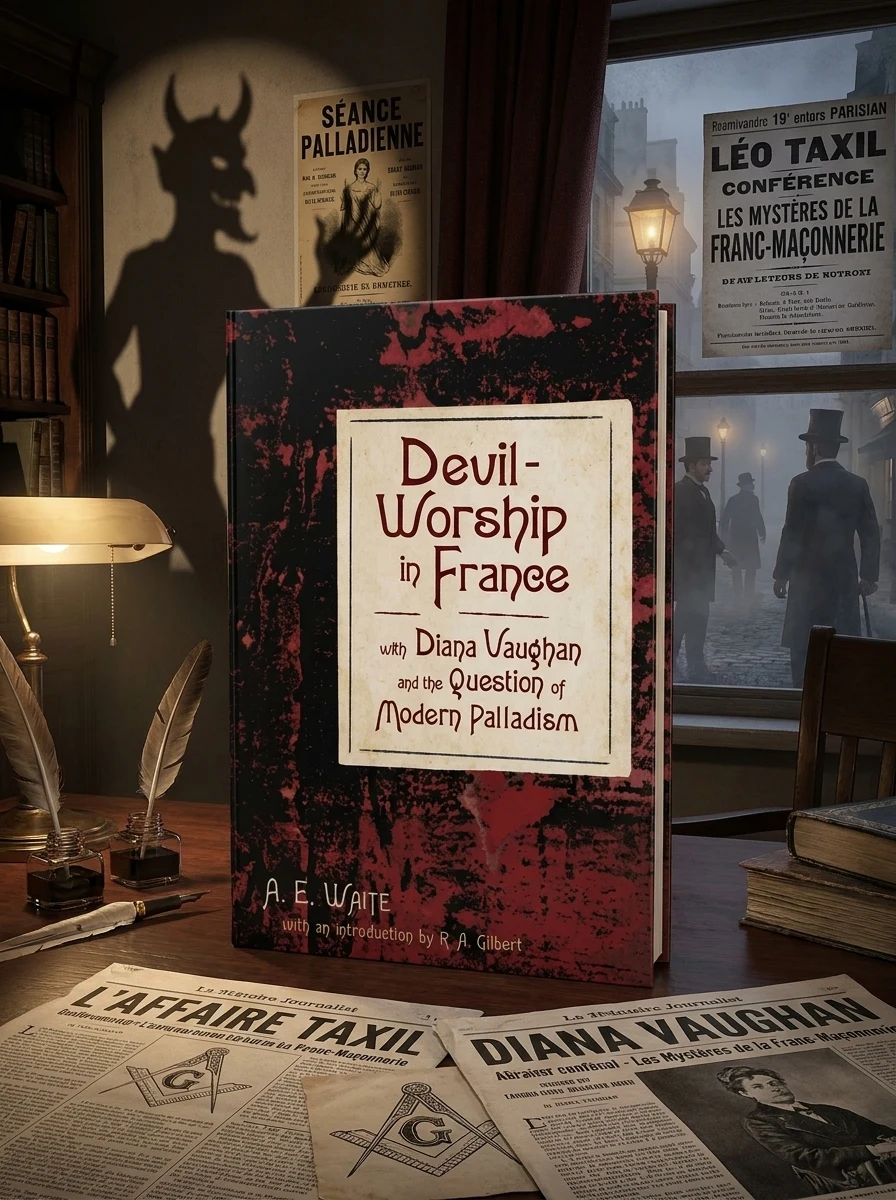
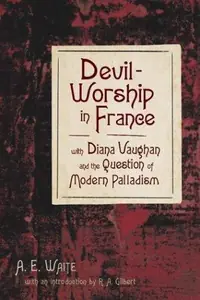
Devil-Worship in France: With Diana Vaughn and the Question of Modern Palladism
This edition can be ordered. No arrival date is confirmed.
Uncover the grandest occult hoax of the 19th century, meticulously exposed by A.E. Waite.
Contrary to its provocative title, A.E. Waite's seminal work is not a manual for infernal rites. Instead, it serves as a penetrating dissection of a sensational fraud perpetrated by Parisian journalist Leo Taxil. Taxil, alongside his fabricated associate Diana Vaughan, conjured the terrifying "Palladian Masons," an alleged secret society engaged in "Luciferian Spiritism." Waite’s book scrutinizes this elaborate deception, which ignited public hysteria against Freemasonry and various occult groups, ultimately contributing to the hoax's undoing and revealing the era's susceptibility to sensationalism.
This work emerges from the late 19th-century European occult landscape, a period marked by intense public fascination with Freemasonry and spiritualism alongside growing skepticism toward sensationalist media narratives. It stands as a critical intersection of esoteric history and journalistic investigation during an era when the boundaries between genuine mysticism and fabricated fraud were heavily contested.


📝 Description: Devil-Worship in France: With Diana Vaughn and the Question of Modern Palladism
💎 Expert review
📖 Why choose it
Why this book is worth reading
Readers with a keen interest in the intersection of occult history, journalism, and social psychology will find this text indispensable. It is specifically designed for those who wish to understand how a fabricated narrative regarding 'Luciferian Spiritism' and the fictional Diana Vaughan could ignite widespread public hysteria against Freemasonry. By meticulously dissecting Leo Taxil’s elaborate deception, Waite provides a masterclass in media literacy within esoteric circles. This book is essential for anyone seeking to separate genuine historical occult practices from the sensationalist fabrications that often cloud their perception. It offers a fascinating look at how the era's susceptibility to scandal was exploited and ultimately corrected by rigorous scrutiny.
⭐ Reader reviews
Reader rating
This volume serves as a vital corrective to the mythos surrounding 19th-century occult frauds, offering a clear-eyed view of the Diana Vaughan hoax and its impact on Palladian Masonry rumors. However, it is not suitable for readers seeking practical ceremonial magic instructions or those who prefer unexamined acceptance of esoteric legends. The text requires patience for historical detail rather than immediate mystical gratification. While intellectually stimulating for historians of religion and journalism, casual occult enthusiasts looking for spellbooks or ritual guides will find its analytical tone dry and detached from the experiential aspects of the tradition it describes.
❓ Frequently asked questions
📖 Who should read this
If you are fascinated by the intersection of media manipulation, religious panic, and occult history, or if you admire A. E. Waite's rigorous scholarship, this compelling account offers profound insights into an era of sensationalism and credulity. It is essential reading for students of esoteric studies and social psychology.
🎯 Key themes and symbolism
The Taxil Deception
Waite meticulously unpacks the fraudulent scheme orchestrated by Leo Taxil, detailing how a fictitious character, Diana Vaughan, was used to fabricate lurid tales of a satanic masonic sect. The book highlights the audacity of the hoax, which captivated and terrified the public with its sensational, yet baseless, claims of "Luciferian Spiritism" and diabolic acts.
Occult Persecution & Hysteria
This work illuminates how the manufactured scandal surrounding the "Palladian Masons" fueled widespread panic and an intense backlash against all things occult and secret societies, particularly Freemasonry. Waite demonstrates the profound impact of such hoaxes on public perception, revealing how easily fear and misinformation can turn society against esoteric traditions.
Waite's Critical Analysis
A.E. Waite's response is a masterclass in scholarly critique, employing a satirical and somewhat farcical tone to dismantle Taxil's elaborate fabrications. His discerning intellect cuts through the sensationalism, exposing the inconsistencies and absurdities of the "Palladian" narrative, serving as a powerful counter-narrative to the prevailing hysteria and discrediting the hoax.
💬 Quotes from the book
“The absurdity of the Palladian narrative, with its grotesque ceremonies and cartoonish devils, served only to reveal the gaping maw of public credulity.”
“True spiritual inquiry demands discernment, not the eager consumption of sensational fables concocted for profit or malice.”
📜 Historical context
📚 Glossary
- Palladism
- Leo Taxil
- Luciferian Spiritism
📔 Questions to reflect on
- How do you think the Taxil hoax influenced public perception of legitimate esoteric traditions in its time, and what parallels might exist today?
- Consider Waite's use of satire in debunking the claims. What are the strengths and limitations of humor as a tool for intellectual critique?
- Reflect on instances in modern media where sensational claims about hidden societies or spiritual practices have gained traction. What lessons can be drawn from the Palladian affair?
🏛 Books from this publisher Weiser Books
All books from this publisher →



 87
87


You might also like
See more →
 91
91