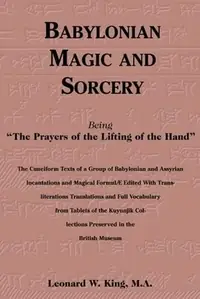
Babylonian Magic and Sorcery: Being the Prayers of the Lifting of the Hand
This edition can be ordered. No arrival date is confirmed.
Sixty ancient clay tablets reveal the raw, devotional power of Babylonian ritual magic.
Leonard W. King’s seminal 1896 volume offers a direct window into the esoteric practices of ancient Mesopotamia. By translating cuneiform inscriptions from Ashurbanipal’s royal library, this text preserves sixty distinct prayers and magical compositions. It features precise transliterations alongside English renderings, supported by specialized glossaries and name lists. This is not a casual introduction but a rigorous scholarly archive of the dawn of Western occultism, capturing the intense spiritual devotion and technical precision of early scribes.
This volume serves as a foundational scholarly bridge between ancient Mesopotamian religious practices and modern Western occultism, preserving the devotional intensity of early scribes. It stands as a rigorous archive of the dawn of ceremonial magic, rooted in the transliteration of cuneiform inscriptions from Ashurbanipal’s royal library.


📝 Description: Babylonian Magic and Sorcery: Being the Prayers of the Lifting of the Hand
💎 Expert review
📖 Why choose it
Why this book is worth reading
Readers seeking an unvarnished, primary-source connection to the origins of Western esotericism will find profound value here. This book is ideal for serious students of comparative religion and ceremonial magic who desire to move beyond modern interpretations and engage directly with the raw, technical precision of ancient Babylonian ritual. It offers a unique window into the intense spiritual devotion that characterized early scribes, allowing practitioners to understand the structural and devotional underpinnings of magical rites. By presenting sixty distinct prayers alongside precise transliterations, it provides an indispensable resource for those committed to historical accuracy and the study of the dawn of occult practice, rather than casual curiosity.
⭐ Reader reviews
Reader rating
A friend in my study group recommended this one. The symbolism is layered and generous to patient readers. Delivery took a bit longer than quoted.
Bought this as a gift for my sister and ended up ordering a second copy for myself. The symbolism is layered and generous to patient readers. A text you study rather than simply read. Will be gifting a copy to a friend.
A friend in my study group recommended this one. The symbolism is layered and generous to patient readers. It assumes more background than a beginner might have. Happy enough with the purchase.
King’s 1896 work is a monumental but dense scholarly archive, not a convenient guide for the uninitiated. It demands patience and a willingness to engage with specialized glossaries and name lists alongside English renderings. This text does NOT suit readers seeking accessible, modernized spellbooks or those looking for a casual introduction to magic without historical rigor. It is strictly for academics and dedicated occultists willing to navigate the complexities of cuneiform translation. The value lies in its preservation of Ashurbanipal’s library inscriptions, offering a direct, albeit difficult, line to ancient Mesopotamian esotericism that remains unmatched in its raw authenticity.
❓ Frequently asked questions
📖 Who should read this
Dedicated occultists and historians seeking primary source material rather than modern interpretations. This volume suits those who appreciate academic rigor and wish to engage directly with the foundational texts of ancient magical traditions.
🎯 Key themes and symbolism
Assyrian Rituals
Cuneiform Translation
Devotional Magic
💬 Quotes from the book
“The texts and translations are accurately presented and definitive.”
“Designed for the professional, whether that professional be Assyriologist, paleographer, or magician.”
📜 Historical context
📚 Glossary
- Cuneiform
- Transliteration
- Ashurbanipal
📔 Questions to reflect on
- How does the formal structure of these ancient prayers differ from modern spontaneous invocation?
- What emotions arise when reading the direct words of a scribe from 600 B.C.?
- In what ways do the rituals here reflect a desire for control over the divine?
🏛 Books from this publisher Weiser Books
All books from this publisher →





 87
87


You might also like
See more →
 91
91