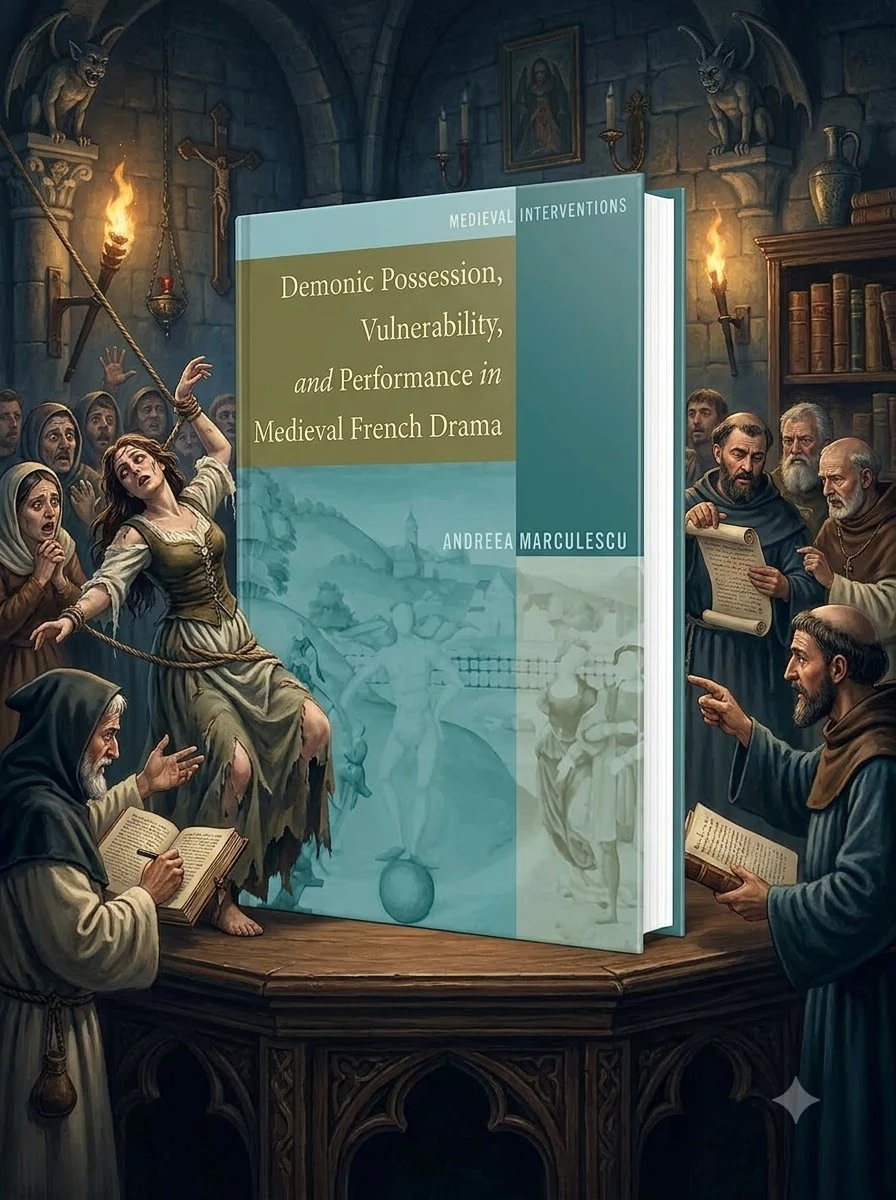
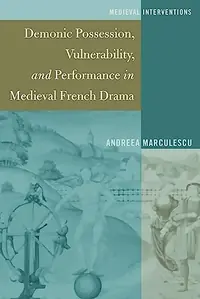
Demonic Possession, Vulnerability, and Performance in Medieval French Drama Nichols, Stephen G
 79
79
 Editorial score
How we rate
Editorial score
How we rate
Stock reported in the catalog; fulfillment is confirmed with your request.
Unmasking medieval possession as a dramatic, gendered performance, not simply pathology.
This scholarly work challenges conventional views of demonic possession in medieval French drama, particularly concerning women. It argues that the supposed 'pathology' of the possessed was a construct, largely shaped by male intellectuals to explore theological and philosophical questions. Instead of seeing symptoms like contortions and disarticulated speech as signs of abnormality, the book proposes viewing them as a complex form of communication and 'intercorporeality,' a sensuous exchange between the possessed and their observers, reframing vulnerability as a performative act within its historical context.
This work sits at the intersection of medieval literary studies and gender theory, examining how French drama utilized the cultural construct of demonic possession to explore theological anxieties. It reframes historical performances of vulnerability as deliberate artistic choices rather than medical anomalies.


📝 Description: Demonic Possession, Vulnerability, and Performance in Medieval French Drama Nichols, Stephen G
💎 Expert review
📖 Why choose it
Why this book is worth reading
Scholars and students of medieval French drama will find this text invaluable for its bold re-evaluation of possession narratives. Nichols and Marculescu offer a fresh lens, encouraging readers to see the possessed not as victims of pathology but as active agents in a complex performative exchange. It is essential for those interested in how gender dynamics shape theological discourse and how vulnerability can be weaponized or utilized within artistic frameworks. The book provides deep insight into the sensuous intercorporeality between performer and observer, making it a crucial resource for understanding the nuanced communication strategies of the medieval stage.
⭐ Reader reviews
Reader rating
This is a dense, theoretical exploration that demands patience and a strong background in literary criticism. It successfully deconstructs the male intellectual gaze but may frustrate general readers seeking accessible history or narrative pleasure. Those looking for straightforward accounts of exorcism rituals or simple historical timelines will find little here. It is strictly for academics and serious enthusiasts willing to engage with abstract concepts of intercorporeality and performative vulnerability. The text is rigorous and intellectually stimulating, though its academic tone may alienate casual readers interested in the occult without a scholarly framework.
❓ Frequently asked questions
📖 Who should read this
If you're fascinated by the intersection of gender, performance, and belief in the Middle Ages, or if you seek to deconstruct historical narratives around 'abnormality,' this book offers a profoundly insightful and challenging perspective for your studies.
🎯 Key themes and symbolism
Female Vulnerability Reimagined
The text explores how medieval male scholars framed possessed women as 'anomalous' and 'incapable of self-governance,' turning their experiences into a lens for theological inquiry rather than acknowledging their subjective reality. It critically re-examines how these narratives contributed to specific understandings of womanhood in the period.
Demonic Performance Theory
This book posits that the dramatic manifestations of possession—shrieks, contortions—should be understood not as mental illness but as a form of 'intercorporeality.' It suggests these bodily expressions were a dynamic dialogue, a 'sensuous exchange' between the possessed individual and their community, offering a new perspective on medieval theatricality.
Intellectual Constructs of Evil
Delving into how medieval theologians and philosophers used the concept of the demoniac, this work argues it was a 'fetishistic construction.' It reveals how these intellectuals utilized the possessed figure to intellectualize abstract notions of demons, the supernatural, and the very nature of the human body and its boundaries.
💬 Quotes from the book
“the subjectivity of the demoniac becomes, thus, a fetishistic construction which allows medieval male intellectuals to ponder questions about demons, the supernatural, and the human body.”
“the demoniac's convulsions, contortions, shrieks of pain, and snapshots of disarticulated language are not conceptualized as 'pathological' but as a model of intercorporeality built around modalities of sensuous exchange between the bodies of both the possessed and of those whom she comes in contact with.”
📜 Historical context
📚 Glossary
- Demoniac
- Hysteric
- Intercorporeality
📔 Questions to reflect on
- How might our modern understanding of mental health or 'abnormal' behavior be influenced by historical constructs similar to medieval possession narratives?
- Consider a contemporary performance or dramatic work that explores themes of vulnerability or altered states. How does it compare to the medieval 'performance' of possession discussed in this book?
- Reflect on how power dynamics (e.g., gender, intellectual authority) might shape interpretations of unusual phenomena in your own field of interest.
🏛 Books from this publisher Peter Lang Inc., International Academic Publishers
All books from this publisher →
You might also like
See more →