
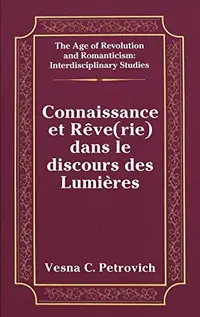
Connaissance Et Rêve(rie) Dans Le Discours Des Lumières May, Gita
This edition can be ordered. No arrival date is confirmed.
Uncover how 18th-century dreams illuminated knowledge and paved the way for Romanticism.
This compelling volume delves into the intricate relationship between dream states and intellectual understanding during the Enlightenment era, particularly in 18th-century France. Author Gita May meticulously charts how the phenomenon of dreaming, both as a literary motif and a cultural concept, was portrayed and debated within the dominant philosophical and artistic discourses of the period. It offers profound insights into how these evolving perceptions of dreams ultimately presaged the emotional and subjective shifts characteristic of the burgeoning Romantic movement, challenging purely rationalist thought.
This work situates itself within the intellectual history of the Enlightenment, specifically examining 18th-century French philosophical and artistic discourses. It explores the tension between rationalist thought and the emerging subjective experiences that would eventually characterize the Romantic movement.


📝 Description: Connaissance Et Rêve(rie) Dans Le Discours Des Lumières May, Gita
💎 Expert review
📖 Why choose it
Why this book is worth reading
Scholars of intellectual history and literature will find this volume indispensable for understanding the subtle shifts in European thought during the Enlightenment. Gita May offers a compelling analysis of how dream states were not merely literary motifs but vital cultural concepts that challenged the dominant rationalist ideologies of the time. Readers interested in the genealogy of Romanticism will appreciate how these earlier debates paved the way for emotional and subjective expression. It is essential for those seeking to trace the complex relationship between unconscious mental processes and the development of modern philosophical discourse in France.
⭐ Reader reviews
Reader rating
May provides a meticulous charting of dream phenomena within 18th-century French discourse, offering profound insights into the presaging of Romanticism. However, this academic rigor may alienate casual readers seeking accessible narratives or practical self-help advice regarding dreams. It is not suited for those expecting a focus on mystical practices rather than intellectual history. The dense analysis of philosophical debates requires patience and prior familiarity with Enlightenment context. While valuable for its scholarly depth, it lacks the narrative flair that might engage general audiences, making it primarily useful for specialized study rather than leisure reading.
❓ Frequently asked questions
📖 Who should read this
Are you fascinated by the intellectual currents of 18th-century Europe, or the intricate history of consciousness? This book is for you. Scholars of French literature, philosophy, and cultural history will find it an essential, thought-provoking addition to their libraries.
🎯 Key themes and symbolism
Dreams as Knowledge Source
Explore how the 18th century grappled with dreams as potential conduits of insight or truth. This book examines the delicate balance between burgeoning scientific rationalism and persistent beliefs in dreams' revelatory power, showing how thinkers attempted to integrate or dismiss their epistemic value within a changing intellectual landscape.
Enlightenment Rationality's Limits
Discover how the Age of Reason confronted the often-irrational, symbolic world of dreams. The text dissects the Enlightenment's attempts to categorize, explain, or even rationalize dream experiences, revealing the inherent tensions between its emphasis on logic and empirical observation, and the enduring mystery of the subconscious mind.
Foreshadowing Romantic Sensibility
Witness how 18th-century dream discourse laid crucial groundwork for the Romantic movement. By giving increasing weight to subjective experience, emotion, and the inner world — elements strongly present in dreams — this study illustrates how Enlightenment thinkers, perhaps unwittingly, began to cultivate the very ground from which Romanticism would later flourish.
💬 Quotes from the book
“The Age of Reason, in its fervent pursuit of clarity and order, often found itself perplexed by the nocturnal theater of the mind, a realm where logic seemed to dissolve into a shifting tapestry of symbols.”
“Yet, within the very attempts to categorize and rationalize dreams, one can discern the subtle seeds of a burgeoning appreciation for subjectivity, a nascent understanding that the inner world held profound truths awaiting exploration.”
📜 Historical context
📚 Glossary
- Enlightenment
- Romanticism
- Discourse
📔 Questions to reflect on
- How do contemporary scientific and psychological views of dreams compare with the cultural perceptions of the 18th century?
- Consider a time when a dream felt like it offered you a form of 'knowledge.' How did this experience align or conflict with your rational understanding?
- In what ways do our current societal values shape how we interpret or dismiss the significance of dreams today?
🏛 Books from this publisher Peter Lang Inc., International Academic Publishers
All books from this publisher →
You might also like
See more →

 91
91
 91
91
 91
91