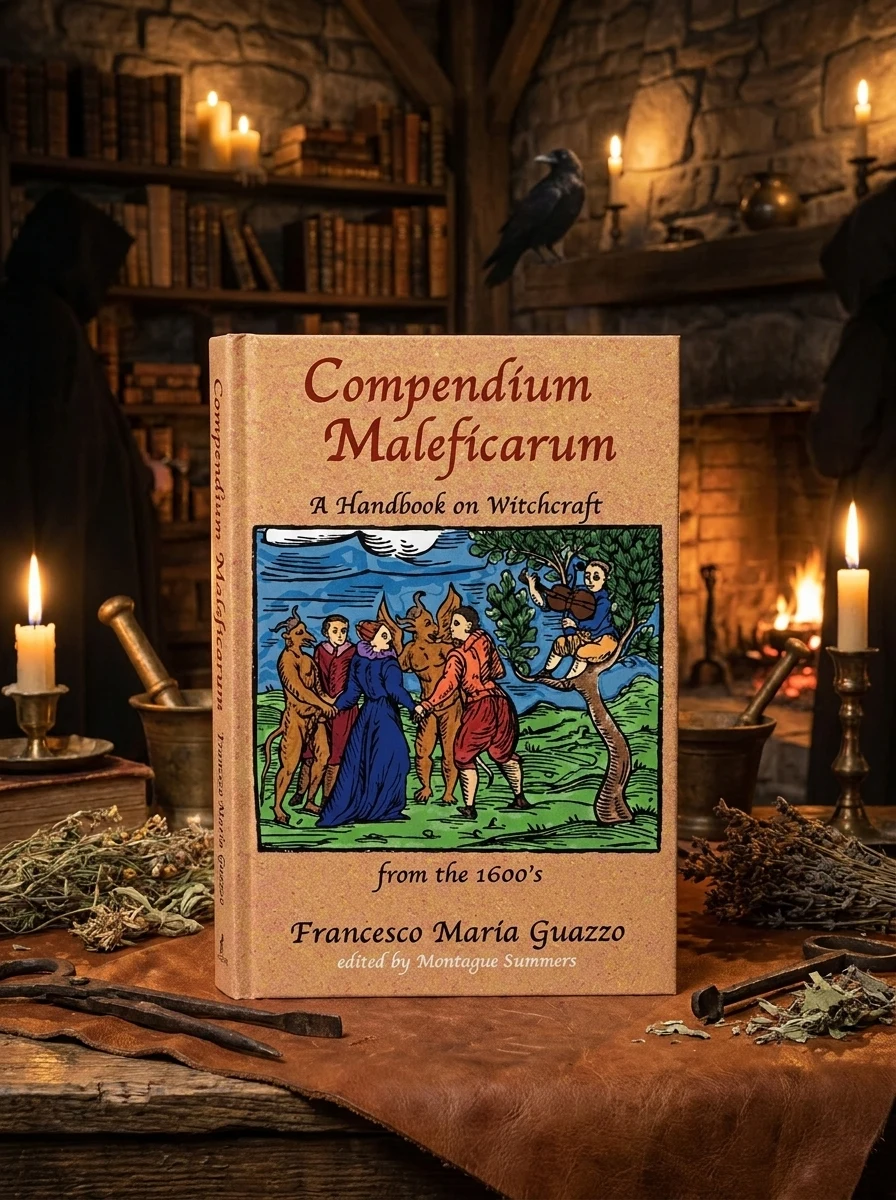
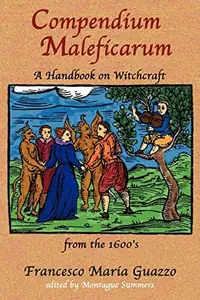
Compendium Maleficarum
Stock reported in the catalog; fulfillment is confirmed with your request.
Uncover the chilling 17th-century manual that fueled the witch hunts and defined evil.
Step into the dark heart of early modern Europe with Francesco Maria Guazzo's infamous 1628 'Compendium Maleficarum.' Presented as a definitive guide to the practice and identification of witchcraft, this tome offers a disturbing window into the era's pervasive fears. While its descriptions of magic and demonic pacts are far from factual today, the book's true value lies in revealing the profound superstition that gripped society, directly contributing to the brutal persecution of countless individuals accused of sorcery. It's an essential document for understanding the historical terror of the witch trials.
This text serves as a pivotal document within the early modern European occult tradition, specifically reflecting the intense period of witch-hunting hysteria in the seventeenth century.


📝 Description: Compendium Maleficarum
💎 Expert review
📖 Why choose it
Why this book is worth reading
Readers fascinated by the psychological underpinnings of historical persecution will find this volume indispensable. It offers a raw, unfiltered glimpse into the collective anxiety that defined an era, allowing scholars and enthusiasts to understand the mechanisms of fear that drove the brutal treatment of accused individuals. By examining Guazzo’s work alongside Summers’ commentary, one gains critical insight into how superstition was systematized and weaponized. It is not merely a catalog of alleged crimes but a mirror reflecting the societal fractures of its time, essential for anyone seeking to comprehend the depth of early modern terror and the cultural forces that justified such widespread violence against those labeled as sorcerers.
⭐ Reader reviews
Reader rating
While historically significant, this book is dense with archaic concepts and grim subject matter that may alienate casual readers. It is not suitable for those seeking practical magical instruction or lighthearted occultism. The content is deeply disturbing and academically rigorous, making it best suited for serious historians or dedicated students of esoteric history who can withstand its bleak tone. Readers expecting modern interpretations or sensationalized drama will likely find this dry and oppressive. It demands a scholarly mindset to appreciate its value as a primary source of societal fear rather than entertainment.
❓ Frequently asked questions
📖 Who should read this
If you're a student of historical occultism, a scholar of early modern European history, or simply fascinated by the origins of mass hysteria and persecution, this primary source offers unparalleled insight into a dark chapter of human belief and fear. It's not for the faint of heart.
🎯 Key themes and symbolism
Defining Early Modern Witchcraft
Guazzo meticulously details what he believed constituted witchcraft, outlining rituals, demonic pacts, and the perceived powers of sorcerers. This section provides a foundational understanding of the era's theological and superstitious framework for identifying and condemning alleged practitioners.
The Grip of Superstition
The Compendium vividly illustrates the profound and often terrifying grip of superstitious beliefs in 17th-century society. It demonstrates how unproven fears and uncritical acceptance of fantastical claims could shape public perception and justify extreme actions against marginalized groups.
Fueling the Witch Hunts
More than a mere description, this work served as a practical guide for persecutors, offering methods for identifying and prosecuting witches. It tragically illuminates the intellectual and spiritual justifications that underlay the widespread and brutal witch trials of the period.
💬 Quotes from the book
“The true witch is she who, having renounced God, makes a pact with the Devil, receiving from him certain powers to work ill upon others.”
“Let no man doubt that the plague of witchcraft is a most grievous infection, demanding swift and merciless remedy for the preservation of Christian souls.”
📜 Historical context
📚 Glossary
- Maleficarum
- Demonology
- Witch Hunt
📔 Questions to reflect on
- How do historical documents like the 'Compendium Maleficarum' shape our understanding of past societal fears and anxieties?
- Considering the book's influence, what parallels can you draw between historical witch hunts and modern forms of mass hysteria or scapegoating?
- If beliefs from this era were considered factual, how might our understanding of justice, morality, and individual liberty be fundamentally altered?
🏛 Books from this publisher Book Tree
All books from this publisher →
 90
90


You might also like
See more →
 89
89
 85
85
 83
83
 75
75