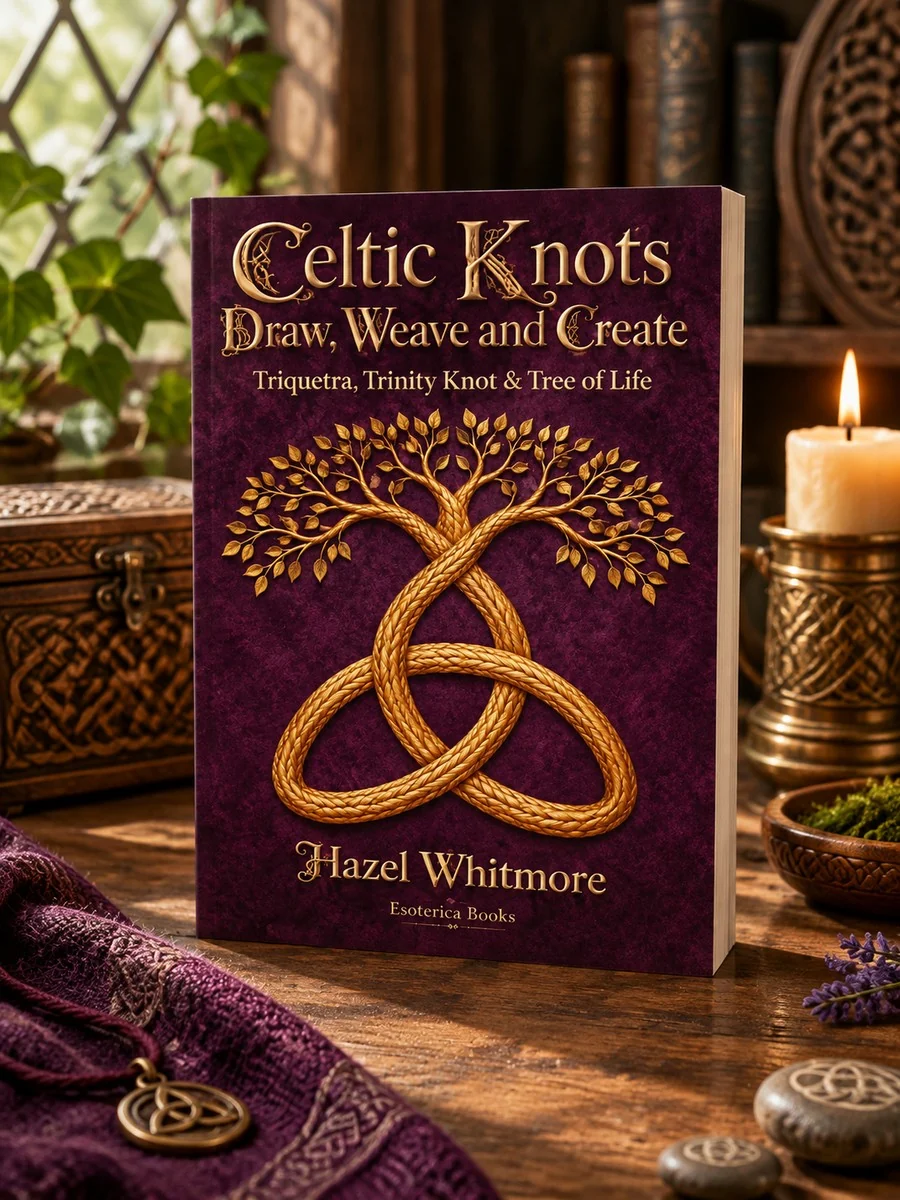
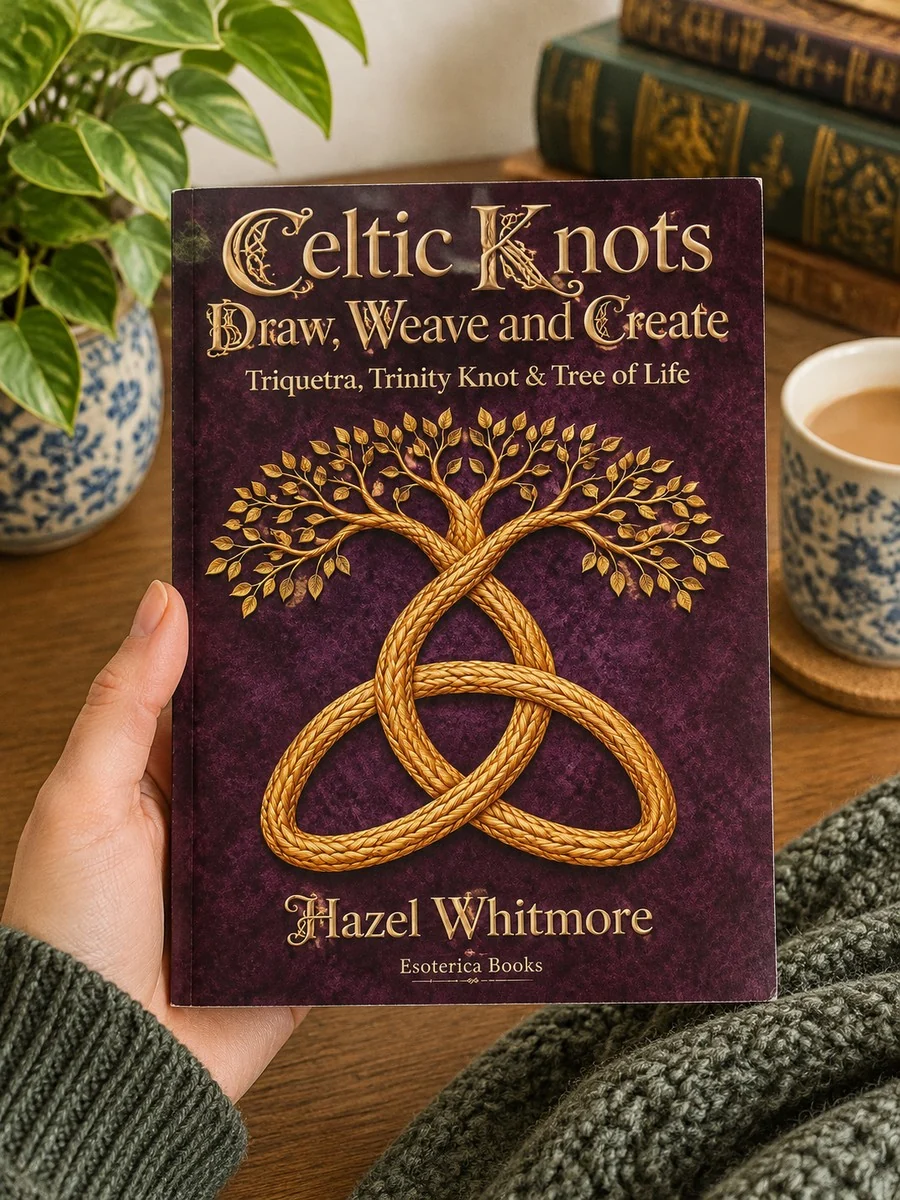
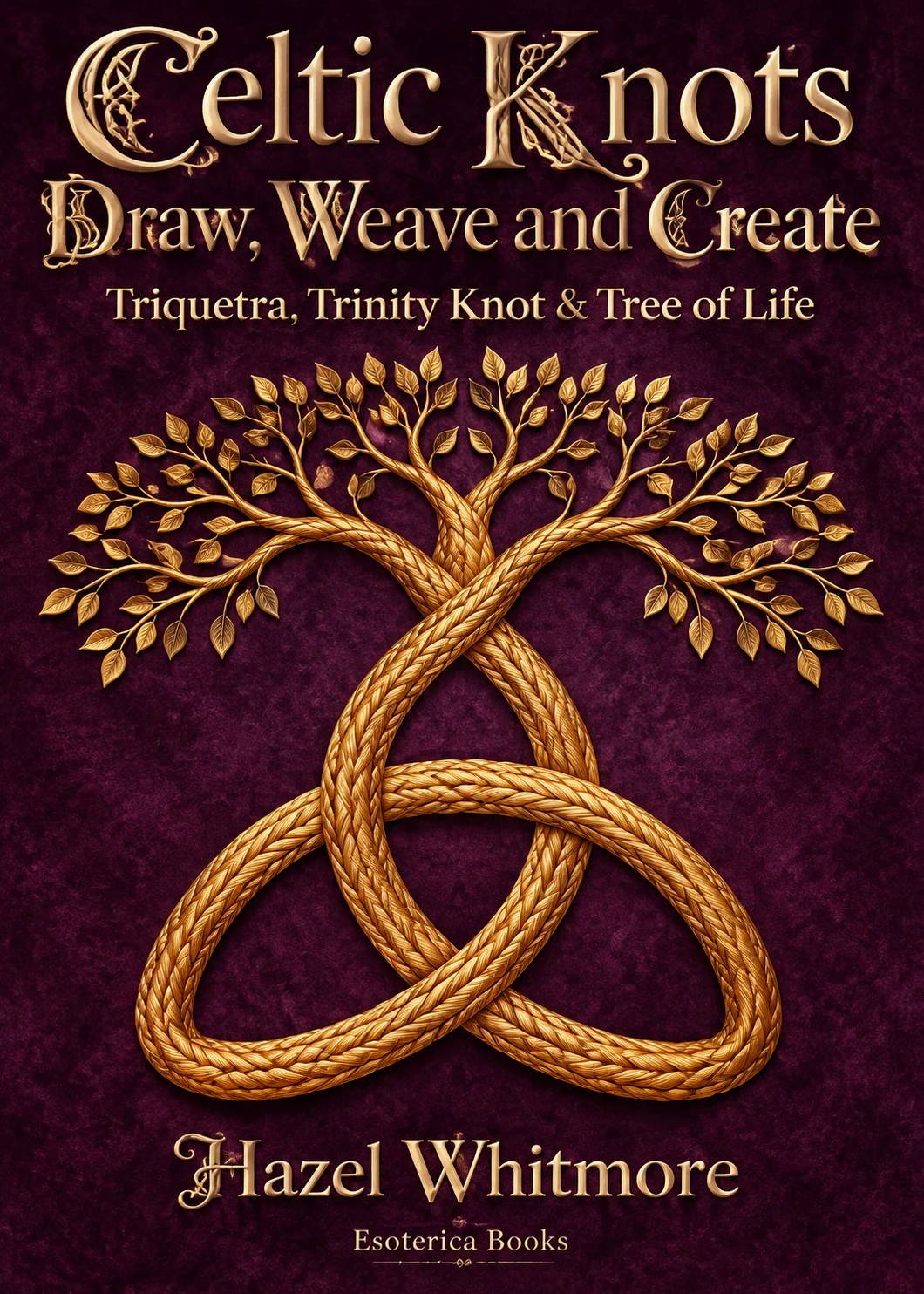
Celtic Knots: Draw, Weave and Create
Learn to draw, weave, and create beautiful Celtic knots, from your first Triquetra to original works of art.
Discover the artistry and symbolism of Celtic knots with a practical, beginner-friendly guide to drawing, weaving, and creating your own interlaced designs. Using the five-step W.E.A.V.E. Method, Hazel Whitmore takes you from simple Triquetra loops and the Trinity Knot to the branching Tree of Life. Learn to use dot grids, plan continuous paths, master over-and-under crossings, and transform patterns into rope decorations, jewelry, braided hairstyles, and wood carvings. Along the way, explore the meanings of connection, continuity, and threefold symbolism.
Celtic knotwork is a distinctive decorative tradition recognized for its interlacing lines, repeating patterns, and carefully balanced crossings. Its motifs invite different interpretations, and this book explores both familiar symbolic associations and the personal meanings readers can develop through modern Celtic-inspired art.


📝 Description: Celtic Knots: Draw, Weave and Create
📖 Why choose it
Why this book is worth reading
Celtic knotwork can look complicated until you understand how its lines travel. This guide makes that process approachable through a consistent five-step method, beginning with three simple loops and gradually introducing more elaborate designs. Its particular appeal is the connection between drawing and making: a pattern first developed on paper can become a rope creation, a pendant, a braided accent, or a carved wooden decoration. You also have room to explore what each symbol means to you.
⭐ Reader reviews
Reader rating
Hazel Whitmore's guide succeeds in making an intricate decorative art approachable. The W.E.A.V.E. Method gives beginners a useful sequence for understanding guide points, strand direction, alternating crossings, and the importance of checking continuity. The progression from the Triquetra to the Trinity Knot and Tree of Life provides a clear learning path, while the later chapters extend the subject into rope, jewelry, hairstyles, and woodwork. We particularly appreciate the emphasis on understanding a pattern's construction instead of simply tracing its outline. The symbolic discussions also leave room for individual interpretation. One limitation: readers seeking a scholarly, historically documented study of Celtic art will find the practical crafting focus more prominent than historical research.
❓ Frequently asked questions
📖 Who should read this
Ideal for beginners who want to learn how to draw Celtic knots step by step, craft decorative rope designs, or explore the symbolism of the Triquetra, Trinity Knot, and Tree of Life. It also suits jewelry makers, braid enthusiasts, woodcraft beginners, and creative readers who enjoy turning meaningful patterns into handmade objects.
🎯 Key themes and symbolism
Celtic Knotwork
Threefold Symbolism
Interlacing Techniques
Creative Craftsmanship
📜 Historical context
📚 Glossary
- Celtic knotwork
- Triquetra
- Trinity Knot
- Tree of Life
- Over-and-under crossing
- W.E.A.V.E. Method
📔 Questions to reflect on
- What does the idea of three interconnected loops represent in your own life, and how might you express that interpretation through a Triquetra?
- Which elements of the Tree of Life design feel most meaningful to you: the roots, the trunk, or the branches? What connections do you see between them?
- If you combined a Trinity Knot with another interlacing pattern to create an original design, which symbols, materials, and personal meanings would you bring together?
📖 Read on the blog
✍️ More books by this author Hazel Whitmore


🏛 Books from this publisher Esoterica Books
All books from this publisher →
You might also like
See more →
Have a question about this item?
Ask about the edition, condition, delivery or anything else — we reply by email or phone, usually within a day.
