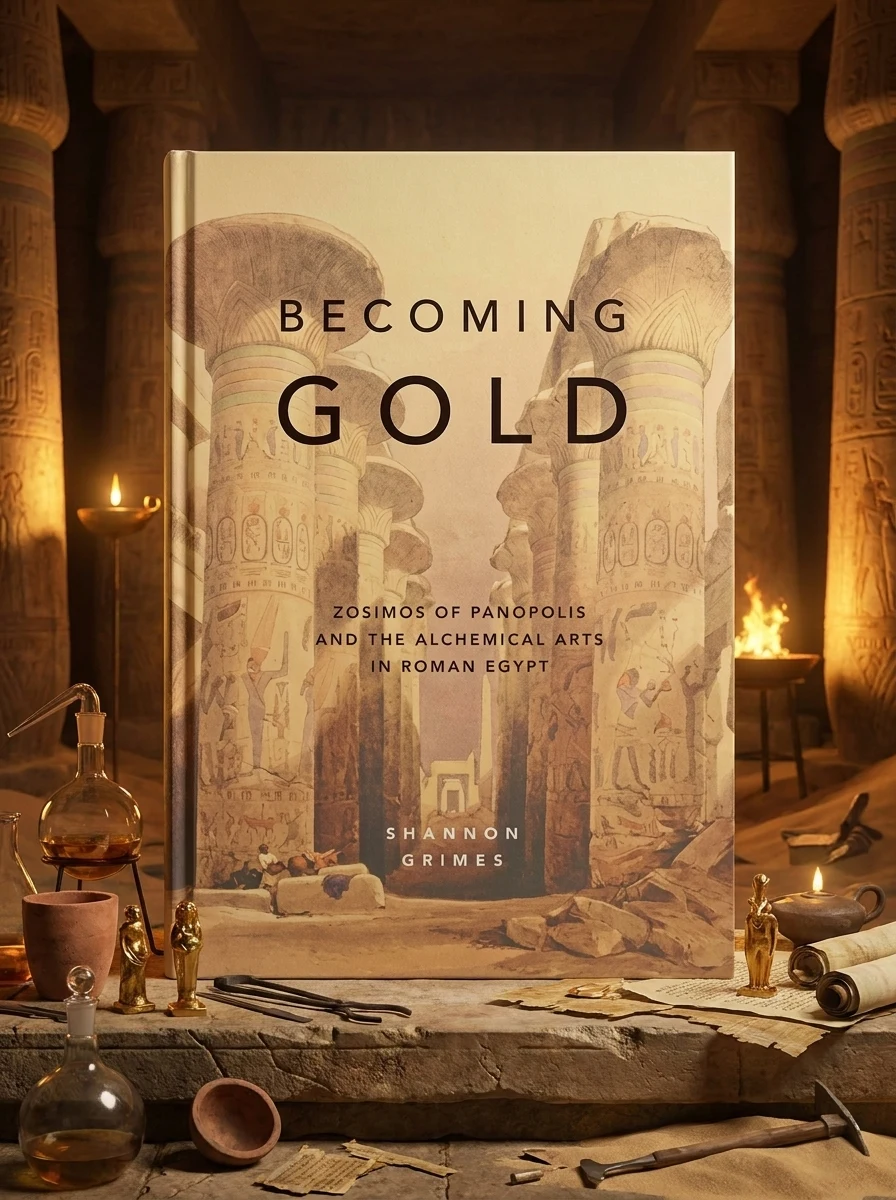
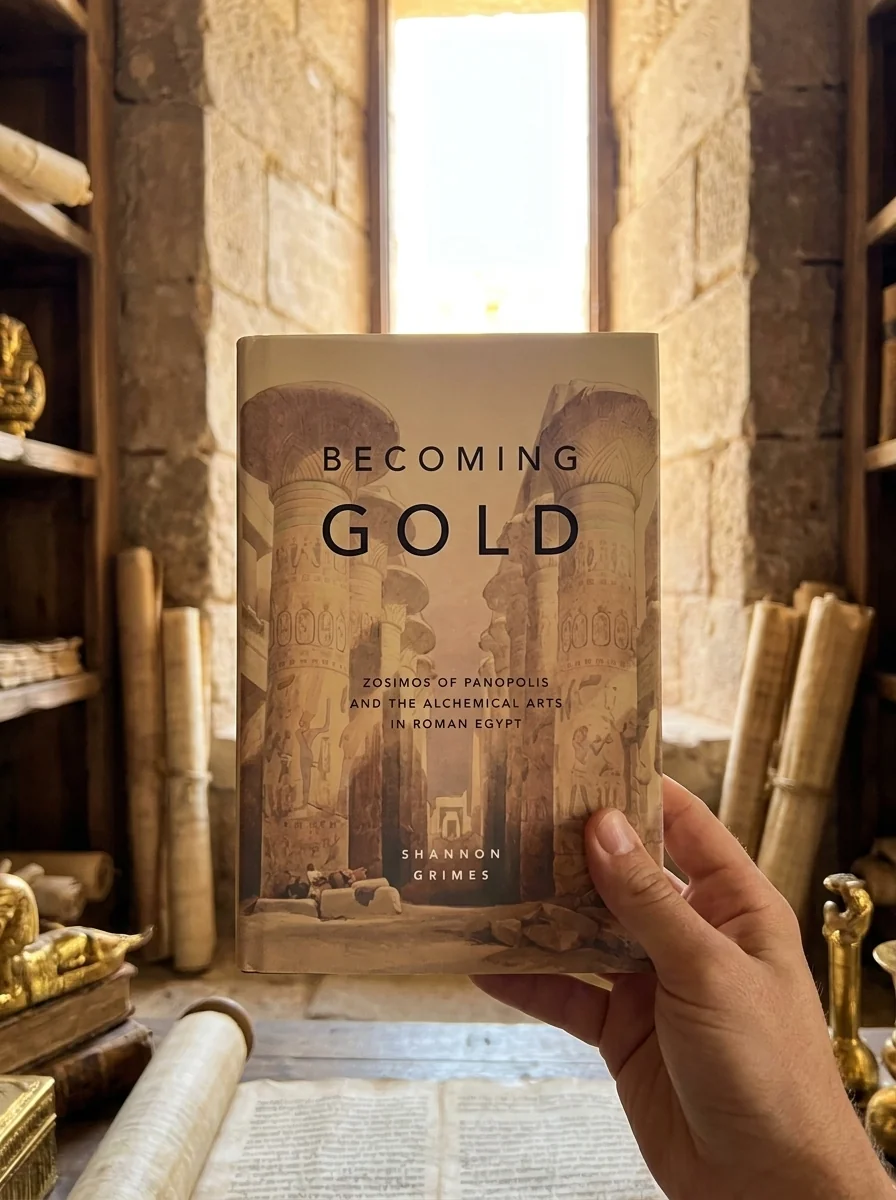
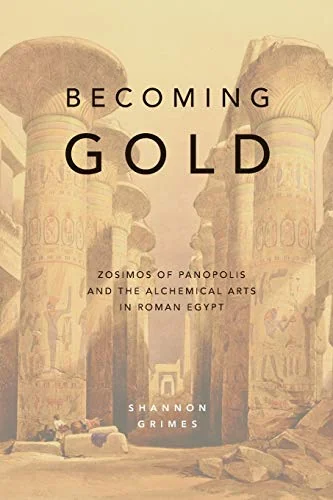
Becoming Gold: Zosimos of Panopolis and the Alchemical Arts in Roman Egypt
Shannon Grimes invites readers to explore the profound legacy of Zosimos of Panopolis, a pivotal figure in ancient alchemy. This work recontextualizes his art, showing it not as a simple blend of Alexandrian ideas, but as deeply rooted in the ancient Near East and Roman Egyptian temple culture. Through meticulous "cultural biography" and "thick description," Grimes reveals Zosimos as a high-ranking scribal priest and goldsmith, intertwining metallurgical craft with sacred ritual. The book unveils alchemy's dual spiritual and material emphasis, exploring polychromic statuary and statue animation rituals as integral to this esoteric tradition.


📝 Description: Becoming Gold: Zosimos of Panopolis and the Alchemical Arts in Roman Egypt
📑 What's inside
- List of Illustrations Abbreviations A Note on Conventions Acknowledgements
- Introduction
- Historiographical Issues Chapter Summaries Primary Sources
- 1. Zosimos and Greco-Egyptian Alchemy, Revisited
- Zosimos and Statue Making Color Transmutation Philosophies of Nature
- 2. Alchemy in Panopolis: Temples and Trade Guilds Priests of the House of Life Temple Culture in the Panopolis Region Trade Guilds and Workshops Zosimos's Associates and Rivals Conclusion
- 3. Alchemy as a Spiritual Exercise
- 6. Coda
- Bibliography Index About the Author
💎 Expert review
📖 Why choose it
Why this book is worth reading
Readers deeply interested in the intersection of material craft and spiritual ritual will find this book a vital resource. It is particularly suited for scholars and practitioners who seek to understand alchemy not as a precursor to modern science, but as a profound religious discipline rooted in ancient Egyptian temple culture. By revealing Zosimos as a high-ranking scribal priest, Grimes offers a fresh perspective on how metallurgy served as a vehicle for sacred transformation. Those fascinated by the cultural biography of esoteric figures and the historical realities of statue animation rituals will gain significant insight here, moving beyond simplistic interpretations to appreciate the complex, dual nature of ancient alchemical arts.
⭐ Reader reviews
Reader rating
Grimes provides a meticulous 'thick description' that successfully recontextualizes Zosimos within his proper Near Eastern and Roman Egyptian milieu. The analysis of polychromic statuary and scribal priesthood is intellectually rigorous and historically grounded. However, this volume may frustrate casual readers or those seeking practical alchemical recipes, as it focuses heavily on cultural biography rather than technical instruction. It demands patience for its academic tone and dense theoretical framework. While essential for serious historians of religion and esoteric studies, it offers little value to hobbyist alchemists or those desiring a straightforward, accessible narrative of early chemical practices.
❓ Frequently asked questions
📖 Who should read this
If you are fascinated by the hidden spiritual dimensions of ancient crafts, the historical lineage of esoteric traditions, or the profound interplay between material science and religious practice, this book offers a groundbreaking exploration into the heart of Roman Egyptian alchemy.
🎯 Key themes and symbolism
Zosimos's Alchemical Vision
This book redefines Zosimos, portraying him as a sacred artist who saw alchemy as a profound spiritual journey intertwined with material transformation. It argues that his work was not merely about transmuting metals but about a deeper, holistic engagement with the divine essence within creation, deeply embedded in priestly traditions.
Ancient Roots of Alchemy
Grimes challenges the notion of alchemy as solely an Alexandrian invention, tracing its origins much further back into the religious cultures of the Ancient Near East. Through a "cultural biography" approach, the book demonstrates how these deeper historical and cultural currents shaped Zosimos's practices and philosophy.
Sacred Metallurgy & Ritual
The text delves into the practical aspects of ancient Egyptian craftsmanship, such as metal-coloring techniques for polychromic statuary and the rituals used to animate statues. It reveals Zosimos as a master craftsman and priest, overseeing these processes where metallurgical expertise merged seamlessly with sacred, life-giving rites within the temple.
📜 Historical context
📚 Glossary
- Syncretism
- Hellenized World
- Polychromic Statuary
📔 Questions to reflect on
- How might the ancient intertwining of spiritual pursuit and material craft reshape our modern understanding of technology or art, if viewed through a sacred lens?
- Consider the concept of 'cultural biography' as applied to a significant figure in your own area of interest. What new insights might this approach reveal?
- Reflect on how viewing a craft or skill you possess as a 'sacred art,' rather than purely pragmatic, might change your approach or experience of it.



![How to Manifest: Bring Your Goals Into Alignment with the Alchemy of the Universe [A Manifestation Book]](/img/how-to-manifest-bring-your-goals-into-alignment-with-the-alchemy-of-the-universe-a-manifestation-book-scene.webp)