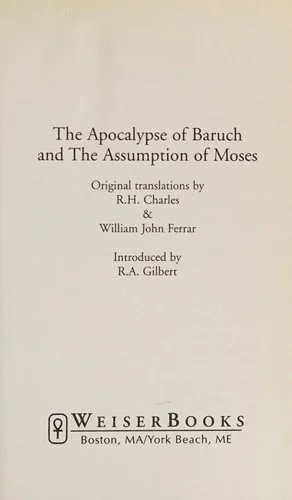
Apocalypse of Baruch and the Assumption of Moses Charles, R H
✍️ Charles, R H;, Ferrar and 3 moreStep into the prophetic mind of Baruch as he grapples with Jerusalem's fall in 70 AD, receiving direct divine visions. This apocryphal text, translated and edited by R. H. Charles, unveils a cosmic end-of-the-world scenario, where periods of peace and tribulation are symbolized by alternating 'bright and black rains.' It culminates in the Messiah's return and a radical redefinition of redemption, promising a literal 'heaven on earth' for the steadfast, challenging popular eschatological views like the Rapture.


📝 Description: Apocalypse of Baruch and the Assumption of Moses Charles, R H
💎 Expert review
📖 Why choose it
Why this book is worth reading
This book is essential for scholars and enthusiasts of early Judeo-Christian history who seek to understand the diverse landscape of ancient apocalyptic thought beyond the canonical scriptures. Readers interested in the evolution of messianic expectations will find value in observing how Baruch’s visions interpret the trauma of Jerusalem's fall through a lens of divine justice and cosmic renewal. It offers a unique perspective on redemption that challenges modern assumptions, inviting those with a taste for dense, theological complexity to explore an alternative vision of the afterlife where the righteous inherit a transformed earth rather than departing from it.
⭐ Reader reviews
Reader rating
This text demands patience and a strong interest in antiquity, making it unsuitable for readers seeking quick spiritual comfort or straightforward narrative entertainment. It is not for those who prefer clear-cut eschatological doctrines like the Rapture, as this work presents a radically different, earth-centered redemption. While R.H. Charles’s translation provides necessary scholarly rigor, the density of apocalyptic symbolism may alienate casual readers. However, for those dedicated to uncovering the roots of Western mystical thought, it remains an indispensable, albeit demanding, primary source that rewards deep engagement with its intricate cosmic scenarios.
❓ Frequently asked questions
📖 Who should read this
If you are drawn to hidden biblical histories, alternative eschatologies, or seek a deeper understanding of early Jewish and Christian prophetic thought, this text offers profound insights. It's a vital read for anyone questioning conventional end-times narratives.
🎯 Key themes and symbolism
Apocalyptic Divine Dialogue
Witness Baruch's direct communion with God amidst profound crisis. The text positions Jerusalem's destruction not as a singular tragedy, but as a pivotal event within a grander, divinely ordained end-time narrative, where prophetic visions reveal humanity's ultimate destiny and the nature of cosmic justice.
Cosmic Cycles of Judgment
Explore the symbolic 'bright and black rains' representing alternating epochs of human harmony and pervasive evil. This cyclical pattern offers a unique perspective on history and prophecy, suggesting a rhythmic unfolding of divine judgment and grace before the ultimate culmination of the world's ages.
Redefining Earthly Redemption
Discover an eschatology where the righteous are not removed from Earth but are destined to inherit a transformed world, enjoying a physical 'heaven on earth' upon the Messiah's return. This powerful vision stands in stark contrast to many contemporary end-times beliefs, offering a grounded hope for the saved.
📜 Historical context
📚 Glossary
- Eschatology
- Apocrypha
- Messiah
📔 Questions to reflect on
- How does the concept of a 'heaven on earth' for the righteous challenge or affirm your own spiritual understanding of the end times?
- Reflect on the power structures that determine which ancient texts become 'canonical' and which are deemed 'apocryphal.' What might be lost or gained in this selection process?
- Consider the symbolism of 'bright and black rains' in your own life or societal observations. How do cycles of light and darkness manifest personally or globally?