Rosicrucianism
Rosicrucianism is the esoteric movement that grew out of three anonymous manifestos published in Germany between 1614 and 1616, announcing a secret brotherhood founded by the legendary Christian Rosenkreutz. It shaped Freemasonry, the Golden Dawn and modern mystical orders.
Where the word comes from
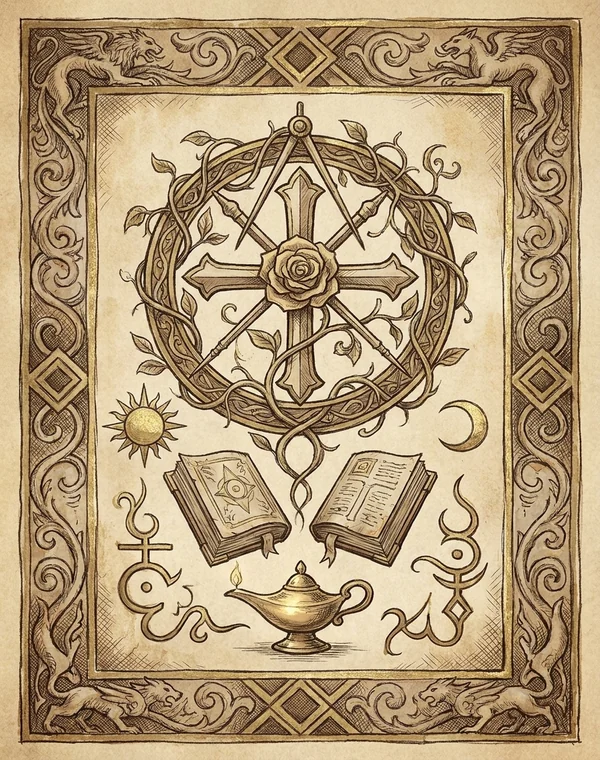
The name comes from the brotherhood's founder in the manifestos, Christian Rosenkreutz, whose surname means "rose cross" in German. The Latin form Rosae Crucis gave the "Rosicrucian" adjective. The rose and cross became the movement's emblem, read variously as the union of love and sacrifice, of spirit and matter, or of the feminine and masculine principles.
In depth
Rosicrucianism begins with a publishing event. In 1614 a pamphlet appeared in Kassel under the title Fama Fraternitatis, "The Fame of the Brotherhood". It told the story of Christian Rosenkreutz, said to have been born in 1378, who travelled to the East, learned the secret wisdom of the Arabs, returned to Germany and founded a small fraternity of physicians and sages. He died in 1484, aged 106, and was buried in a hidden vault. One hundred and twenty years later the vault was found, his body incorrupt and surrounded by books and symbols, and the brothers now invited the learned of Europe to join them in a general reformation of knowledge.
The three manifestos
The Fama was followed in 1615 by the Confessio Fraternitatis, which set out the brotherhood's beliefs in more detail, and in 1616 by The Chymical Wedding of Christian Rosenkreutz, an elaborate alchemical allegory in seven days. The Chymical Wedding is generally attributed to the Lutheran theologian Johann Valentin Andreae, who later called it a ludibrium, a playful or satirical work. How much of the whole affair was earnest, satire or a mixture of both is still debated.
The Rosicrucian furore
The manifestos caused a sensation. Hundreds of pamphlets appeared asking to join the brotherhood, denouncing it or claiming to speak for it. Nobody ever produced the society itself. Learned men such as the English physician Robert Fludd and the German alchemist Michael Maier wrote in its defence, while critics attacked it as heresy or fraud. Frances Yates' study The Rosicrucian Enlightenment (1972) argued that the movement belonged to a wider hope for religious and scientific renewal in Protestant Europe before the Thirty Years' War.
Later Rosicrucian orders
Real organisations calling themselves Rosicrucian came later. In the eighteenth century the Order of the Golden and Rosy Cross (Gold- und Rosenkreuzer) flourished in German lands, combining alchemy and mysticism. Freemasonry adopted the symbolism in degrees such as the Rose Croix. In 1865 to 1866 English Masons founded the Societas Rosicruciana in Anglia, from whose members came the founders of the Hermetic Order of the Golden Dawn; the Golden Dawn's inner order was itself called the Rosae Rubeae et Aureae Crucis.
The twentieth century added popular and religious forms: the Rosicrucian Fellowship founded by Max Heindel in 1909, AMORC (the Ancient Mystical Order Rosae Crucis) founded in the United States by H. Spencer Lewis in 1915, and the Dutch Lectorium Rosicrucianum, founded in 1935.
Core themes
Despite their variety, Rosicrucian groups share a cluster of ideas: an esoteric Christianity, the harmony of science and spirituality, the study of nature as divine revelation, alchemy as both laboratory work and inner transformation, healing as a sacred duty, and the existence of hidden teachers working for humanity's progress.
Where it appears
Fama Fraternitatis (Kassel, 1614). The first manifesto and the legend of Christian Rosenkreutz.
Confessio Fraternitatis (1615). The second manifesto, setting out the brotherhood's beliefs.
The Chymical Wedding of Christian Rosenkreutz (1616). An alchemical allegory usually attributed to Johann Valentin Andreae.
The Rosicrucian Enlightenment (Frances Yates, 1972). The classic modern study of the movement's context.
What it means today
Rosicrucianism is one of the most influential stories in Western esotericism, and much of its power comes from mystery. The founding documents raise a question they never answer, and generations of seekers have answered it themselves by founding the brotherhood they hoped to find.
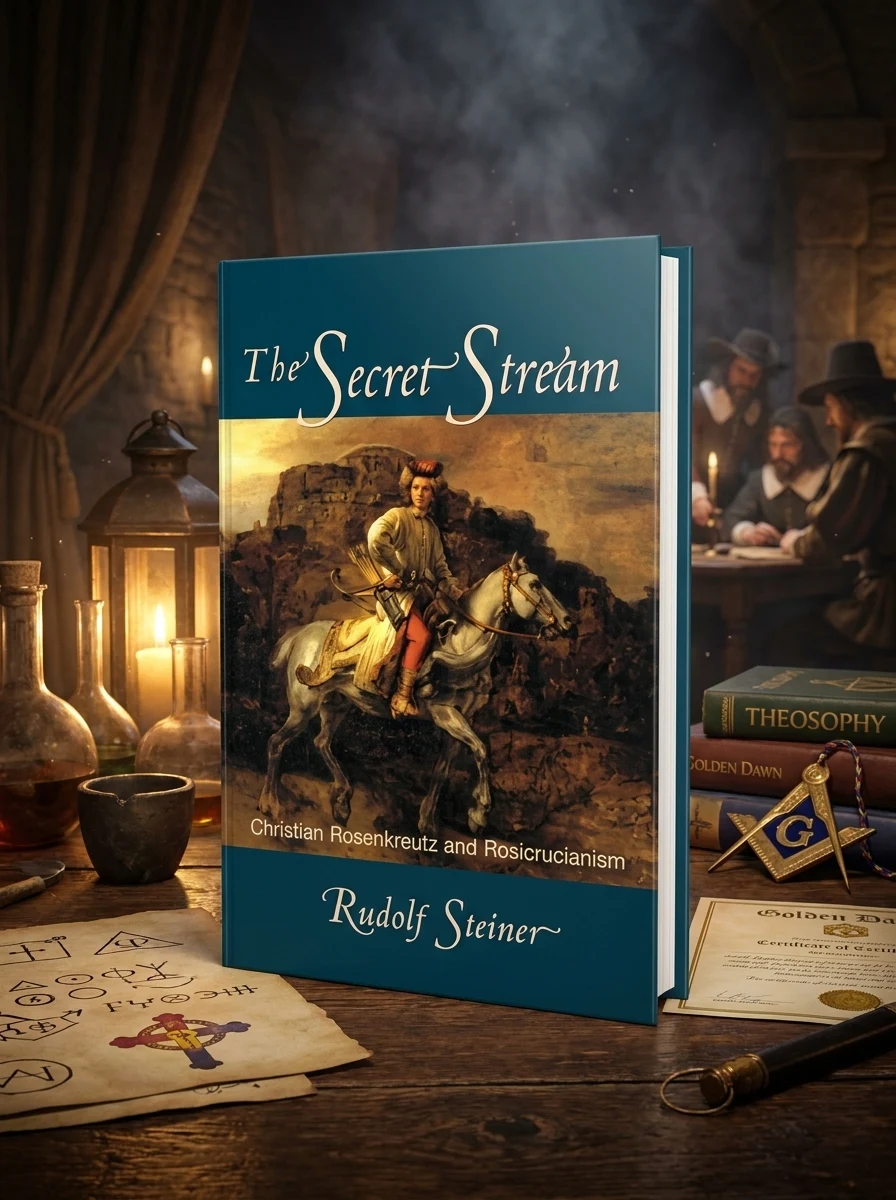
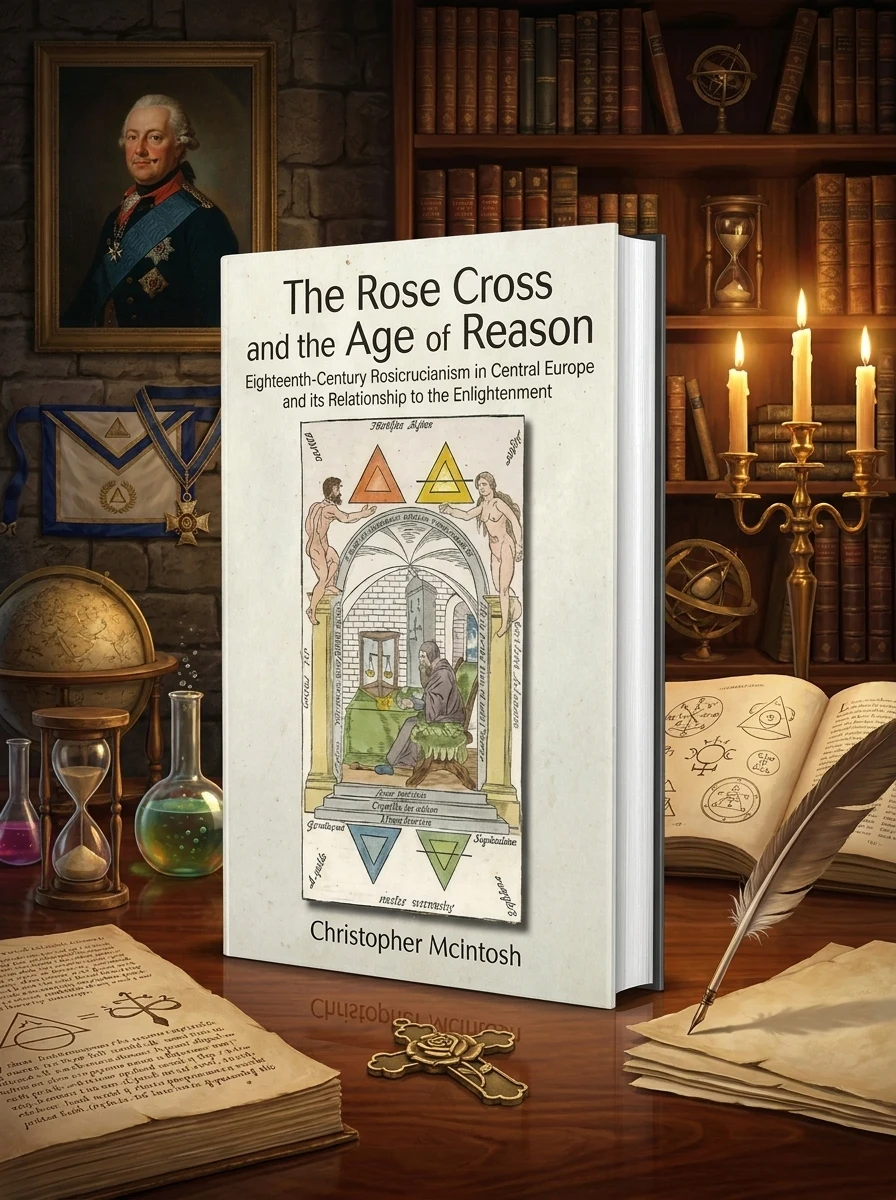
For readers, the best entry point is the manifestos themselves, which are short, followed by The Chymical Wedding, which rewards slow reading as alchemical allegory. Yates gives the historical context, and Christopher McIntosh's histories trace the later orders.