Hermetic Order of the Golden Dawn
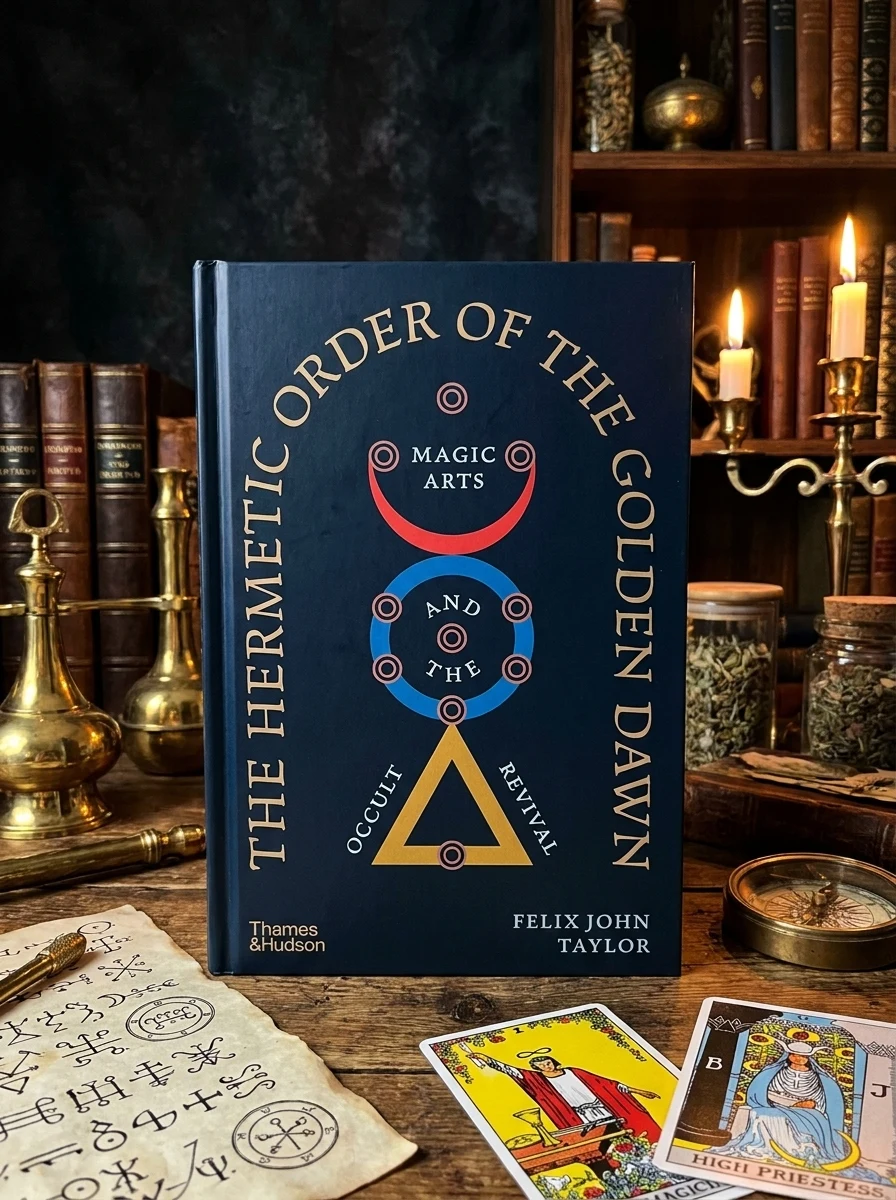
The Hermetic Order of the Golden Dawn was a magical society founded in London in 1888. In barely twelve years it built the system of ceremonial magic, Qabalah and tarot that most of modern Western occultism still uses.
Where the word comes from
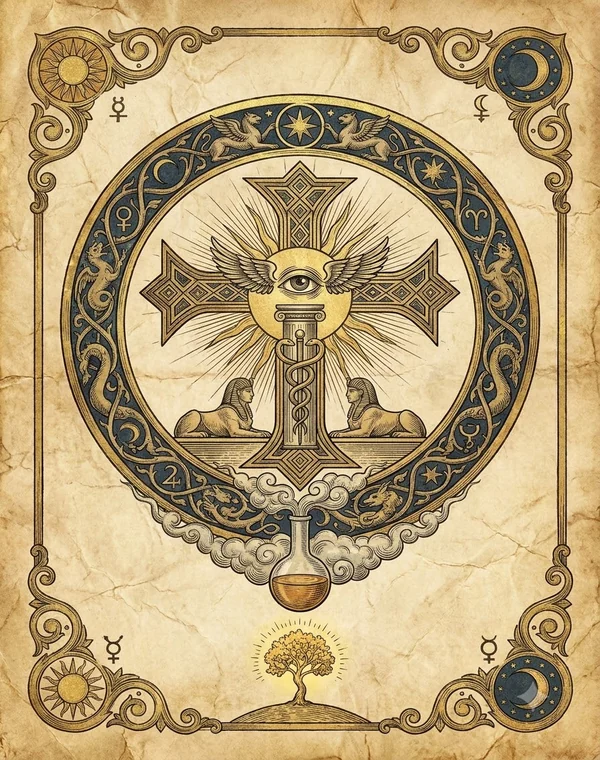
The name joins "Hermetic", after Hermes Trismegistus and the Hermetic tradition, with the image of the "golden dawn", the first light of spiritual illumination breaking over the darkness of ignorance. Its inner order bore a Rosicrucian name, Rosae Rubeae et Aureae Crucis, "of the Ruby Rose and Golden Cross".
In depth
The Golden Dawn was founded in 1888 by three Freemasons who were also members of the Societas Rosicruciana in Anglia: William Wynn Westcott, a London coroner; Samuel Liddell MacGregor Mathers, a scholar of occult manuscripts; and William Robert Woodman. Its first temple, Isis-Urania, opened in London that year, and others followed in Weston-super-Mare, Bradford, Edinburgh and Paris.
The founding documents
The order traced its authority to the Cipher Manuscripts, a set of documents in a simple cipher outlining five initiation rituals, which Westcott said he had obtained in 1887. With them came the name and address of a German adept, Anna Sprengel, whose letters authorised the founding of an English temple. Most historians now regard the Sprengel letters as fabricated, but the rituals Mathers developed from the manuscripts became the heart of the order.
Grades on the Tree of Life
Members advanced through grades mapped onto the ten sephiroth of the Qabalistic Tree of Life. The Outer Order ran from Neophyte (0=0) through Zelator, Theoricus, Practicus and Philosophus (4=7), and taught theory: Hebrew letters, astrology, geomancy, tarot correspondences and the elements. From 1892 the Inner Order, the R.R. et A.C., taught practical magic: consecration of talismans, invocation, skrying, astral travel and, at its most ambitious, Enochian magic derived from the sixteenth-century work of John Dee and Edward Kelley.
The members
The Golden Dawn attracted an unusually gifted membership. The poet W. B. Yeats was a dedicated member for decades. The actress Florence Farr led the London temple for a time. Arthur Edward Waite and the artist Pamela Colman Smith, both members, later created the Rider-Waite-Smith tarot deck (1909), still the most widely used in the world. Moina Mathers, Annie Horniman, Algernon Blackwood and Arthur Machen belonged, and in 1898 a young Aleister Crowley was initiated.
Schism and successors
The order broke apart around 1900. Members in London rebelled against Mathers, who was by then living in Paris, partly over his support for Crowley's advancement; the dispute ended in the so-called Battle of Blythe Road over the order's London rooms. Successor groups followed: the Stella Matutina, Mathers' own Alpha et Omega, and Waite's Independent and Rectified Rite. Crowley went on to found the A∴A∴ and develop Thelema from Golden Dawn foundations.
Publication and legacy
The rituals were secret until Israel Regardie, a former secretary of Crowley's and member of the Stella Matutina, published them as The Golden Dawn (four volumes, 1937 to 1940). That decision made the system available to everyone. Today the Lesser Banishing Ritual of the Pentagram, the Middle Pillar exercise, Golden Dawn tarot attributions and its use of the Tree of Life are part of the shared vocabulary of Wicca, Thelema, chaos magic and modern ceremonial magic, and several groups claim to continue the order directly.
Where it appears
The Cipher Manuscripts (1880s). The founding documents behind the order's rituals.
The Golden Dawn (Israel Regardie, 1937 to 1940). The publication of the order's rituals and teachings.
The Magicians of the Golden Dawn (Ellic Howe, 1972). A documentary history of the order.
Women of the Golden Dawn (Mary K. Greer, 1995). The order through the lives of four of its women.
What it means today
For a society that lasted little more than a decade in its original form, the Golden Dawn has had an astonishing afterlife. Almost every modern book on ritual magic is either built on its system or arguing with it.
Its strength was synthesis: Qabalah, tarot, astrology, Egyptian imagery, Enochian magic and Christian Rosicrucian mysticism were organised into one map with a clear path through it. Its weakness was the same: so much was combined that students can mistake the structure for the goal.
Regardie's The Golden Dawn remains the primary source. For history, read Ellic Howe's The Magicians of the Golden Dawn and Mary K. Greer's Women of the Golden Dawn, which restores Farr, Moina Mathers, Horniman and Maud Gonne to the story.