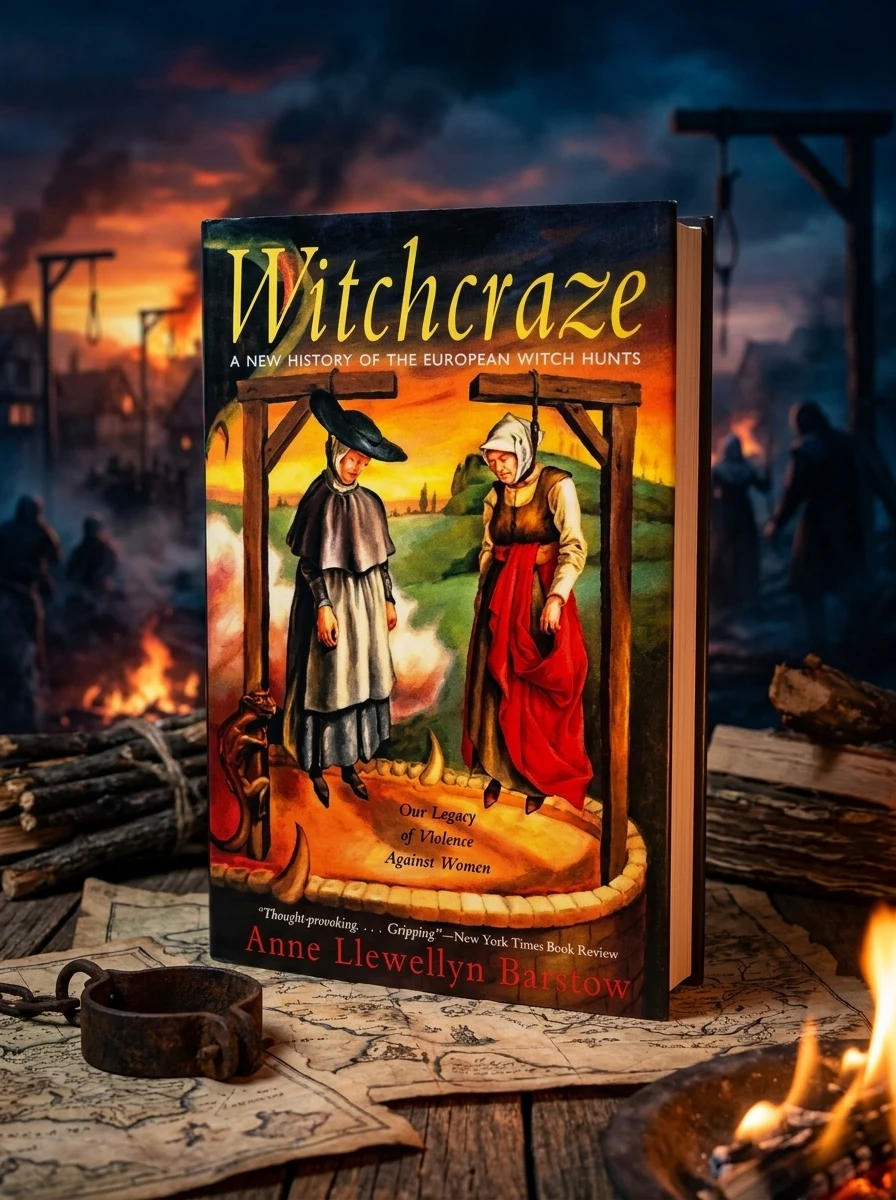
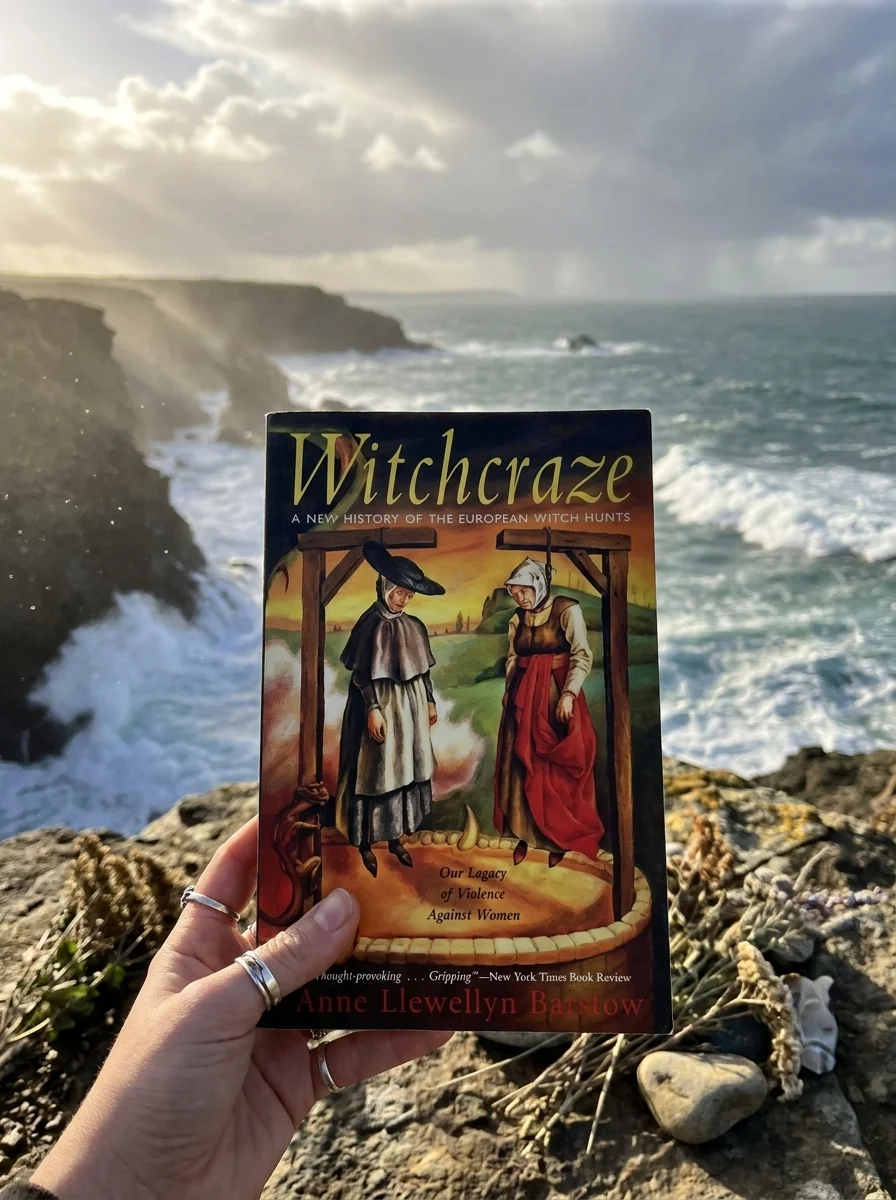

Witchcraze: New History of the European Witch Hunts, a
A feminist history of European witch hunts targeting independent women during the Reformation.
Anne L. Barstow presents a feminist history of the European witch hunts, framing them as an unrecognized holocaust and a form of ethnic cleansing targeting independent women during the Reformation period. This work examines how these historical events created residual attitudes that continue to influence modern culture. The book bridges social science and occult studies, offering readers a concrete look at the intersection of gender, power, and mysticism in medieval Europe.
Published in 1995 by HarperOne, this paperback sits at the intersection of social science and occult studies. It addresses the historical period of medieval Europe during the Reformation, focusing on the persecution of women as a distinct ethnic and gendered group within that specific cultural context.


📝 Description: Witchcraze: New History of the European Witch Hunts, a
💎 Expert review
📖 Why choose it
Why this book is worth reading
Readers deeply interested in the socio-political mechanics of historical oppression will find immense value in this text. It is essential for those seeking to understand how systemic gender bias operated not merely as religious fervor, but as a calculated tool for suppressing female autonomy. Those studying the roots of modern patriarchal structures or the legal evolution regarding women’s rights will gain profound insights into how economic instability was weaponized against independent women. This book offers a necessary correction to historical myths, providing a clear, evidence-based analysis of the tragic erasure of widows and healers. It empowers readers with a rigorous understanding of how these events reshaped Western culture and legal frameworks, leaving enduring scars that continue to influence contemporary gender dynamics and societal expectations.
⭐ Reader reviews
Reader rating
Barstow delivers a rigorous, archival-heavy analysis that dismantles the myth of witch hunts as simple religious hysteria. While intellectually robust and crucial for academic discourse on gendered persecution, this is not a leisurely read. It may frustrate readers seeking narrative flair or broad, accessible summaries of history. Those looking for uplifting stories of resistance rather than systematic oppression might find the tone unrelentingly grim. The dense focus on legal frameworks and economic anxiety excludes casual enthusiasts of occult history who prefer mystical explanations over sociological ones. It is a serious scholarly contribution that demands attention to detail and patience with complex historical arguments.
❓ Frequently asked questions
📖 Who should read this
Readers interested in feminist history, the sociological roots of misogyny, and the intersection of religion and power in early modern Europe will find this essential. It appeals to those seeking to understand the historical foundations of contemporary gender politics.
🎯 Key themes and symbolism
Gendered Persecution
Reformation Social History
Feminist Historiography
📜 Historical context
📚 Glossary
- Ethnic Cleansing (Metaphorical)
- Reformation Europe
- Feminist Historiography
📔 Questions to reflect on
- How does the historical erasure of female authority in your own community mirror the dynamics described in the text?
- In what ways do modern social structures still subtly penalize women who operate outside traditional roles?
- Reflect on a historical event you previously viewed as 'superstition.' How might a feminist lens reveal underlying power struggles?
📖 Read on the blog
🏛 Books from this publisher HarperOne
All books from this publisher →







You might also like
See more →




Have a question about this item?
Ask about the edition, condition, delivery or anything else — we reply by email or phone, usually within a day.
