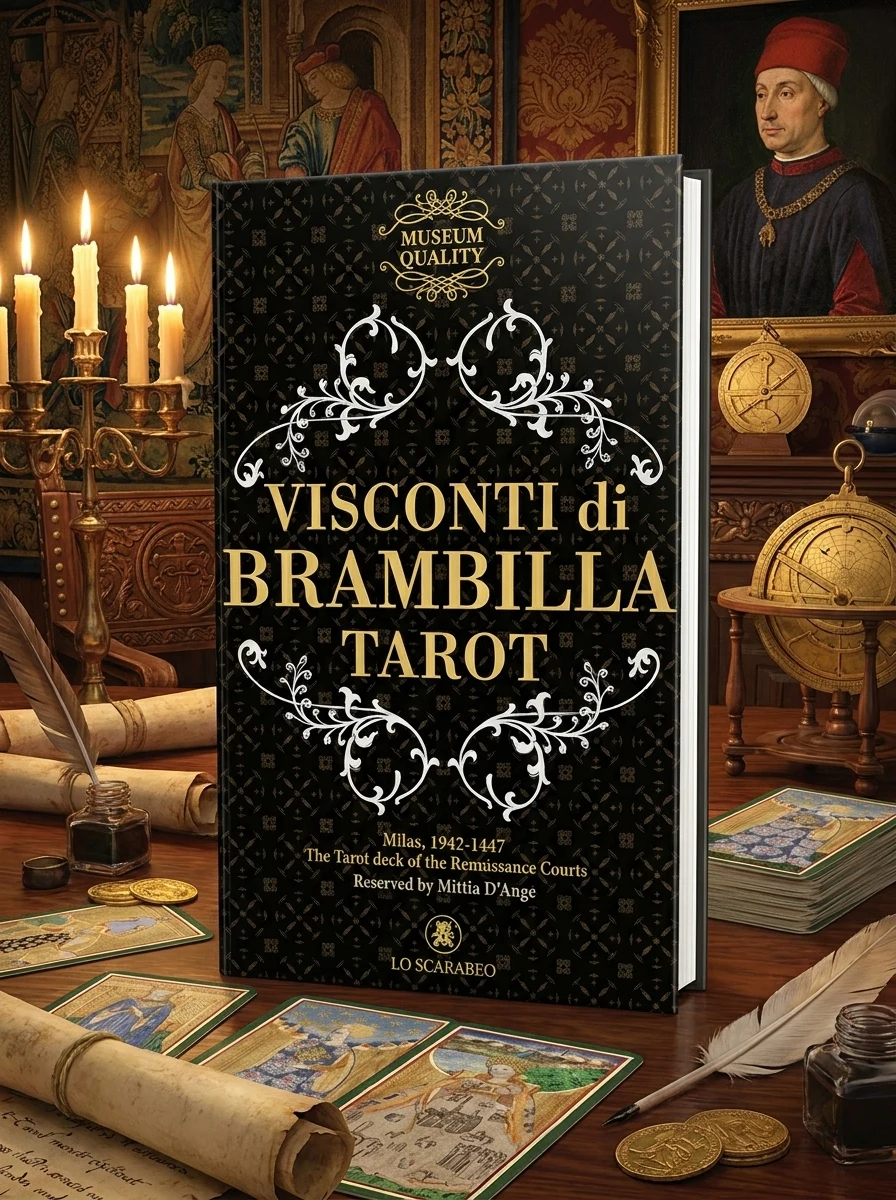
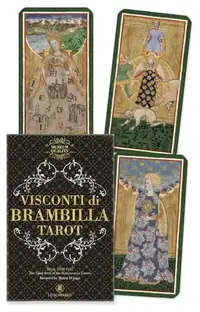
Visconti Brambilla Tarot
Lo ScarabeoThis edition can be ordered. No arrival date is confirmed.
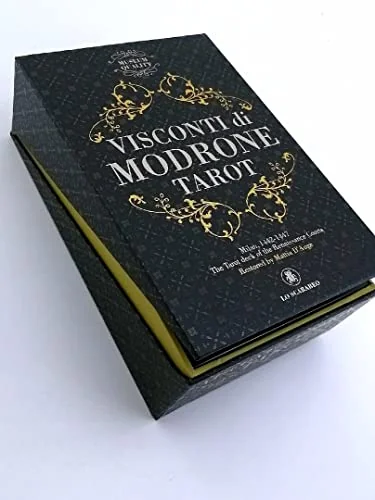
Unearth the 15th-century origins of tarot with this museum-quality Visconti masterpiece.
Step back into the Italian Renaissance with this extraordinary reproduction of the Visconti Brambilla Tarot. As one of only three surviving complete or near-complete early tarot decks, it offers an unparalleled glimpse into the inception of these symbolic cards. Crafted for Duke Filippo Maria Visconti, this edition faithfully captures the artistry and esoteric significance of the original 15th-century creation. More than just a deck, it is a historical artifact, a testament to the rich cultural tapestry from which modern tarot emerged, essential for any serious collector or student of occult history.
This work bridges the Italian Renaissance and modern occult studies by reproducing one of the earliest surviving tarot decks, originally crafted for Duke Filippo Maria Visconti in the 15th century. It serves as a historical artifact that illuminates the cultural tapestry from which contemporary tarot symbolism emerged.


📝 Description: Visconti Brambilla Tarot
💎 Expert review
📖 Why choose it
Why this book is worth reading
Serious collectors and students of occult history will find immense value in this extraordinary reproduction, which offers an unparalleled glimpse into the inception of symbolic cards. As one of only three surviving complete or near-complete early tarot decks, it allows you to step back into the Italian Renaissance and uncover the 15th-century origins of tarot. This edition faithfully captures the original artistry and esoteric significance crafted for Duke Filippo Maria Visconti. More than just a deck, it is a museum-quality historical artifact essential for understanding the rich cultural roots of divination. If you seek to connect with the deep lineage of esoteric traditions, this masterpiece provides a tangible link to the past.
⭐ Reader reviews
Reader rating
This publication stands as a testament to the rich cultural tapestry from which modern tarot emerged, offering a museum-quality experience for those fascinated by history. However, it does not suit readers seeking detailed instructional guides on card meanings or quick divination techniques. The focus remains firmly on historical reproduction and artistic fidelity rather than practical application. Those looking for comprehensive essays on interpretation may find the content sparse. It is best appreciated as a visual and historical artifact rather than a functional manual. While essential for collectors, casual users might prefer decks with more contemporary imagery or explanatory text to bridge the gap between 15th-century symbolism and modern practice.
❓ Frequently asked questions
📖 Who should read this
If you're a dedicated tarot collector, a historian of esoteric arts, or simply fascinated by the origins of symbolic systems, this deck belongs in your collection. It's for those who seek to connect directly with the foundational artistry and early mysteries of tarot.
🎯 Key themes and symbolism
Early Tarot Evolution
This deck serves as a crucial bridge to understanding how tarot transitioned from courtly games to divinatory tools. Its imagery, distinct from later traditions, reflects the nascent stages of tarot symbolism, predating the more standardized Waite-Smith or Thoth systems. It invites contemplation on the initial interpretations and cultural embedding of these archetypal figures.
Renaissance Artistry Preserved
A true jewel of 15th-century Italian art, the Brambilla Tarot showcases the meticulous craftsmanship and aesthetic sensibilities of its era. Each card is a miniature painting, reflecting the artistic currents prevalent during Duke Filippo Maria Visconti's reign. This reproduction allows enthusiasts to appreciate the delicate details and vibrant palette of the original work.
Historical Rarity & Legacy
As one of the world's scant surviving early tarot decks, its very existence is a historical triumph. This reproduction honors that rarity, making an otherwise inaccessible museum piece available for study and appreciation. It highlights the enduring legacy of the Visconti family's patronage in shaping the early history of esoteric practices and card games.
💬 Quotes from the book
“This extraordinary reproduction of the Visconti Brambilla Tarot offers an unparalleled glimpse into the inception of these symbolic cards.”
“More than just a deck, it is a historical artifact, a testament to the rich cultural tapestry from which modern tarot emerged.”
📜 Historical context
📚 Glossary
- Visconti
- Brambilla
- Cartomancy
📔 Questions to reflect on
- Reflect on how the imagery of the Visconti Brambilla deck differs from contemporary tarot. What insights does this offer about the evolution of symbolism?
- If you could travel back to 15th-century Milan and meet Duke Filippo Maria Visconti, what questions would you ask him about the creation and purpose of these cards?
- Consider the feeling of holding a reproduction of such an ancient artifact. How does this physical connection to history influence your understanding of tarot's lineage?
✍️ More books by this author Lo Scarabeo
All books by this author →
 86
86
 88
88
 90
90
 79
79
![Quantum Tarot Kit: Version 2.0 [With Paperback Book]](/img/quantum-tarot-kit-version-2-0-with-paperback-book.webp)
![Wicca Sealing Wax [With Sealing Wax and Stamp Designs] Lo Scarabeo](/img/wicca-sealing-wax-with-sealing-wax-and-stamp-designs-lo-scarabeo.webp)
🏛 Books from this publisher Llewellyn Publications
All books from this publisher →

 89
89



You might also like
See more →
 91
91
![Black Agate Runes [With RunesWith Velvet Bag] Lo Scarabeo](/img/black-agate-runes-with-runeswith-velvet-bag-lo-scarabeo-scene.webp)
 91
91
 91
91