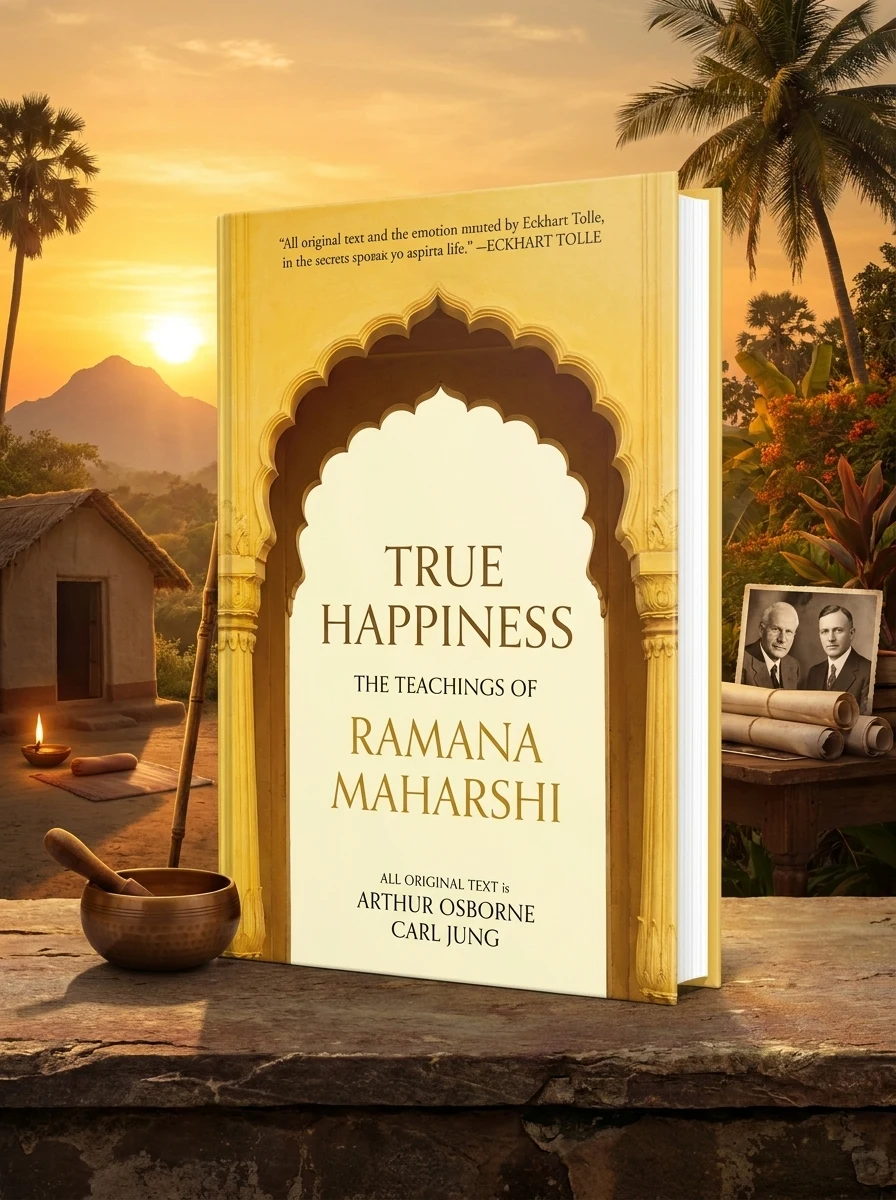
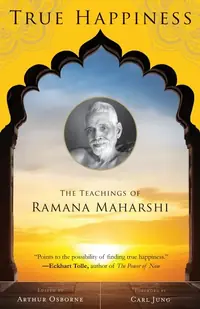
True Happiness: The Teachings of Ramana Maharshi
This edition can be ordered. No arrival date is confirmed.
Uncover the timeless wisdom of self-inquiry to awaken your true, unbound nature.
This profound collection, meticulously assembled by Arthur Osborne, distills the essential insights of Sri Ramana Maharshi, a preeminent Indian sage. It invites readers to explore the direct path of self-realization, detailing his approach to understanding one's inherent identity. From living mindfully in the present to discerning the nature of freedom and knowledge, Maharshi's teachings guide seekers toward detaching from illusion and embracing the liberating truth of non-duality, a path he illuminated after his own transformative awakening at a young age.
This work sits at the intersection of Eastern Advaita Vedanta and Western esoteric thought, bridging the spiritual insights of the Indian sage Ramana Maharshi with perspectives from Jungian psychology. It represents a pivotal moment in the cross-cultural transmission of non-dual wisdom to English-speaking audiences.


📝 Description: True Happiness: The Teachings of Ramana Maharshi
💎 Expert review
📖 Why choose it
Why this book is worth reading
This book is an essential guide for seekers who feel a profound disconnect between their daily lives and their inner truth. If you are drawn to the concept of self-inquiry and wish to understand how to detach from illusion without abandoning the world, this collection offers a clear, direct path. It is particularly valuable for those interested in the synthesis of spiritual practice with psychological depth, as it includes insights from Carl Jung alongside Ramana Maharshi’s teachings. By distilling complex philosophical concepts into accessible prose, it empowers readers to explore their inherent identity and embrace non-duality, making it a transformative resource for anyone ready to awaken to their unbound nature.
⭐ Reader reviews
Reader rating
Osborne’s compilation serves as a vital introduction to Ramana Maharshi’s direct path, offering clarity where many traditional texts may seem obscure. The inclusion of Carl Jung’s commentary adds a unique psychological dimension that appeals to Western readers unfamiliar with Indian philosophy. However, this book will not suit those seeking elaborate rituals, dogmatic religious structures, or complex metaphysical debates. It is also likely too abstract for readers who prefer narrative-driven spiritual journeys or concrete step-by-step exercises. While the prose is accessible, the core teachings demand serious contemplation and introspection, making it unsuitable for casual browsing or those looking for quick fixes rather than profound self-realization.
❓ Frequently asked questions
📖 Who should read this
If you yearn for a direct, experiential path to spiritual liberation, seeking to understand the fundamental nature of existence and your place within it, this work offers profound guidance. It's for those ready to question their deepest assumptions about self and reality.
🎯 Key themes and symbolism
Self-Inquiry's Path
Delve into the meditative technique of "Who am I?" as the fundamental method for dissolving ego and perceiving the ultimate reality. This practice encourages an inward turning, moving beyond external identifications to the core of one's being, revealing an unchanging presence beneath transient experiences and fostering a direct knowing of the Self.
Non-Dual Reality
Explore the profound concept that all perceived separation is illusory, pointing towards a singular, indivisible consciousness. The book unpacks how to transcend the duality of subject and object, challenging conventional notions of self and world to reveal an underlying unity that is both universal and deeply personal, dissolving the boundaries of perceived existence.
Embracing True Nature
Discover the inherent state of peace and happiness that lies dormant within, often obscured by mental constructs and attachments. Maharshi’s wisdom guides the reader to shed misconceptions, fostering a direct experience of one's authentic, eternal self, which is always present, complete, and the source of all lasting contentment and freedom beyond external conditions.
💬 Quotes from the book
“The only way to be rid of sorrow is to know the Self. All else is but a temporary diversion.”
“To ask 'Who am I?' is not to seek an answer in words, but to turn the mind inward to its source, until it merges with the Heart.”
📜 Historical context
📚 Glossary
- Advaita
- Self-Inquiry
- Non-Duality
📔 Questions to reflect on
- How do you currently define "happiness," and how might Ramana Maharshi's teachings challenge or expand that definition through self-inquiry?
- Consider a recent moment of inner turmoil or dissatisfaction. How might the practice of self-inquiry ("Who am I?") offer a different perspective or path through it?
- What illusions about your own identity or the world do you believe you are clinging to, and what might it feel like to begin detaching from them to find your true nature?
🏛 Books from this publisher Hampton Roads Publishing Company
All books from this publisher →


 88
88


You might also like
See more →


 91
91