US shipping Secure card payment Occult and esoteric books

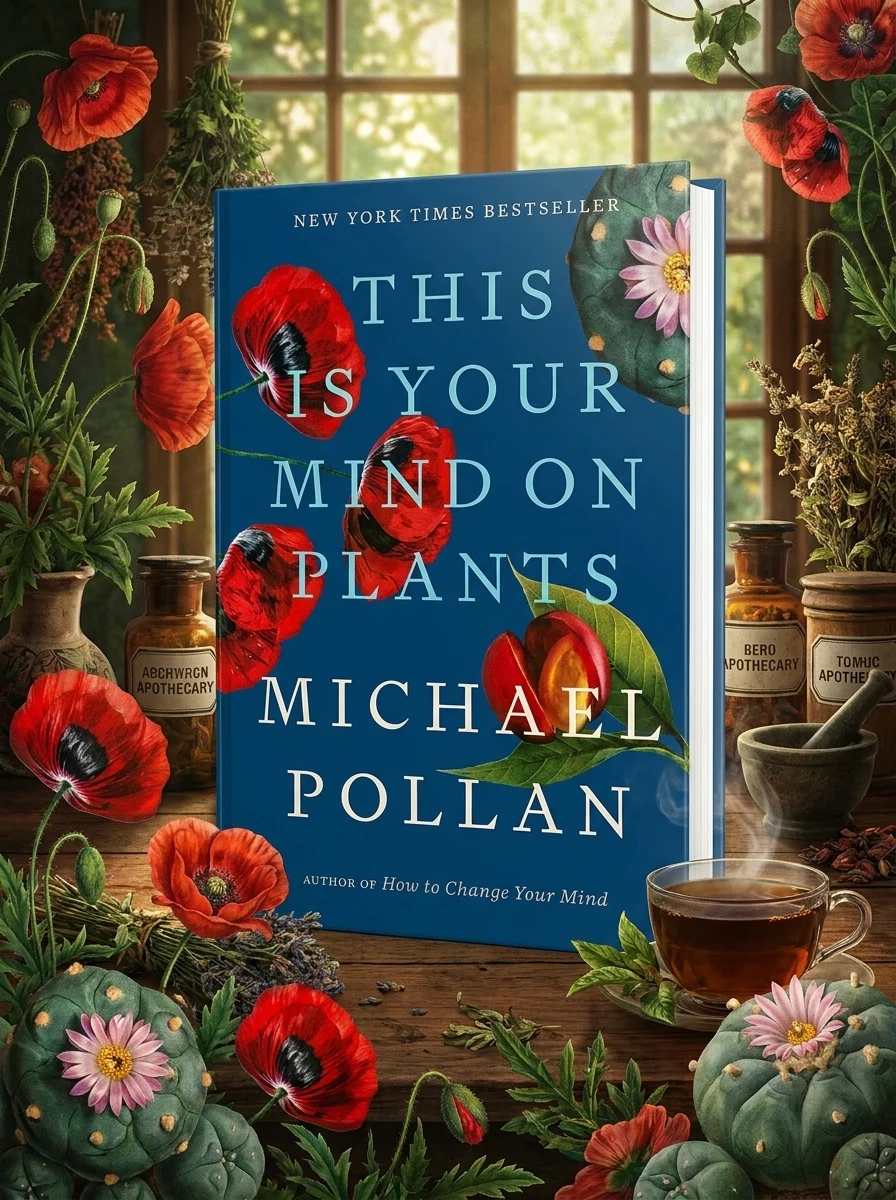
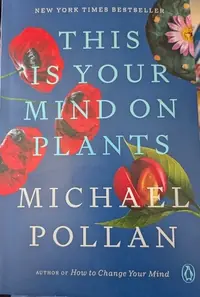
This Is Your Mind on Plants

Pollan, Michael
Reader rating
4.6
(1 reviews) 22 sold
In stock

Stock reported in the catalog; fulfillment is confirmed with your request.

📚 ABOUT THE BOOK

Explore how plants twist our minds, challenging taboos and perceptions of consciousness.

Michael Pollan delves into humanity's profound connection with psychoactive flora, questioning why certain plant-derived substances are embraced while others are condemned. This insightful work scrutinizes our deeply ingrained taboos surrounding consciousness-altering compounds, inviting readers to reconsider what constitutes a "drug" and why. Pollan skillfully navigates the complex interplay between plant chemistry, human perception, and societal norms, revealing the arbitrary lines we draw. He challenges conventional wisdom, exploring the historical and cultural significance of plants that reshape our mental landscapes, from daily caffeine rituals to more potent, often stigmatized, botanicals.

Key themes
Consciousness & Botany Defining "Drugs" & Taboos Perception & Addiction
Historical context

This work sits within the contemporary tradition of botanical inquiry and critical ethnobotany, challenging modern Western taboos surrounding psychoactive substances. It bridges natural history with cultural critique, questioning societal norms about consciousness and legality.

Difficulty
● Easy
Fans will love it
Carl Sagan · Terence McKenna · Graham Hancock · The Tao of Physics
🌌 Mysticism
🏛 Penguin Books 📅 2022 📖 288 pages 🌐 en 📐 Paperback ISBN: 9780593296929
Fun fact
Pollan once again demonstrates his unparalleled ability to illuminate complex topics with clarity and engaging prose. This book excels at unpicking the subtle biases in our understanding of psychoactive plants, offering a refreshing, critical perspective. Readers seeking a definitive moral stance or practical guidance on substance use will find themselves challenged, but those open to profound introspection on humanity's intricate relationship with consciousness-altering flora will discover a vital and timely contribution to ethnobotanical and social discourse.

📝 Description: This Is Your Mind on Plants

The instant New York Times bestseller - A Washington Post Notable Book - One of NPR's Best Books of the Year - Author of the highly anticipated forthcoming book, A World Appears "Expert storytelling . . . [Pollan] masterfully elevates a series of big questions about drugs, plants and humans that are likely to leave readers thinking in new ways." --New York Times Book Review From #1 New York Times bestselling author Michael Pollan, a radical challenge to how we think about drugs, and an exploration into the powerful human attraction to psychoactive plants--and the equally powerful taboos. Of all the things humans rely on plants for--sustenance, beauty, medicine, fragrance, flavor, fiber--surely the most curious is our use of them to change consciousness: to stimulate or calm, fiddle with or completely alter, the qualities of our mental experience. Take coffee and tea: People around the world rely on caffeine to sharpen their minds. But we do not usually think of caffeine as a drug, or our daily use as an addiction, because it is legal and socially acceptable. So, then, what is a "drug"? And why, for example, is making tea from the leaves of a tea plant acceptable, but making tea from a seed head of an opium poppy a federal crime? In This Is Your Mind on Plants, Michael Pollan dives deep into three plant drugs--opium, caffeine, and mescaline--and throws the fundamental strangeness, and arbitrariness, of our thinking about them into sharp relief. Exploring and participating in the cultures that have grown up around these drugs while consuming (or, in the case of caffeine, trying not to consume) them, Pollan reckons with the powerful human attraction to psychoactive plants. Why do we go to such great lengths to seek these shifts in consciousness, and then why do we fence that universal desire with laws and customs and fraught feelings? In this unique blend of history, science, and memoir, as well as participatory journalism, Pollan examines and experiences these plants from several very different angles and contexts, and shines a fresh light on a subject that is all too often treated reductively--as a drug, whether licit or illicit. But that is one of the least interesting things you can say about these plants, Pollan shows, for when we take them into our bodies and let them change our minds, we are engaging with nature in one of the most profound ways we can. Based in part on an essay published almost twenty-five years ago, this groundbreaking and singular consideration of psychoactive plants, and our attraction to them through time, holds up a mirror to our fundamental human needs and aspirations, the operations of our minds, and our entanglement with the natural world.

💎 Expert review

💎
Esoterica Books editorial team
Occult literature desk
Pollan delivers a compelling critique of societal hypocrisy regarding psychoactive flora. His exploration of how plants twist our minds is both intellectually stimulating and culturally relevant. However, readers seeking rigorous scientific data or dry academic theory may find the narrative too anecdotal. Those with strict religious objections to any form of mind-altering substance will likely reject the premise entirely. The book does not advocate for use but rather for understanding. It suits those willing to question their own biases about legality and morality in relation to botanical compounds. It is a thoughtful, if provocative, examination of our collective relationship with the plant kingdom.
✓ EDITOR'S REVIEW

📖 Why choose it

📖

Why this book is worth reading

Readers fascinated by the intersection of botany, psychology, and sociology will find this book profoundly illuminating. It is ideal for those weary of rigid categorizations who seek to understand the arbitrary lines drawn around consciousness-altering plants. Pollan’s accessible narrative invites you to reconsider your own relationship with substances like caffeine and more potent botanicals. If you are curious about how flora shapes human perception and why society condemns certain experiences while embracing others, this text offers a gentle yet challenging invitation to expand your mental landscape. It appeals to open-minded seekers ready to dismantle ingrained prejudices through the lens of plant chemistry and cultural history.

⭐ Reader reviews

The starting rating comes from the team Esoterica Books —
⭐ Esoterica editorial review Editorial rating 4.6/5
★★★★
If you're curious about humanity's ancient bond with psychoactive plants, question societal rules around altered states, or seek to broaden your understanding of consciousness and its chemical keys, this thought-provoking journey is for you. Prepare to challenge your deepest assumptions.

Reader rating

4.6
Based on 1 reviews
5
0
4
1
3
0
2
0
1
0
E
Esoterica Books editorial team

Pollan delivers a compelling critique of societal hypocrisy regarding psychoactive flora. His exploration of how plants twist our minds is both intellectually stimulating and culturally relevant. However, readers seeking rigorous scientific data or dry academic theory may find the narrative too anecdotal. Those with strict religious objections to any form of mind-altering substance will likely reject the premise entirely. The book does not advocate for use but rather for understanding. It suits those willing to question their own biases about legality and morality in relation to botanical compounds. It is a thoughtful, if provocative, examination of our collective relationship with the plant kingdom.

❓ Frequently asked questions

Absolutely not. Pollan's work is a journalistic exploration of the history, cultural context, and science behind our complex relationship with plant-derived psychoactive substances, not a manual for their consumption.
While grounded in science, Pollan seamlessly weaves in historical accounts, personal narratives, and philosophical reflections, creating a rich tapestry that appeals to both scientific and humanistic interests.

📖 Who should read this

If you're curious about humanity's ancient bond with psychoactive plants, question societal rules around altered states, or seek to broaden your understanding of consciousness and its chemical keys, this thought-provoking journey is for you. Prepare to challenge your deepest assumptions.

🎯 Key themes and symbolism

Consciousness & Botany

Pollan examines the age-old, often unconscious, human reliance on plants to modify mental states. From subtle stimulants to profound visionary agents, he explores the diverse ways botanicals have shaped our perceptions, rituals, and daily lives, revealing a fundamental drive to tweak our inner experience.

Defining "Drugs" & Taboos

The book scrutinizes society's inconsistent classifications of psychoactive substances. It dissects the arbitrary cultural and legal distinctions between accepted daily rituals, like coffee consumption, and stigmatized plant use, prompting a re-evaluation of our collective biases and moral judgments regarding altered states.

Perception & Addiction

Pollan explores how perception influences our understanding of addiction and dependency. He contrasts the unchallenged daily use of substances like caffeine with the intense societal condemnation of others, highlighting how legality and social acceptance profoundly shape our views on habit-forming compounds.

💬 Quotes from the book

“The lines we draw between 'medicine' and 'addiction,' or 'ritual' and 'recreation,' are often far more arbitrary than we care to admit, dictated by culture, not chemistry.”

“To understand ourselves, we must first understand the plants that have, for millennia, subtly and profoundly reshaped our perceptions of reality.”

📜 Historical context

Following in the footsteps of ethnobotanists and cultural critics, Pollan continues his renowned exploration of humanity's intricate relationship with the natural world. This work aligns with a tradition of challenging conventional wisdom surrounding plant-based substances, echoing inquiries into consciousness and societal regulation found in both scientific and counter-cultural literature, offering a modern perspective on ancient practices.

📚 Glossary

Entheogen
Psychoactive
Taboo

📔 Questions to reflect on

  1. Reflect on a common psychoactive plant you consume daily (e.g., coffee, tea). How do you perceive its effects, and would you categorize its use as a 'drug' habit if it were illegal?
  2. Consider a substance widely accepted in one culture but taboo in another. What do these differences reveal about the social construction of 'drugs' and altered states?
  3. How might our relationship with pleasure, pain, and self-control change if societal taboos around certain plants were re-examined or lifted?

🏛 Books from this publisher Penguin Books

All books from this publisher →
You might also like

See more →