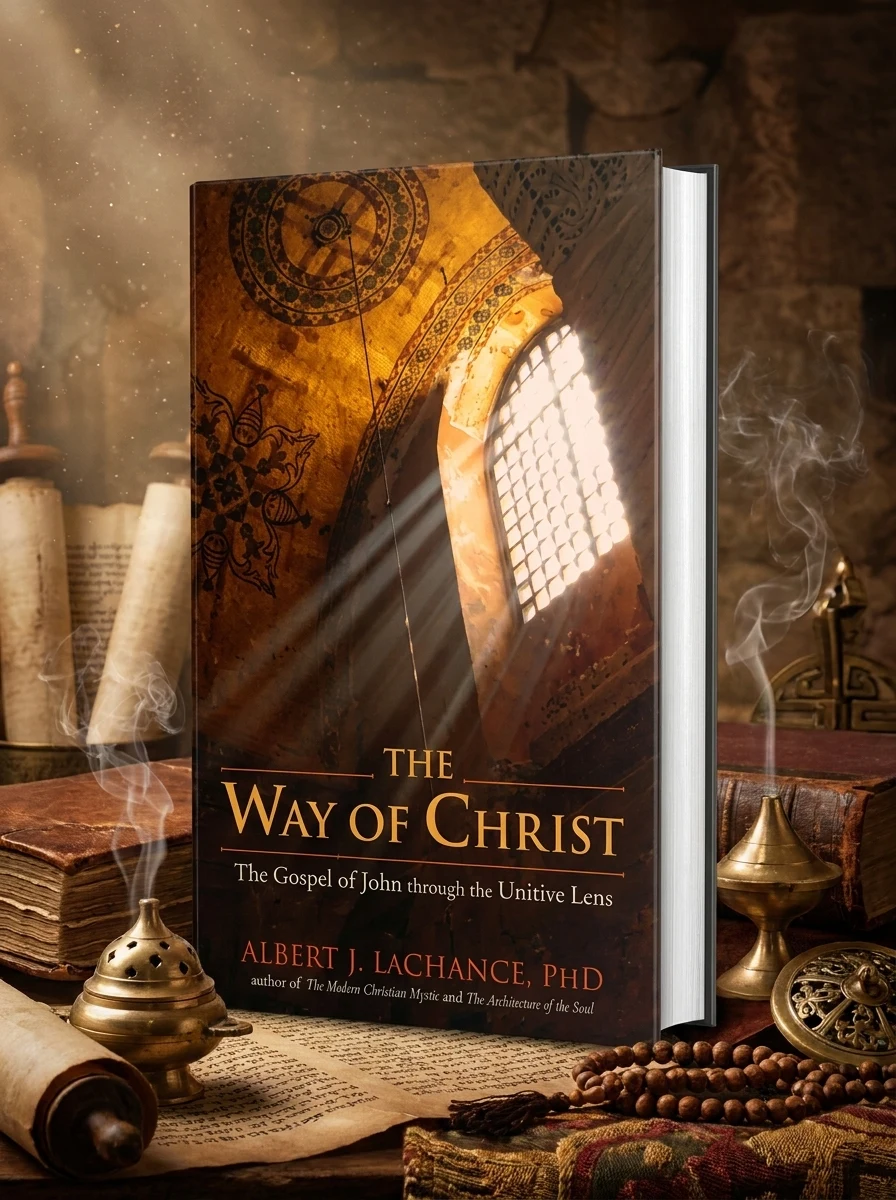
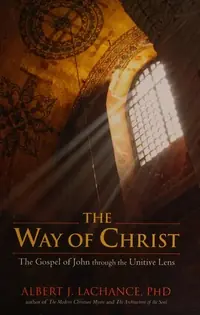
The Way of Christ: The Gospel of John Through the Unitive Lens
This edition can be ordered. No arrival date is confirmed.
Unveil Christ's message through an unprecedented fusion of John's Gospel and ancient spiritual wisdom.
Albert LaChance offers a profound reinterpretation of John's Gospel, moving beyond conventional historical or strictly Judaic analyses. He employs a 'unitive lens,' drawing extensively from Eastern mysticism and various global spiritual traditions spanning the Middle East, India, and China. This expansive approach seeks to uncover the Gospel's deepest meaning: a direct pathway to experiencing a universal divine presence. LaChance masterfully uses the Prologue as a framework, illuminating Jesus's identity and teachings through a lens that emphasizes themes of union over separation, and the essential self beyond the ego.
This work sits at the intersection of Christian mysticism and comparative religion, reflecting the late twentieth-century trend of synthesizing Western theological texts with Eastern philosophical frameworks.


📝 Description: The Way of Christ: The Gospel of John Through the Unitive Lens
💎 Expert review
📖 Why choose it
Why this book is worth reading
Readers seeking a spiritual awakening beyond dogmatic boundaries will find profound resonance in LaChance's inviting reinterpretation. This book is ideal for those who feel constrained by traditional historical or Judaic analyses of the Bible and crave a more universal, experiential connection to the divine. By framing Jesus’s teachings through a unitive lens that honors Eastern mysticism and global wisdom traditions, LaChance offers a bridge for seekers wishing to dissolve the ego and experience union with the essential self. It is particularly beneficial for Christians open to non-dual perspectives or spiritual explorers looking to understand the Gospel not as history, but as a timeless map for inner transformation and direct encounter with universal presence.
⭐ Reader reviews
Reader rating
LaChance provides a bold, expansive reading of John’s Gospel that successfully bridges Western scripture with Eastern metaphysical concepts. The emphasis on union over separation offers a refreshing, albeit controversial, theological perspective for those tired of literalist interpretations. However, this approach will likely alienate readers who prefer strict historical-critical methods or orthodox Judaic-Christian frameworks, as it deliberately sidesteps conventional doctrinal anchors in favor of mystical abstraction. While intellectually stimulating for the spiritually curious, it may feel too speculative for those seeking grounded, traditional exegesis. It is a compelling choice for comparative religion enthusiasts but less suitable for fundamentalist audiences.
❓ Frequently asked questions
📖 Who should read this
If you're a spiritual seeker weary of dogmatic interpretations, an interfaith explorer, or someone curious about the mystical dimensions of Christianity, this book will profoundly resonate. It's for those ready to see the Gospel of John not just as history, but as a guide to universal spiritual awakening.
🎯 Key themes and symbolism
Eastern Mysticism & John
LaChance daringly bridges the theological chasm between biblical scholarship and Eastern mystical thought. He reveals how core principles found in traditions from India and China resonate deeply within the narratives and teachings of John's Gospel, suggesting a universal spiritual language underlying Christ's message. This unique cross-cultural comparison enriches and expands the traditional understanding of the New Testament.
Universal Divine Experience
At the heart of LaChance's work is the quest for a direct, unmediated experience of the divine, transcending sectarian boundaries. By interpreting John's Gospel through a 'unitive lens,' he posits that its ultimate purpose is to guide individuals toward a personal, profound encounter with a universal God, echoing the experiential goals of many indigenous and Eastern spiritual practices. This offers a path beyond mere intellectual assent to faith.
Ego Versus Essential Self
This book delves into the perennial spiritual struggle between the limited individual ego and the boundless, authentic essential self. LaChance elucidates how John's Gospel, when viewed through an Eastern mystical framework, provides profound insights into transcending the illusions of separation and identifying with one's deeper, divine nature. It reframes spiritual growth as a process of unification, mirroring the journey of Christ.
💬 Quotes from the book
“The Logos, as revealed in John, is not merely a historical figure but an eternal principle, a vibration of universal consciousness echoing through all creation, inviting us beyond creed to direct divine communion.”
“To truly follow the Christ is to embark on an inner journey, dissolving the separating 'I' and recognizing the boundless, unified awareness that underpins all existence, a state of being inherent in the Gospel's deepest layers.”
📜 Historical context
📚 Glossary
- Unitive Lens
- Eastern Mysticism
- Essential Self
📔 Questions to reflect on
- How might a universal, mystical understanding of God, as presented by LaChance, reshape your personal spiritual practice or perception of the divine?
- Reflect on the distinction between your 'individual ego' and your 'essential self.' How do you perceive John's Gospel, through LaChance's lens, guiding you to connect with that deeper self?
- Consider the parallels LaChance draws between Jesus's teachings and Eastern mystical traditions. What new insights or challenges does this comparative approach present to your existing beliefs?
🏛 Books from this publisher North Atlantic Books
All books from this publisher →
You might also like
See more →

 91
91