US shipping Secure card payment Occult and esoteric books

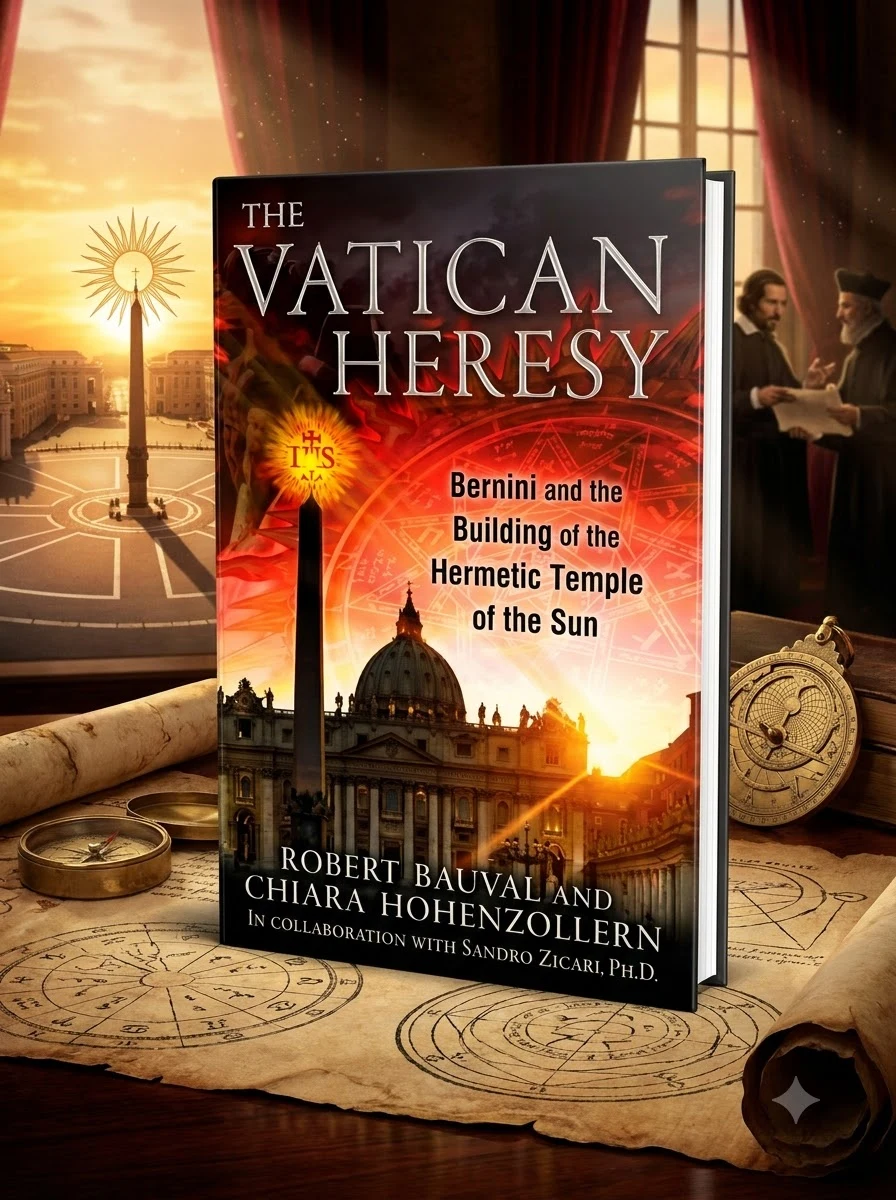
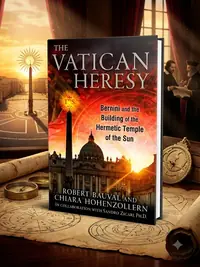
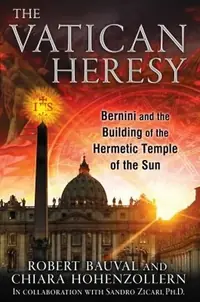
The Vatican Heresy: Bernini and the Building of the Hermetic Temple of the Sun

Bauval, Robert
Reader rating
4.6
(8 reviews) 15 sold
Availability to be confirmed

This edition can be ordered. No arrival date is confirmed.

📚 ABOUT THE BOOK

Uncover the secret Hermetic sun temple hidden within the Vatican's sacred architecture.

Robert Bauval peels back the layers of Rome’s most sacred site to reveal a clandestine architectural agenda. He argues that Gian Lorenzo Bernini, guided by Jesuit scholars and Queen Christina of Sweden, designed St. Peter’s Square as a massive heliocentric monument. This structure was intended to harmonize ancient Hermetic wisdom with the emerging scientific truth of a sun-centered universe. The book details how Renaissance thinkers sought to reform Christianity through this magical, geometric temple, embedding celestial mechanics into the very stones of the Church’s heart.

Key themes
Hermetic Architecture Heliocentric Symbolism Papal Esotericism
Historical context

This work belongs to the tradition of esoteric architectural history and Hermetic studies, exploring the intersection of Renaissance Catholicism and ancient occult wisdom. It aligns with narratives that seek hidden meanings within major religious landmarks.


Difficulty
●● Moderate
Fans will love it
Graham Hancock · Erich von Däniken · Dion Fortune
🪶 Hermetica
🏛 Bear & Company 📖 304 pages 📔 Paperback 📐 Paperback ISBN: 9781591431787
Fun fact
Bauval delivers a thrilling, if speculative, narrative that recontextualizes Bernini’s masterpiece as a tool for theological and scientific synthesis. The architectural analysis is vivid and persuasive, though historians may chafe at the interpretive leaps regarding Jesuit intent. It sits firmly in the tradition of esoteric archaeology, appealing to those who seek hidden patterns in history. While not a dry academic text, it offers a compelling alternative lens for viewing the Renaissance.
📚 This book appears in Esoterica Books

📝 Description: The Vatican Heresy: Bernini and the Building of the Hermetic Temple of the Sun

Reveals how the largest Sun Temple in the world, built according to Hermetic principles, is located at one of Christianity's holiest sites: the Vatican - Shows how famous Renaissance philosophers and scientists called for a Hermetic reformation of Christianity by building a magical Temple of the Sun in Rome - Explains how the Vatican architect Bernini designed St. Peter's Square to reflect heliocentric and Hermetic principles - Reveals how the design was masterminded by Bernini, Jesuit scholars, the mystical Queen Christine of Sweden, and several popes In 16th century Italy, in the midst of the Renaissance, two powerful movements took hold. The first, the Hermetic Movement, was inspired by an ancient set of books housed in the library of Cosimo de' Medici and written by the Egyptian sage Hermes Trismegistus. The movement expounded the return of the "true religion of the world" based on a form of natural magic that could draw down the powers of the heavens and incorporate them into statues and physical structures. The other movement, the Heliocentric Movement launched by Copernicus, was a direct challenge to the Vatican's biblical interpretation of a geocentric world system. Declared a heresy by the Pope, those who promoted it risked the full force of the Inquisition. Exploring the meeting point of these two movements, authors Robert Bauval and Chiara Hohenzollern reveal how the most outspoken and famous philosophers, alchemists, and scientists of the Renaissance, such as Giordano Bruno and Marsilio Ficino, called for a Hermetic reformation of the Christian religion by building a magical utopic city, an architectural version of the heliocentric system. Using contemporary documents and the latest cutting-edge theses, the authors show that this Temple of the Sun was built in Rome, directly in front of the Vatican's Basilica of St. Peter. They explain how the Vatican architect Bernini designed St. Peter's Square to reflect the esoteric principles of the Hermetica and how the square is a detailed representation of the heliocentric system. Revealing the magical architectural plan masterminded by the Renaissance's greatest minds, including Bernini, Jesuit scholars, Queen Christine of Sweden, and several popes, the authors expose the ultimate heresy of all time blessed by the Vatican itself.

💎 Expert review

💎
Esoterica Books editorial team
Occult literature desk
Bauval presents a bold thesis linking Bernini’s St. Peter’s Square to Hermetic sun worship, offering a fascinating alternative to standard art historical accounts. However, this volume is not for readers seeking conventional academic rigor or mainstream theological interpretations. Skeptics of fringe architectural theories may find the connections between Jesuit scholars and heliocentric geometry tenuous or overly speculative. The book requires an open mind regarding unconventional historical links and a willingness to accept magical geometric interpretations as literal intent rather than metaphorical artistic choice. It suits those who enjoy provocative, boundary-pushing esoteric histories over dry, fact-heavy chronicles.
✓ EDITOR'S REVIEW

📖 Why choose it

📖

Why this book is worth reading

Readers fascinated by the hidden layers of Roman history and the secret agendas behind famous architectural masterpieces will find this book deeply engaging. It appeals specifically to those who enjoy connecting disparate historical figures like Bernini, Queen Christina, and Jesuit scholars into a cohesive, alternative narrative. If you are intrigued by the idea that sacred spaces encode scientific truths about the sun-centered universe, this text offers a compelling, albeit unconventional, perspective. It is perfect for enthusiasts of Hermeticism who appreciate detailed examinations of how celestial mechanics might be embedded in stone, providing a unique lens through which to view the Vatican’s grand design.

⭐ Reader reviews

The starting rating comes from the team Esoterica Books —
⭐ Esoterica editorial review Editorial rating 4.7/5
★★★★
Readers fascinated by the intersection of Renaissance science, secret societies, and ecclesiastical history will find this provocative synthesis of architecture and mysticism deeply compelling.

Reader rating

4.6
Based on 8 reviews
5
5
4
2
3
1
2
0
1
0
S
Simon P. ✓ Verified purchase
May 3, 2026
Essential reading

This exceeded my expectations. A text you study rather than simply read. It connects ideas I'd only seen treated separately elsewhere. Definitely recommend.

R
Robert E. ✓ Verified purchase
April 10, 2026

Bought this as a gift for my sister and ended up ordering a second copy for myself. A text you study rather than simply read. Some archaic spellings slow things down. Good, with the caveats above.

A
Adam T. ✓ Verified purchase
October 19, 2025
Beautiful edition

Was skeptical at first. It reads better in small doses — a chapter at a time with notes. The symbolism is layered and generous to patient readers. Deserves a place on any esoteric bookshelf.

F
Francis P. ✓ Verified purchase
July 12, 2025
Exactly as described

Bought this as a gift for my sister and ended up ordering a second copy for myself. The print is clean and easy on the eyes for long sessions. Glad I finally picked this up.

H
Henry G. ✓ Verified purchase
July 30, 2025
Excellent find

Grabbed this during a weekend order. It connects ideas I'd only seen treated separately elsewhere. The print is clean and easy on the eyes for long sessions.

J
John A.
April 15, 2025
Essential reading

I collect works on this subject and this is a worthy addition. The typesetting is comfortable for study, with good margins for notes. The language takes some getting used to, but it becomes part of the charm.

S
Stella S.
October 27, 2024

Honestly wasn't sure what to expect, but I'm impressed. Not a light read, but far more accessible than I feared. It assumes more background than a beginner might have.

E
Esoterica Books editorial team

Bauval presents a bold thesis linking Bernini’s St. Peter’s Square to Hermetic sun worship, offering a fascinating alternative to standard art historical accounts. However, this volume is not for readers seeking conventional academic rigor or mainstream theological interpretations. Skeptics of fringe architectural theories may find the connections between Jesuit scholars and heliocentric geometry tenuous or overly speculative. The book requires an open mind regarding unconventional historical links and a willingness to accept magical geometric interpretations as literal intent rather than metaphorical artistic choice. It suits those who enjoy provocative, boundary-pushing esoteric histories over dry, fact-heavy chronicles.

❓ Frequently asked questions

No, it argues that the architecture encodes Hermetic and heliocentric principles to subtly reform Christian theology from within, rather than replacing it with paganism.
Bauval interprets architectural alignments and correspondence with Jesuit scholars and Queen Christina to argue for a coordinated, hidden intent behind the design.

📖 Who should read this

Readers fascinated by the intersection of Renaissance science, secret societies, and ecclesiastical history will find this provocative synthesis of architecture and mysticism deeply compelling.

🎯 Key themes and symbolism

Hermetic Architecture

Heliocentric Symbolism

Papal Esotericism

💬 Quotes from the book

“The largest Sun Temple in the world is located at one of Christianity's holiest sites.”

“Bernini designed St. Peter's Square to reflect heliocentric and Hermetic principles.”

📜 Historical context

Emerging from the intellectual ferment of the 17th century, this work bridges the gap between the Hermetic revival sparked by Medici libraries and the astronomical revolution initiated by Copernicus. It places the Vatican not merely as a religious center, but as a crucible where ancient Egyptian magic met new cosmological theories, reshaping European spiritual and scientific paradigms.

📚 Glossary

Hermeticism
Heliocentric
St. Peter's Square

📔 Questions to reflect on

  1. How might sacred spaces encode scientific truths that were considered heretical at the time?
  2. What role does architecture play in shaping spiritual experience beyond mere aesthetics?
  3. How do secret knowledge and public faith intersect in historical institutions?

🏛 Books from this publisher Bear & Company

All books from this publisher →
You might also like

See more →