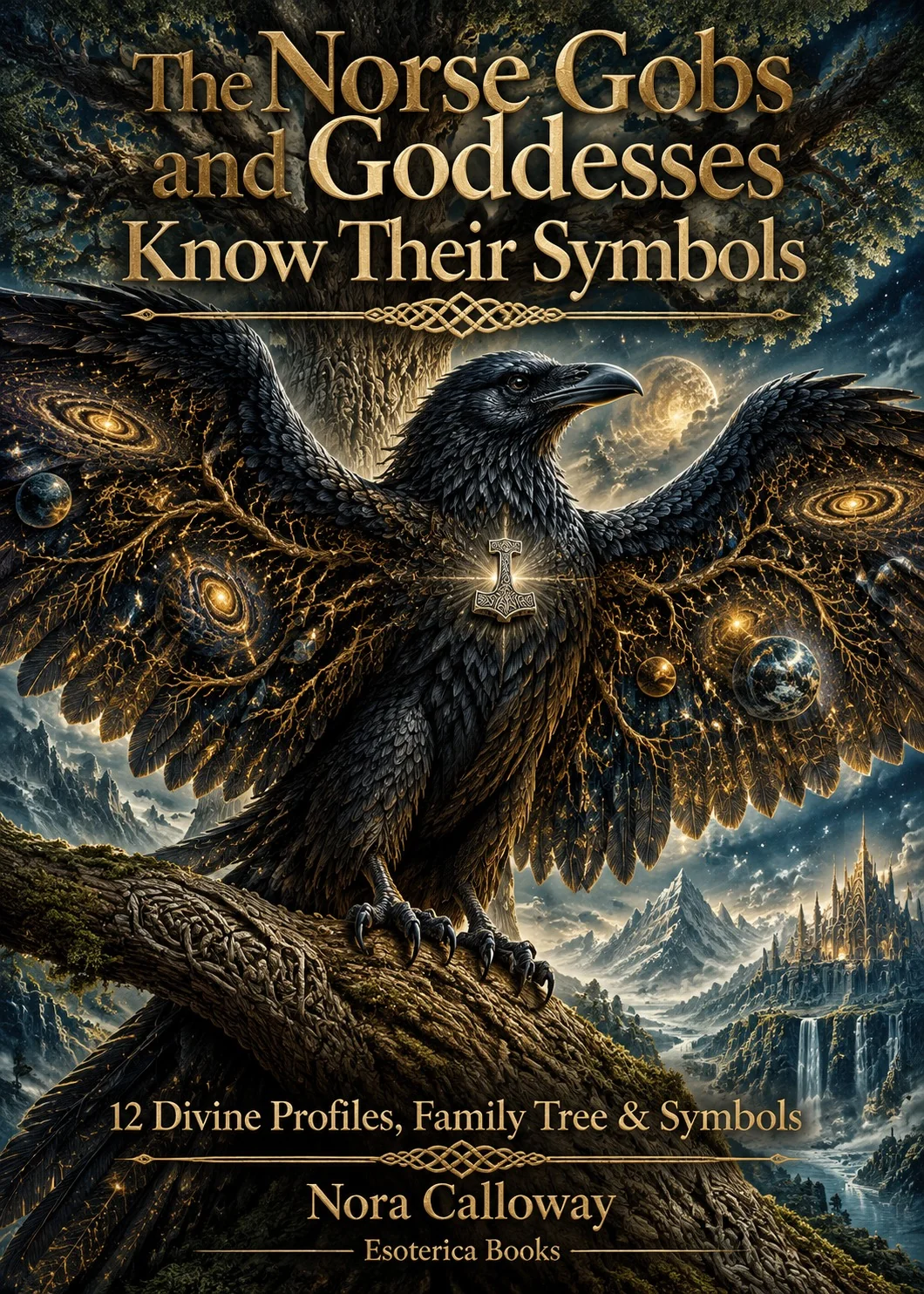
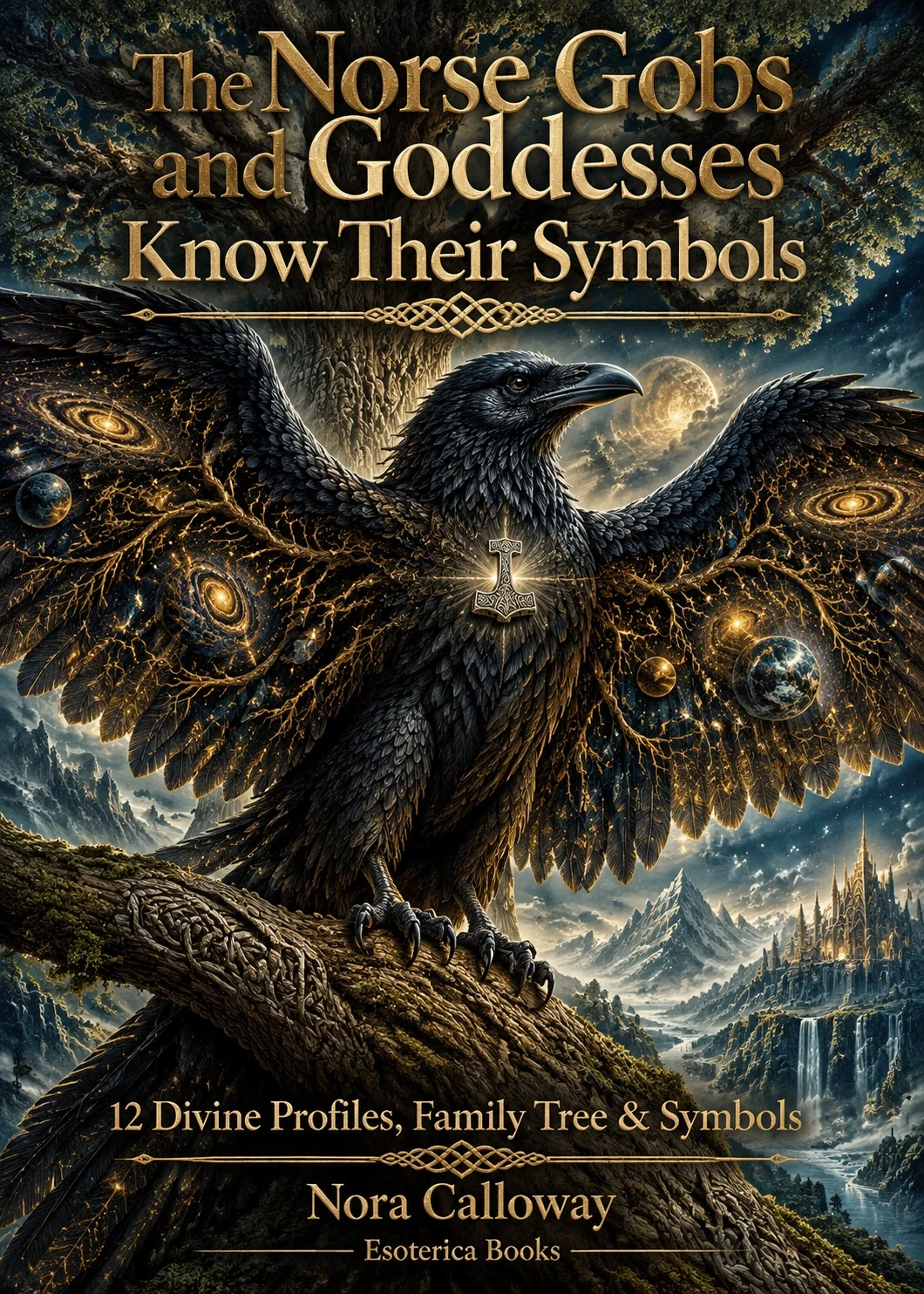
The Norse Gods and Goddesses: Know Their Symbols
Meet the Norse gods, decode their symbols, and discover the family connections behind their most memorable myths.
Discover the Norse gods and goddesses through their defining stories, family relationships, traditional symbols, and mythological roles. From Odin’s ravens and Thor’s Mjölnir to Freyja’s Brísingamen and Loki’s complicated nature, this beginner-friendly guide makes unfamiliar names and associations easier to recognize. The Story-to-Symbol Path connects mythology with practical reflection through four steps: Discover, Connect, Recognize, and Reflect. Explore the Aesir and Vanir, map the Nine Worlds, trace the divine family tree, and create a personal Norse mythology reference journal.
Norse mythology brings together stories of the Aesir and Vanir, their relationships with other mythological beings, and the interconnected Nine Worlds of Yggdrasil. Its gods, goddesses, animals, and legendary objects carry layered traditional associations that invite careful study and personal reflection.


📝 Description: The Norse Gods and Goddesses: Know Their Symbols
📖 Why choose it
Why this book is worth reading
Knowing a deity’s name is only the beginning. Understanding the story behind the name, recognizing its symbols, and tracing its place in the divine family makes Norse mythology far more rewarding to explore. This guide brings those pieces together in a practical sequence, so you can move between myths, reference lists, and personal reflection without losing the bigger picture. Its guided exercises also give you something concrete to do with what you learn, from sketching Mjölnir to building your own deity profiles.
⭐ Reader reviews
Reader rating
The strongest feature here is the Story-to-Symbol Path, which gives beginners a repeatable way to approach unfamiliar mythology. The five-step introductory exercise is particularly useful: readers choose a deity, encounter a defining story, identify a symbol, record a family connection, and write a reflection. The preview also handles two common misconceptions thoughtfully, clarifying that Mjölnir is more than a decorative pendant and that Loki cannot be reduced to a purely evil character. The twelve-chapter structure promises a useful progression from foundational knowledge to personal reference-building. One limitation: experienced students seeking detailed source criticism or extensive textual analysis may find this introductory approach too basic.
❓ Frequently asked questions
📖 Who should read this
Ideal for beginners curious about Norse gods and goddesses, readers who want to understand the meaning behind familiar mythological symbols, and anyone interested in developing a thoughtful personal practice inspired by Norse stories. Also useful for mythology enthusiasts who want an approachable reference for names, relationships, and traditional associations.
🎯 Key themes and symbolism
Norse Deity Profiles
Divine Family Tree
Mythological Symbols
Personal Reflection
📜 Historical context
📚 Glossary
- Aesir
- Vanir
- Yggdrasil
- Mjölnir
- Seiðr
- Brísingamen
📔 Questions to reflect on
- Which Norse deity's defining story resonates most strongly with you, and what qualities or choices in that story stand out?
- What does one traditional symbol, such as Mjölnir, Gungnir, or Brísingamen, reveal about the deity associated with it?
- How does understanding the relationships between the Aesir and Vanir change the way you interpret a Norse myth?
📖 Read on the blog
✍️ More books by this author Nora Calloway


🏛 Books from this publisher Esoterica Books
All books from this publisher →

You might also like
See more →

Have a question about this item?
Ask about the edition, condition, delivery or anything else — we reply by email or phone, usually within a day.
