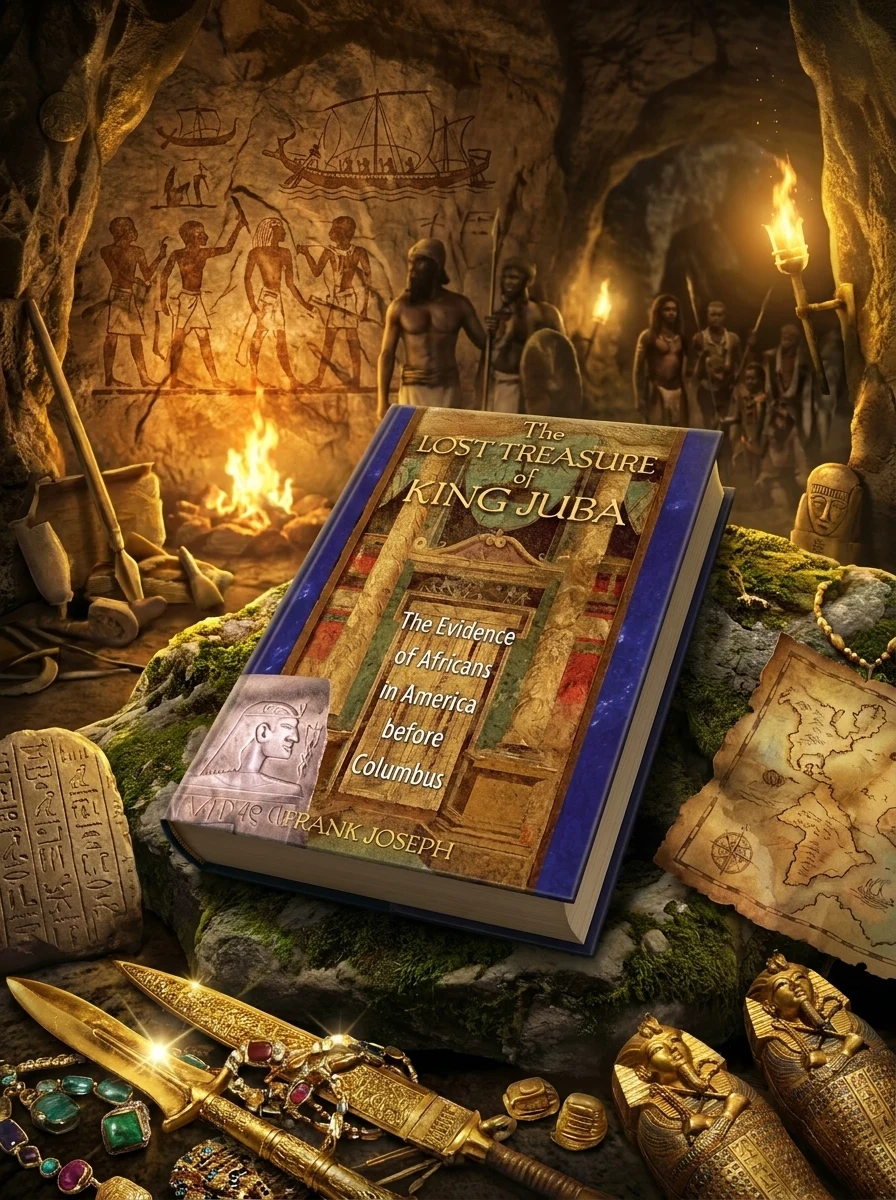
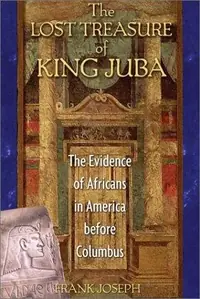
The Lost Treasure of King Juba: The Evidence of Africans in America Before Columbus (Original)
Joseph, Frank

This edition can be ordered. No arrival date is confirmed.
An Illinois cave reveals startling evidence: Africans crossed the Atlantic centuries before Columbus.
Delve into the astonishing saga of a hidden southern Illinois cave, where a treasure hunter unearthed an extraordinary collection of artifacts. Frank Joseph meticulously examines over 7,000 relics, from ancient weapons to enigmatic sarcophagi, to construct a compelling narrative. He posits that these objects provide irrefutable proof of an African presence in North America long before 1492, tracing their origins to a daring voyage led by King Juba and his Mauretanian sailors. This work challenges conventional historical timelines, offering a radical new perspective on early American history.
This work sits firmly within the tradition of alternative history and esoteric archaeology, challenging established academic consensus by proposing pre-Columbian transoceanic contact. It aligns with speculative non-fiction that seeks to uncover suppressed narratives about ancient civilizations and their potential interactions.


📝 Description: The Lost Treasure of King Juba: The Evidence of Africans in America Before Columbus (Original)
💎 Expert review
📖 Why choose it
Why this book is worth reading
Readers fascinated by the mysteries of ancient exploration and those who question conventional historical timelines will find this book particularly engaging. Frank Joseph offers a bold narrative that connects African heritage with early American history, appealing to individuals interested in uncovering hidden truths about human migration. The detailed examination of artifacts provides a tangible sense of discovery for enthusiasts of archaeological puzzles. It is ideal for those who enjoy speculative theories backed by physical evidence and who appreciate alternative perspectives on world history. This text serves as a compelling gateway for curious minds seeking to understand the broader, often overlooked connections between ancient cultures across the Atlantic.
⭐ Reader reviews
Reader rating
While Frank Joseph presents a provocative argument supported by an extensive array of artifacts, this book is not for skeptics or those strictly adhering to mainstream archaeological consensus. Readers expecting rigorous, peer-reviewed academic proof may find the narrative too speculative or lacking in conventional scholarly verification. However, for enthusiasts of alternative history and esoteric topics, it offers a fascinating, albeit controversial, perspective on pre-Columbian contact. It is best suited for open-minded explorers of history rather than traditionalists. The engaging storytelling makes it accessible, but the claims require a willingness to entertain radical revisions of established historical timelines without demanding definitive academic validation.
❓ Frequently asked questions
📖 Who should read this
For curious minds who question established historical narratives and are fascinated by ancient mysteries. If you seek to challenge conventional timelines and explore alternative histories of human migration, this book promises a truly provocative and engaging journey beyond the familiar.
🎯 Key themes and symbolism
Pre-Columbian Contact
This book fiercely advocates for transoceanic voyages to the Americas centuries before European arrival. Joseph uses the varied artifacts discovered in Burrows Cave—including West African, Roman, and Jewish symbols—as primary evidence to argue that diverse cultures interacted with the "New World" far earlier than commonly accepted, fundamentally reshaping our understanding of global history.
The Burrows Cave Mystery
At the heart of this narrative lies the controversial Burrows Cave, a site of immense archaeological contention. The book chronicles its discovery by Russell E. Burrows, the incredible array of artifacts found within, and the subsequent academic uproar over their authenticity. It explores how these contested findings sparked a bitter debate, culminating in the cave's enigmatic sealing.
Ancient African Voyages
Joseph reconstructs the epic journey of King Juba and his Mauretanian seafarers, who, motivated by historical events tied to Cleopatra’s lineage, are presented as the architects of this ancient African presence in America. The book details their motivations for crossing the Atlantic and establishing new societies, linking them to later indigenous groups like the Washitaws encountered by Lewis and Clark.
💬 Quotes from the book
“The intricate carvings and diverse materials unearthed from Burrows Cave are not mere curiosities; they are a Rosetta Stone, demanding we rewrite the earliest chapters of American history.”
“Imagine the audacious journey of Mauretanian sailors, driven by imperial decree and a spirit of exploration, bridging an ocean to forge a new destiny on unfamiliar shores.”
📜 Historical context
📚 Glossary
- Mauretania
- Washitaw
- Pre-Columbian
📔 Questions to reflect on
- How might the accepted historical narrative of the Americas shift if evidence of widespread pre-Columbian transoceanic contact were unequivocally proven? What implications would this have for our understanding of global interconnectedness?
- Consider the role of controversial archaeological discoveries, like Burrows Cave, in challenging or reinforcing academic consensus. How should mainstream archaeology engage with findings that defy conventional understanding?
- Reflect on the motivations that might have driven ancient peoples, such as King Juba's Mauretanians, to undertake perilous voyages across vast oceans. What does this suggest about human curiosity and resilience?
✍️ More books by this author Joseph, Frank
All books by this author →

🏛 Books from this publisher Bear & Company
All books from this publisher →

You might also like
See more →