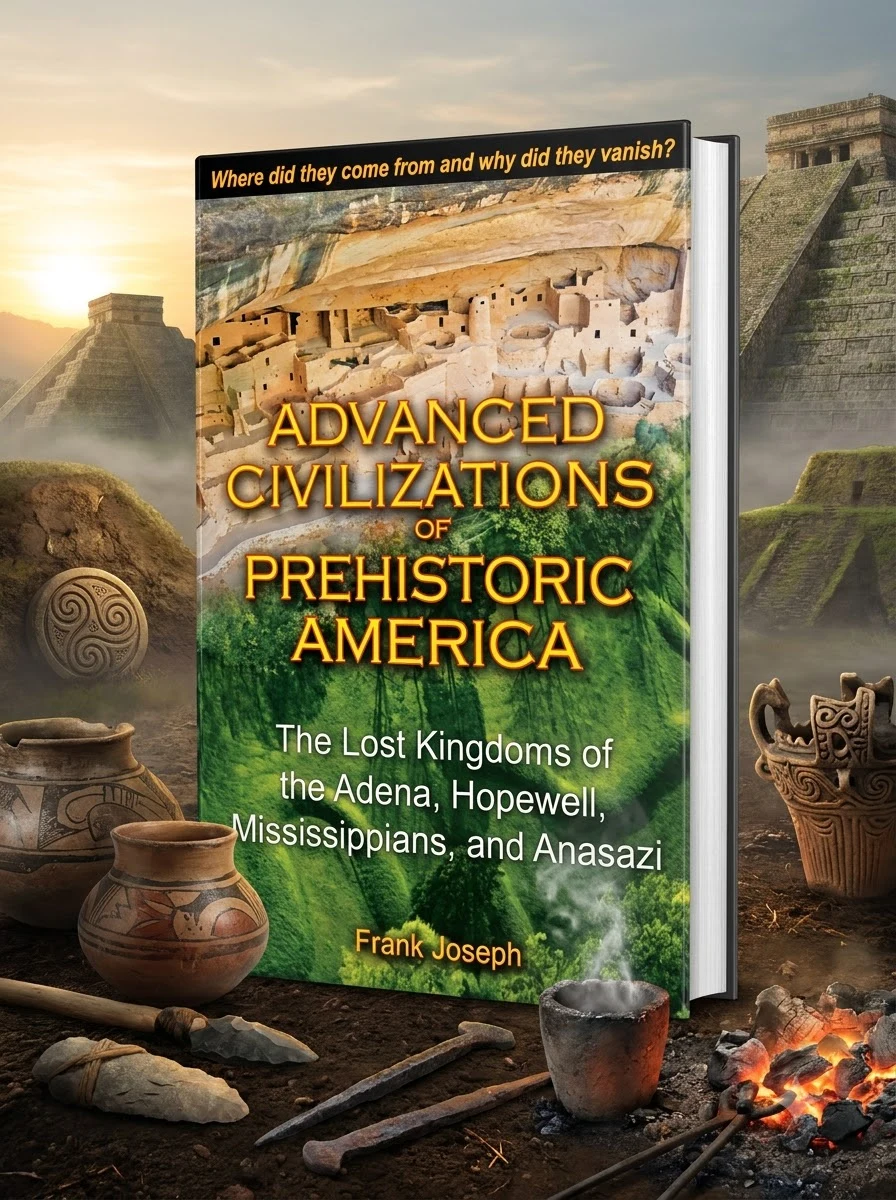
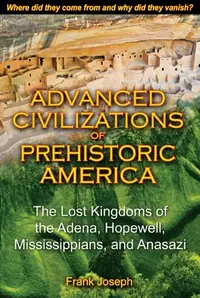
Advanced Civilizations of Prehistoric America: The Lost Kingdoms of the Adena, Hopewell, Mississippians, and Anasazi
Joseph, Frank

This edition can be ordered. No arrival date is confirmed.
Uncover North America's hidden empires and ancient global connections, long before Columbus.
This compelling study re-evaluates North American history, unveiling the sophisticated societies that thrived centuries before European arrival. It meticulously explores the Adena, Hopewell, Mississippian, and Anasazi cultures, revealing their monumental architecture, advanced engineering, and complex social structures. Challenging conventional narratives, the author presents evidence suggesting extensive transoceanic contact, proposing that European Celts influenced the Adena and Japanese mariners shaped the Hopewell. Prepare to discover a continent rich with forgotten kingdoms, whose ingenuity rivaled—and often surpassed—contemporaneous Old World developments, fundamentally reshaping our understanding of global antiquity.
This work sits firmly within the alternative history and esoteric archaeology tradition, challenging mainstream academic consensus by proposing ancient transoceanic connections between prehistoric American cultures and Old World civilizations. It aligns with the speculative historical narratives often found in occult and metaphysical bookshops.


📝 Description: Advanced Civilizations of Prehistoric America: The Lost Kingdoms of the Adena, Hopewell, Mississippians, and Anasazi
💎 Expert review
📖 Why choose it
Why this book is worth reading
Readers fascinated by the mysteries of pre-Columbian America and skeptical of traditional historical timelines will find this book profoundly engaging. It offers a refreshing, albeit controversial, perspective that elevates the Adena, Hopewell, Mississippian, and Anasazi from mere tribal groups to sophisticated empires with global ties. If you enjoy uncovering hidden histories and exploring the possibility of advanced ancient engineering, this text provides a compelling narrative that reshapes our understanding of global antiquity. It is ideal for those who crave evidence of lost kingdoms and wish to see North American history through a lens of interconnectedness rather than isolation.
⭐ Reader reviews
Reader rating
While the book presents a bold re-evaluation of North American history, it is not suitable for readers seeking strictly peer-reviewed archaeological data or conventional academic narratives. Skeptics may find the claims regarding Celtic and Japanese influences speculative rather than conclusive. However, for those open to esoteric interpretations of antiquity, the text serves as an intriguing catalyst for thought. It successfully challenges established dogmas by highlighting monumental architecture and complex social structures, inviting readers to question the isolationist view of prehistoric Americas. It is best appreciated as a provocative exploration of alternative history rather than definitive proof.
❓ Frequently asked questions
📖 Who should read this
If you’re captivated by forgotten histories, ancient mysteries, and the potential for global connections long before recorded voyages, this book is for you. It appeals to those who question mainstream historical paradigms and seek a deeper, more complex understanding of North America’s enigmatic past.
🎯 Key themes and symbolism
America's Ancient Engineering Marvels
Delve into the astonishing technological prowess of North America's early inhabitants. This work showcases monumental achievements like massive earthen pyramids, sophisticated urban planning, and extensive hydraulic systems that transformed arid landscapes. It highlights how these societies developed complex infrastructure and social organizations centuries before European settlement, challenging perceptions of prehistoric ingenuity.
Global Threads of Antiquity
Explore the provocative hypothesis of ancient cultural diffusion across oceans. The book posits that early North American civilizations were not isolated, but rather influenced by Old World voyagers. It meticulously examines potential connections, suggesting Celtic roots for the Adena and Japanese maritime contact for the Hopewell, offering a radical reinterpretation of historical interactions and shared human development.
Challenging Established Narratives
This book boldly questions mainstream historical accounts of North America's past. It reveals a vibrant tapestry of advanced societies, like the Mississippians and Anasazi, whose achievements in urban planning, agriculture, and governance rivaled—and often exceeded—contemporary European developments. Prepare to encounter a continent with a far richer, more interconnected history than commonly taught.
💬 Quotes from the book
“Imagine vast metropolises in North America, thriving with advanced metallurgy and monumental pyramids, while Europe was still finding its footing in the Classical era.”
“The sheer scale of ancient American engineering, from massive earthen structures to intricate irrigation systems stretching hundreds of miles, demands a re-evaluation of our historical understanding.”
📜 Historical context
📚 Glossary
- Adena
- Hopewell
- Cahokia
📔 Questions to reflect on
- How might archaeological interpretations shift if evidence of widespread transoceanic contact in antiquity becomes more widely accepted?
- Consider the implications of advanced civilizations thriving in North America centuries before European colonization. What does this reveal about human ingenuity?
- What established historical narratives or timelines have you encountered that this book's claims directly challenge, and how does that make you feel?
✍️ More books by this author Joseph, Frank
All books by this author →


🏛 Books from this publisher Bear & Company
All books from this publisher →



You might also like
See more →