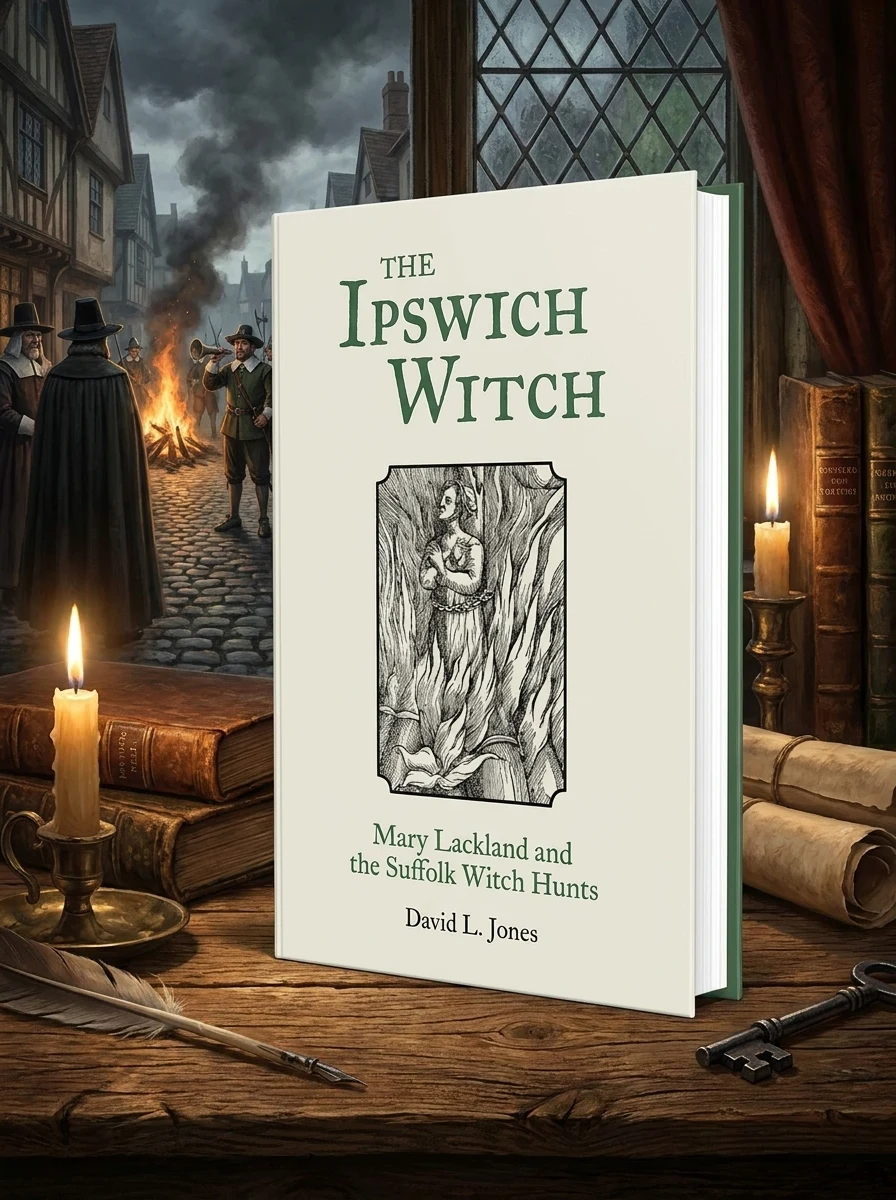
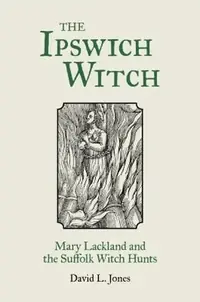
The Ipswich Witch: Mary Lackland and the Suffolk Witch Hunts
This edition can be ordered. No arrival date is confirmed.
Ipswich burned with fear in 1645, forging the dark age of the English witchfinder.
David L. Jones dissects the 1645 Ipswich witch-hunt, the most severe in English history. Against the backdrop of the Civil Wars, religious strife, and plague, this town became a crucible for puritanical zealotry. The narrative centers on Mary Lackland, who endured the harshest penalty ever inflicted on an English witch. Jones explores how poverty, gender dynamics, and occult beliefs fueled this ideological battlefield, challenging modern stereotypes while illuminating the terrifying intersection of faith, power, and superstition in Stuart-era England.
This work sits firmly within the tradition of historical occult studies and social history, examining the intersection of Puritanical zealotry, Stuart-era superstition, and gender dynamics during the English Civil Wars.


📝 Description: The Ipswich Witch: Mary Lackland and the Suffolk Witch Hunts
💎 Expert review
📖 Why choose it
Why this book is worth reading
Readers fascinated by the grim realities of Stuart-era England and the terrifying mechanics of mass hysteria will find this book invaluable. It offers a profound look at how poverty, religious strife, and plague created a perfect storm for ideological warfare in Ipswich. By focusing on Mary Lackland’s tragic fate, the narrative humanizes the statistics of witchcraft trials, challenging modern misconceptions about the period. Those interested in the sociological roots of fear, the role of gender in historical persecution, and the specific cultural climate that empowered English witchfinders will gain a deeper, more nuanced understanding of this dark chapter. It is essential for anyone seeking to comprehend the severe consequences of religious fervor colliding with social vulnerability in 17th-century Britain.
⭐ Reader reviews
Reader rating
Was skeptical at first. The symbolism is layered and generous to patient readers. If you're drawn to this subject, don't hesitate.
This edition finally does the material justice. The typesetting is comfortable for study, with good margins for notes. Some sections stopped me cold in the best way. Still worth having on the shelf.
Ordered this after seeing it referenced in another book I was studying. I appreciated how the argument builds steadily from first principles. Some sections stopped me cold in the best way. Deserves a place on any esoteric bookshelf.
Not my usual area but wanted to branch out. I found myself reading passages aloud just to sit with them. It rewards patience more than any book I've bought this year. My only quibble is the cover feels thinner than expected. Happy enough with the purchase.
Jones delivers a rigorous dissection of the 1645 Ipswich witch-hunt, effectively illustrating how the town became a crucible for Puritanical zealotry. The analysis of Mary Lackland’s experience provides a stark, necessary counterpoint to romanticized views of the era. However, readers seeking a narrative-driven tale of magic or supernatural phenomena will be disappointed; this is a scholarly examination of social and political forces, not an occult manual. It may also feel dry to those preferring broad overviews, as it zooms in intensely on one specific, localized tragedy. While the intersection of faith and power is compelling, those uninterested in the gritty details of poverty and gender dynamics during the Civil Wars might find the focus too narrow and academically dense.
❓ Frequently asked questions
📖 Who should read this
Readers fascinated by the intersection of theology and social control, those studying Stuart history, and practitioners interested in how historical persecution shaped modern occult perceptions.
🎯 Key themes and symbolism
Puritan Zealotry
Gender and Power
Civil War Sociology
💬 Quotes from the book
“The Devil loomed at the door of every English home.”
“An ideological battlefield where Puritanism struggled against Catholic sensibilities.”
📜 Historical context
📚 Glossary
- Witchfinder
- Puritanism
- Stuart Era
📔 Questions to reflect on
- How might modern societal fears replace the 'Devil' as a scapegoat for communal anxiety?
- In what ways do economic hardships amplify religious or ideological extremism?
- How does the gendering of supernatural blame reflect broader power structures in society?
🏛 Books from this publisher History Press
All books from this publisher →
 87
87

You might also like
See more →