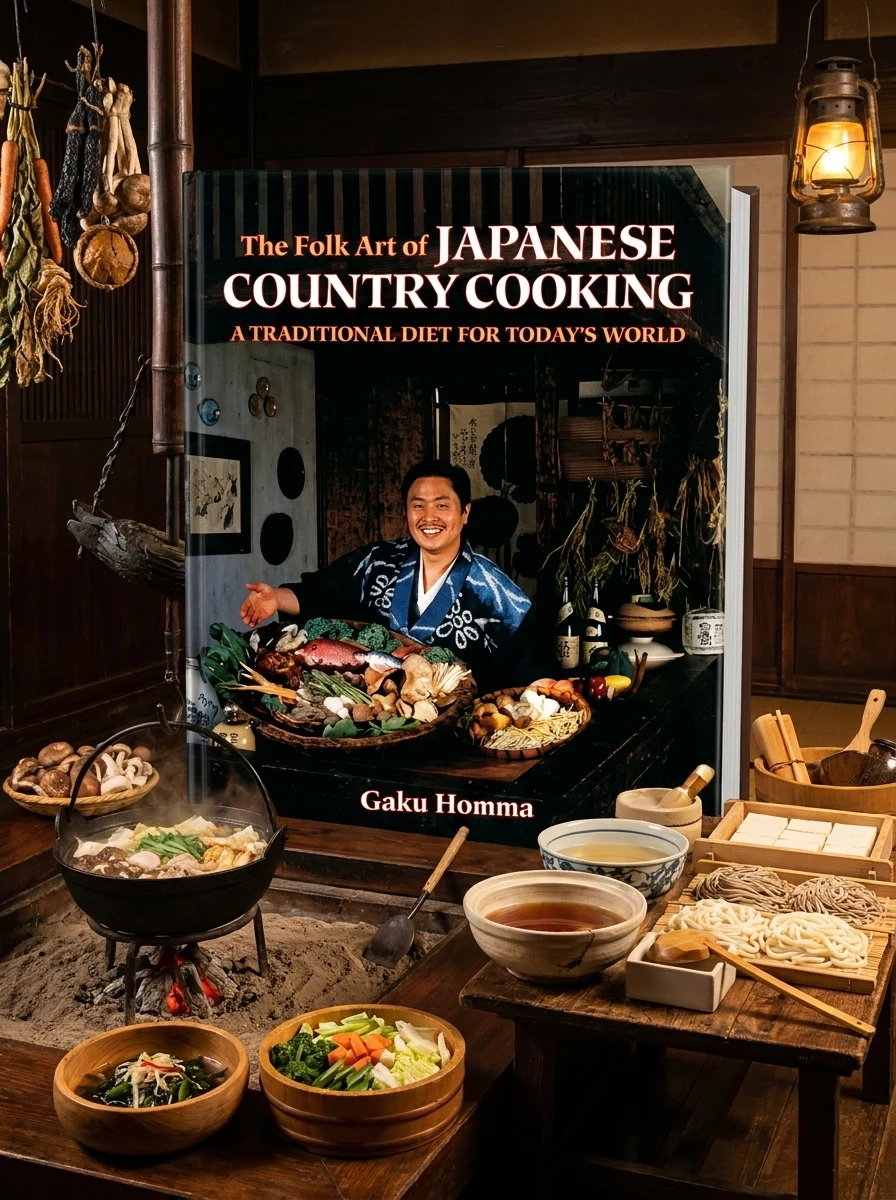
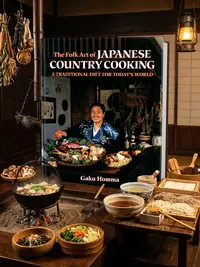
The Folk Art of Japanese Country Cooking: A Traditional Diet for Today's World


This edition can be ordered. No arrival date is confirmed.
Rediscover the soul of Japan through humble, earthy country dishes and ancestral wisdom.
Gaku Homma invites you beyond the sushi counter into the rustic heart of Japanese home cooking. This volume explores the profound simplicity of regional staples, from robust miso broths and sunomono salads to hand-pulled udon noodles. You will learn the tactile arts of chopping vegetables, crafting tofu, and simmering rich dashi stocks. It is more than a recipe collection; it is a meditation on traditional techniques passed down through generations. Homma blends memoir with practical instruction, offering a treasure trove of methods that honor the ingredients and the land, perfect for those seeking authentic, unpretentious nourishment.
This work sits within the lineage of traditional Japanese culinary arts, specifically focusing on rural and ancestral cooking methods rather than modern or urbanized cuisine. It bridges the gap between memoir and practical instruction, preserving regional staples for contemporary appreciation.


📝 Description: The Folk Art of Japanese Country Cooking: A Traditional Diet for Today's World
💎 Expert review
📖 Why choose it
Why this book is worth reading
Readers seeking authentic, unpretentious nourishment will find profound value in this volume. It is ideal for those who wish to move beyond the superficiality of sushi bars and engage with the rustic heart of Japanese home cooking. Homma offers a tactile education in chopping vegetables, crafting tofu, and simmering dashi, making it perfect for cooks who view food as a meditation on tradition. The blend of memoir and technique honors ingredients and land, providing ancestral wisdom that resonates with anyone looking to reconnect with humble, earthy dishes. It is not just for chefs, but for anyone desiring a deeper, more soulful connection to their daily meals through the lens of Japanese country life.
⭐ Reader reviews
Reader rating
Needed this for my research. You can tell why this work has endured. It connects ideas I'd only seen treated separately elsewhere. If you're drawn to this subject, don't hesitate.
Needed this for my research. The print is clean and easy on the eyes for long sessions. Happy enough with the purchase.
Gaku Homma delivers a heartfelt exploration of regional staples, from robust miso broths to hand-pulled udon. The book succeeds as both a practical guide and a philosophical meditation on simplicity. However, it does not suit those seeking quick, modern recipes or complex gastronomic experiments. Readers expecting high-end culinary theory may find the focus on humble, ancestral techniques too basic. It is best for those willing to slow down and appreciate the tactile arts of traditional preparation. While charming and informative, it lacks the speed required for busy urban cooks. The emphasis on generational methods makes it a niche treasure rather than a universal cookbook.
❓ Frequently asked questions
📖 Who should read this
Seekers of authentic Asian flavors who wish to move beyond restaurant stereotypes. Ideal for home cooks interested in the philosophy behind the ingredients and those who value the meditative aspects of traditional food preparation over quick, modern shortcuts.
🎯 Key themes and symbolism
Rustic Culinary Heritage
The book celebrates the unrefined, hearty nature of Japanese country cuisine. It emphasizes seasonal ingredients and simple preparations that highlight the natural flavors of vegetables, grains, and soy, contrasting sharply with the polished aesthetics of urban restaurant food. This approach grounds the reader in the agricultural roots of Japanese dietary traditions.
Tactile Food Preparation
Homma details the physical processes of cooking, such as hand-cutting vegetables and kneading noodle dough. These sections focus on the sensory experience of food creation, teaching readers to respect the texture and structure of ingredients. The emphasis is on mastering manual skills that connect the cook directly to the meal's outcome.
Culinary Memoir
Weaving personal anecdotes throughout the instructions, the author shares memories of his upbringing. These narratives provide emotional context to the recipes, illustrating how food serves as a vessel for cultural memory and family history. The memoir aspect adds depth, transforming technical instructions into a story of heritage and identity.
💬 Quotes from the book
“The soul of Japanese cooking lies not in complexity, but in the purity of its ingredients and the respect for their natural state.”
“To make tofu is to understand patience; the bean must surrender its form to become something entirely new yet fundamentally itself.”
📜 Historical context
📚 Glossary
- Nabemono
- Sunomono
- Dashi
📔 Questions to reflect on
- Which seasonal ingredient from your local market reminds you of your childhood, and how can you prepare it simply?
- How does the act of hand-cutting vegetables change your perception of the meal you are building?
- What traditional family recipe holds the most emotional weight for you, and how can you preserve its method?
🏛 Books from this publisher North Atlantic Books
All books from this publisher →






You might also like
See more →