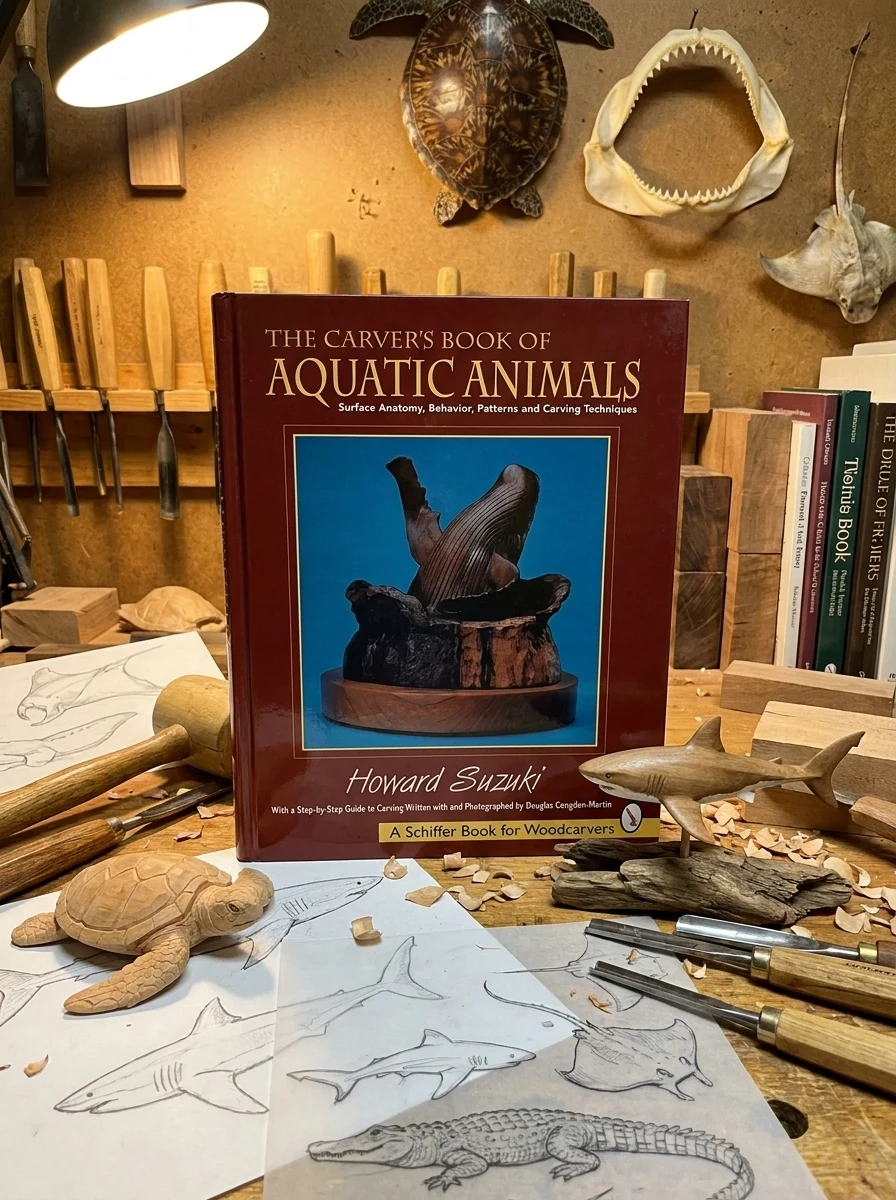

The Carver's Book of Aquatic Animals Suzuki, Howard K
This edition can be ordered. No arrival date is confirmed.
Carve the deep with Howard Suzuki's definitive guide to sculpting aquatic life from wood.
Howard K. Suzuki delivers the first exhaustive manual dedicated exclusively to the wooden carving of marine fauna. This volume transcends mere instruction by weaving anatomical precision with behavioral insight, ensuring your figures breathe with lifelike authenticity. You will find detailed patterns, reference drawings, and photographic guides for species ranging from the Great White Shark to the Humpback Whale. Suzuki provides specific sculpting techniques for each creature, accompanied by step-by-step documentation of his own works, serving as both a technical handbook and a wellspring of artistic inspiration for serious artisans.
This volume sits within the niche intersection of specialized craft literature and natural history illustration, serving as a technical bridge between artistic practice and biological observation. It reflects a tradition of exhaustive reference manuals that prioritize anatomical accuracy alongside aesthetic execution for dedicated artisans.


📝 Description: The Carver's Book of Aquatic Animals Suzuki, Howard K
💎 Expert review
📖 Why choose it
Why this book is worth reading
This book is an indispensable resource for serious woodcarvers who seek to elevate their marine fauna sculptures beyond superficial representation. It offers unparalleled value by combining exhaustive anatomical precision with behavioral insight, ensuring that every carved figure breathes with lifelike authenticity. Whether you are crafting a Great White Shark or a Humpback Whale, the detailed patterns, reference drawings, and photographic guides provide the necessary technical foundation. Suzuki’s step-by-step documentation of his own works serves as both a practical handbook and a wellspring of artistic inspiration, making it essential for artisans committed to mastering the complex textures and forms of aquatic life.
⭐ Reader reviews
Reader rating
Finally got around to ordering this. The material is presented clearly and the structure makes it easy to revisit key passages. Deserves a place on any esoteric bookshelf.
Came across this title in a footnote and had to track it down. The symbolism is layered and generous to patient readers. Plenty of passages worth underlining; my copy is already full of margin notes. It assumes more background than a beginner might have. Still worth having on the shelf.
Took a chance on this and glad I did. The material is presented clearly and the structure makes it easy to revisit key passages. The symbolism is layered and generous to patient readers. Great value for what you get.
Grabbed this during a weekend order. There's real depth here that reveals itself on a second reading. Will be gifting a copy to a friend.
Was skeptical at first. I found myself reading passages aloud just to sit with them. Still worth having on the shelf.
While this manual is a definitive guide for its specific niche, it may not suit casual crafters or those seeking quick, simplified projects. The text demands a commitment to anatomical rigor and behavioral study that might overwhelm beginners looking for simple decorative outcomes. However, for the serious artisan, the exhaustive coverage of marine fauna from sharks to whales provides a depth rarely found in general woodworking texts. It is a wellspring of inspiration for those willing to invest time in sculpting techniques specific to each creature. The blend of technical instruction and artistic insight makes it a valuable addition to any library focused on high-level naturalistic carving, despite its specialized nature.
❓ Frequently asked questions
📖 Who should read this
Dedicated woodcarvers seeking to expand their repertoire into marine subjects, particularly those who value scientific accuracy alongside aesthetic beauty in their sculptural practice.
🎯 Key themes and symbolism
Anatomical Realism in Wood
The text emphasizes that accurate muscle structure and skeletal proportion are paramount for believable aquatic forms. Suzuki teaches readers to observe natural movement and physical traits, translating biological data into tangible wood grain, ensuring the final sculpture captures the essence of the creature rather than just its silhouette.
Species-Specific Techniques
Each featured animal requires distinct handling methods. The book isolates unique challenges, such as carving the smooth, hydrodynamic curves of a dolphin versus the rugged, textured skin of a sea turtle. These tailored instructions allow the carver to adapt their toolwork and approach to match the specific physical demands of each subject.
Artistic Inspiration and Design
Beyond mechanics, the work encourages originality. By showcasing Suzuki’s own sculptures alongside reference materials, it demonstrates how to move beyond replication. The author invites carvers to interpret the animals' spirits, using the provided patterns as a foundation for developing personal, expressive designs that honor the natural world.
💬 Quotes from the book
“Detailed photographs and captions document each step of the sculpting.”
“These can be readily adapted to other subjects.”
📜 Historical context
📚 Glossary
- Hydrodynamic Form
- Anatomic Fidelity
- Sculptural Adaptation
📔 Questions to reflect on
- Which marine creature's movement do you find most difficult to capture in wood, and why?
- How can you use the grain of your chosen wood to mimic the texture of a specific animal's skin?
- What behavioral trait of your subject would bring the most life to your sculpture if emphasized?
🏛 Books from this publisher Schiffer Craft
All books from this publisher →




 83
83



You might also like
See more →


 90
90
 89
89
 89
89